

Many entrepreneurs do not begin their journey with a long-term master plan. Sometimes, a major career shift happens because of timing, opportunity, and a willingness to take a risk when circumstances suddenly change.
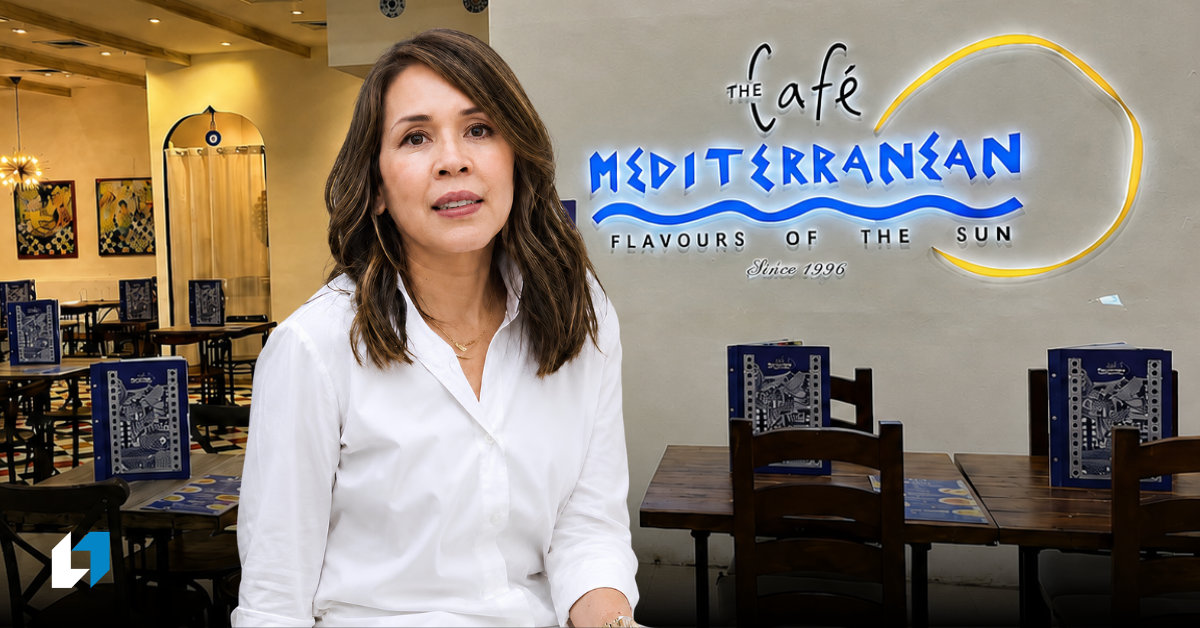
For Marla Moran, the decision to leave corporate life and enter the restaurant business came during a period of transition that unexpectedly opened the door to entrepreneurship.
At the time, Moran was working in the corporate sector and had no immediate plans of becoming a restaurateur.
“Before Café Mediterranean, I was working at a big corporation in the packaging division,” Moran recalls.
It was already her second job after an earlier experience in hospitality. While she enjoyed working, she was still relatively young and building her professional career when a new opportunity emerged through family.
“My sister and her husband, who owned a Mexican restaurant, approached me with the idea of starting a Mediterranean concept,” she says.
The proposal came at an interesting moment in her corporate career. Around the same period, the business division where she worked was going through a merger.
“Around that time, the business where I was then assigned was merging with another company,” Moran explains.
As part of the restructuring, employees were being offered early retirement packages.
“They were offering early retirement packages,” she recalls.
For many professionals, moments like this create uncertainty. But for aspiring entrepreneurs, these disruptions can sometimes become turning points. Instead of viewing the situation as a setback, Moran saw it as an opportunity to try something new.
“So I said, ‘Why not? Perfect timing.’”
At only 28 years old, she made the decision to leave corporate life and invest the retirement package into a restaurant venture.
“At 28 years old, I got early retirement,” she says. “And I put the money into the Café Med.”
That decision reflects a pattern seen in many entrepreneurial stories. Founders often use transition periods—corporate restructurings, layoffs, or career shifts—as opportunities to pursue ventures they may not have otherwise attempted.
For Moran, however, the decision was not based purely on timing. She also recognized that the restaurant business matched her personality and strengths far more naturally than corporate work.
Discovering a Passion for Operations
As the business began taking shape, Moran quickly realized that she enjoyed the operational side of running a restaurant.
“I always felt I was meant to be involved in the day-to-day because I really enjoy operations,” she says.
Restaurant operations involve constant activity—managing staff, handling customer concerns, maintaining food quality, and making sure service runs smoothly. For some entrepreneurs, this kind of environment can feel exhausting. For Moran, it felt natural.
“Bagay sa akin,” she explains.
Her partners, meanwhile, preferred different roles inside the business.
“Unlike me, my partners didn’t enjoy that part,” she says.
This difference helped shape the internal dynamics of the company. Moran naturally became more involved in the day-to-day running of the restaurant, while her partners focused on other aspects of the business.
The experience highlights an important entrepreneurial insight: businesses often perform better when founders align themselves with responsibilities that match their strengths and personalities.
Operations, in particular, can become a competitive advantage in the restaurant industry. Good food alone is rarely enough to sustain a business long term. Consistency, execution, customer experience, and discipline behind the scenes often determine whether restaurants survive beyond their early years.
For Moran, operations became one of the foundations of her leadership style.
Seeing an Opportunity for Mediterranean Food
Timing also played an important role in the concept itself.
“That was back in 1994,” Moran recalls.
At the time, Mediterranean food had not yet entered the mainstream dining scene in Metro Manila. Most shawarma concepts were still small stalls usually operated by Middle Eastern owners.
“All of us saw the need for a Mediterranean concept,” she says.
The founders believed there was room to bring Mediterranean cuisine into a more accessible and modern dining environment—particularly inside shopping malls, where Filipino consumers were increasingly spending time.
Their first branch opened in Greenbelt.
“We opened our first branch in Greenbelt,” Moran says.
The restaurant itself was modest.
“It was a tiny space of only 50 square meters.”
Like many successful restaurant concepts, Cafe Mediterranean began as a small operation with limited resources but a clear understanding of the market opportunity.
“It was really a mom-and-pop operation in the beginning,” Moran recalls.
Turning a Career Shift Into a Business
Looking back, Moran’s story illustrates how entrepreneurial journeys often begin during moments of uncertainty rather than certainty.
What started as an early retirement decision at age 28 eventually became the foundation for Cafe Mediterranean, a restaurant concept that helped introduce Mediterranean cuisine to a broader audience in the Philippines.
For Moran, the transition from corporate employee to restaurateur was not simply a career change. It became an opportunity to build a business that aligned more closely with her strengths, interests, and long-term vision.

