

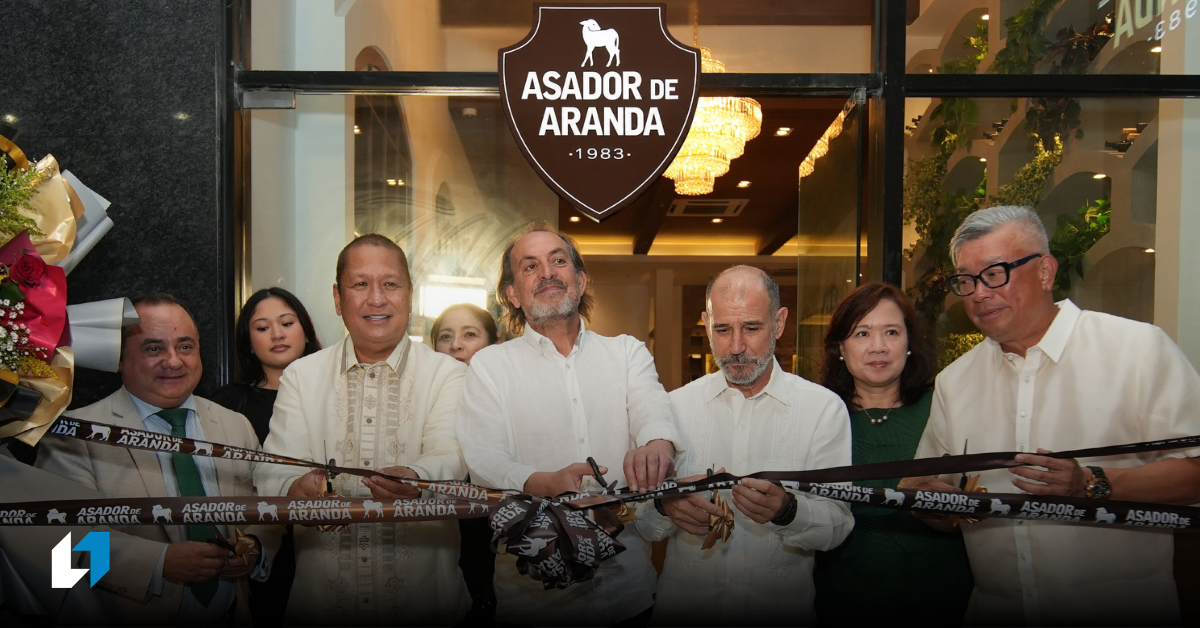
After building Gerry’s Grill into one of the Philippines’ most recognizable restaurant chains, Gerry Apolinario could have stayed within the market he already understood.
Instead, he entered a very different segment by bringing Asador de Aranda, a Spanish restaurant brand known for traditional oven-roasted meats, to Manila.
The decision did not begin with a franchise presentation or a consultant’s market study. Apolinario already knew the concept as a customer.
“Regular customer ako nito pag nandoon ako sa Spain,” he said.
His familiarity with the restaurant gave him something that many franchise buyers do not possess before signing an agreement: personal experience with the product, the service and the type of customer the brand attracts.
Choosing an Established Spanish Brand
Asador de Aranda traces its history to 1983. Apolinario said the group had about 31 Asador restaurants at the time of the interview, apart from its other Spanish concepts.
The brand originated in Aranda, while its headquarters later moved to Barcelona.
When asked why he chose Asador de Aranda rather than another Spanish restaurant concept, Apolinario pointed to its scale and established presence.
“Ito yung pinaka malaki sa Spain,” he said. “Sila yung talagang all over Spain.”
He observed that many Spanish restaurants operated only one or two locations. Asador de Aranda, in contrast, had built a broader network across the country.
“So yung mga Asador kasi, yung mga ganito, they’re all over Spain,” he said. “Pero ito yung pinaka-popular.”
For an entrepreneur who had already built a large restaurant chain, the brand’s ability to expand beyond a single location likely carried weight.
A successful restaurant can depend heavily on one chef, one location or one group of loyal customers. A concept that has operated across several markets provides stronger evidence that its food, systems and identity can be replicated.
That does not guarantee success in another country. It does, however, reduce some of the uncertainty that comes with introducing an entirely untested idea.
Starting as a Customer
Apolinario did not evaluate Asador de Aranda solely through financial projections.
He had eaten at its restaurants during his visits to Spain and had seen how the brand performed in different locations.
“Regular customer ako nito,” he said. “Madalas ako sa Spain.”
He described one of the group’s major restaurants in Barcelona’s Tibidabo area as a large property that remained consistently full. He also referred to another location near Paseo de Gracia and Plaza Catalunya.
This gave him a customer’s understanding of the concept before he approached it as an investor.
A financial model can estimate sales, costs and returns, but it cannot completely explain why customers return. The owner must understand what makes the experience memorable and which parts of it cannot be changed without weakening the brand.
Apolinario had tasted the food, observed the clientele and experienced the restaurant in its home market. That allowed him to evaluate more than the popularity of the name.
He could also ask whether the same experience would remain attractive after it was transferred to Manila.
Finding Opportunity in a Different Market Segment
Asador de Aranda serves a different market from Gerry’s Grill.
Gerry’s Grill occupies a broader, middle-market position. Its menu and pricing allow it to serve families, office groups and customers across many locations.
Asador de Aranda targets a smaller and more specialized market.
“Eh, why not?” Apolinario said when asked why he entered a higher-priced restaurant segment. “I mean, it’s a totally different market.”
He believes opportunities exist across different price points.
“In every market segment naman may opportunity,” he said. “Yung Gerry’s natin is one price point.”
He acknowledged that the largest food-service market remains below Gerry’s Grill, where mass-market chains serve a much larger number of customers. Gerry’s Grill sits closer to the middle, while Asador de Aranda occupies a narrower niche.
“Ito may market niche,” he said.
A niche restaurant can serve fewer customers but charge more for a specialized experience. It can build loyalty among diners who value authenticity, quality and exclusivity.
The challenge is that the business must understand exactly who those customers are. A premium restaurant cannot rely on the same volume that supports a mass-market chain.
Its location, menu, service and pricing must all fit the specific group it wants to attract.
Why He Believed Filipinos Would Understand the Food
Foreign restaurant concepts often fail when they introduce food that customers find too unfamiliar.
People may try the restaurant once out of curiosity but return to flavors they already know and enjoy. A concept may be successful abroad yet struggle when the local market does not connect with the product.
Apolinario believed Asador de Aranda had an advantage because Spanish and Filipino food cultures share familiar flavors.
“Madalas naman ako sa Europe, so nakikita ko what can be applicable sa bansa natin,” he said. “And this is one of them.”
“Kasi yung flavor profile natin and Spain is very close.”
The restaurant’s signature dishes include cochinillo and cordero, or roasted suckling pig and lamb. Cochinillo, in particular, has an immediate point of reference for Filipino diners because of the country’s familiarity with lechon.
Apolinario did not believe customers would see the food as completely foreign.
“Pag natikman mo yung mga pagkain natin dito, it’s familiar,” he said. “Hindi siya yung, ‘Oo, masarap ito, pero ngayon ko lang natikman.’”
“It’s something na natikman mo na, pero it’s just 10 times better.”
His description reflects a useful approach to introducing an international concept.
Customers often respond well to a product that offers novelty without requiring them to abandon everything familiar. The restaurant can present traditional Spanish preparation while connecting it to tastes Filipinos already understand.
This reduces the educational burden on the business. The customer does not need a long explanation before appreciating roasted pork, grilled meat, tapas or gambas.
The product feels recognizable, but the quality, technique and presentation offer a different experience.
A Brand Already Known by Filipino Travelers
Apolinario also saw an existing base of awareness among Filipinos who had visited Spain.
He estimated that many of the customers he spoke with at the Manila restaurant had previously traveled there. Some already recognized the Asador de Aranda name.
“They’re very popular,” he said. “Ang maganda nga kasi dito is that siguro 50 percent of the people na nakausap ko rito have been to Spain.”
He later said customers from areas such as Greenhills were already traveling to the restaurant because they knew the brand from their visits abroad.
“Most of the people know Asador de Aranda,” he said. “Yung mga galing Spain would know.”
“So nung nag-landing dito sa atin, everybody already knew na, ‘Ay, meron na palang Asador sa Manila?’ Kaya sila nag-boom, dinadayo.”
The exact percentages were Apolinario’s estimates rather than independently verified market data. Still, his observation points to a valuable source of initial demand.
Filipinos who had experienced the restaurant in Spain did not need to be convinced of the brand’s history or authenticity. They could become early customers and recommend it to their own networks.
This allowed the Manila branch to benefit from recognition developed long before it opened.
Translating a Brand Rather Than Copying It
Bringing a foreign concept to the Philippines requires more than copying the menu and interior design.
The operator must determine which elements define the brand and which aspects can adjust to local conditions.
Apolinario viewed Asador de Aranda’s identity as closely connected to its traditional cooking, Spanish ingredients and focused menu. These elements could not be changed freely without weakening the reason customers would choose the restaurant.
At the same time, he had to assess whether the concept made commercial sense in Manila.
His reasoning rested on several factors. The brand had operated since 1983, built a network across Spain and developed recognition among Filipino travelers. The food also offered flavors that local diners could understand.
Most importantly, Apolinario had experienced the concept himself.
This did not eliminate risk. A brand that works in Barcelona or Madrid may face different costs, customer habits and competitive conditions in Manila.
His familiarity with the product, however, gave him a clearer basis for deciding which risks were worth accepting.
Applying a Lesson From Gerry’s Grill
Apolinario’s decision also reflects a lesson from his experience with Gerry’s Grill: restaurant concepts must match the market they intend to serve.
Gerry’s Grill succeeded because it offered familiar Filipino food at a price point that could support a large network. Asador de Aranda follows a different model.
Its potential does not depend on becoming another mass-market chain. It depends on serving a smaller segment that values an authentic Spanish dining experience.
“In every market segment naman may opportunity,” Apolinario said.
That opportunity becomes viable only when the concept, price and customer align.
Apolinario did not choose Asador de Aranda simply because it was a foreign name. He chose a restaurant he had patronized, a brand with an established history and a menu that he believed would feel familiar to Filipino diners.
The broader business lesson is straightforward.
Entrepreneurs who bring international concepts into a local market should look beyond the prestige of the brand. They must understand the product as customers, examine whether it has proved itself across locations and determine whether local consumers will recognize enough value to return.
For Apolinario, Asador de Aranda met those conditions.
He knew the restaurant from Spain. He understood the market segment it served. He also believed its flavors could cross borders without losing their appeal.
The restaurant was foreign, but the dining experience did not have to feel unfamiliar.

