

Artificial intelligence may be the most talked-about technology in business today, but for Philippine startups, the more important question is no longer whether AI will change the way companies operate.
It is whether businesses can actually use it well enough to create value.
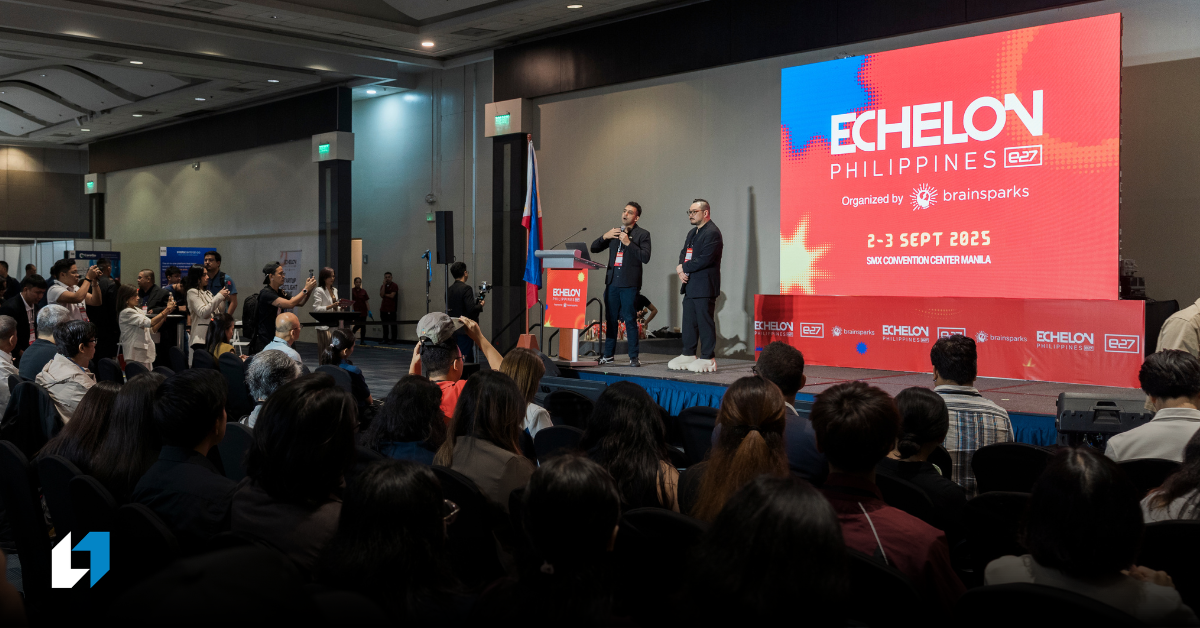
That is the challenge Echelon Philippines 2026 wants to address when it returns on August 25 and 26 at the SMX Convention Center Aura in Metro Manila. Organized by Brainsparks, the third edition of the conference will bring together founders, investors, corporate leaders, policymakers and other members of the startup ecosystem under the theme, “Age of the AI-preneur.”
Rather than focus on broad discussions about the promise of artificial intelligence, this year’s event will place greater emphasis on execution: how companies can adopt new technologies, manage rising costs, build leaner organizations and adjust their business models as AI becomes more deeply embedded in the economy.
“The time for AI hype is over; the Philippine startup ecosystem needs a ‘No-BS Blueprint’ to navigate the Age of the AI-preneur,” said Artie Lopez, co-founder and startup coach at Brainsparks.
“As AI rewrites traditional business models, local startups, SMEs, and corporate ecosystems must rapidly transition into the Intelligent Age to survive.”
That shift comes at an important time for entrepreneurs.
For several years, startups around the world benefited from abundant capital and strong investor appetite for rapid growth. The environment has since become more demanding. Founders now face greater pressure to show sustainable revenues, control expenses and demonstrate that technology investments can produce measurable business results.
AI adds another layer to that challenge.
While generative AI and automation can improve productivity and reduce certain operating costs, implementation is not free. Companies still have to invest in systems, data, training and organizational change. Employees need to adapt, existing workflows may have to be redesigned and management must determine where AI can genuinely improve returns rather than simply add another layer of technology.
Echelon Philippines 2026 intends to put these practical issues at the center of the conversation.
Among the themes to be discussed is the growing divide between companies that remain dependent on slow legacy systems and those that have built more flexible, AI-native operations.
For younger companies, the discussion will also include how founders can launch and scale businesses with less capital. Lean execution has become more important as investors demand clearer paths to profitability and become more selective about where they deploy funds.
The event will also examine what organizers describe as the “true cost of tech.” Beyond software subscriptions and infrastructure expenses, companies have to consider workforce resistance, implementation time and the management attention required to integrate new technologies successfully.
These issues are particularly relevant to Philippine businesses because digital transformation is no longer limited to the technology sector.
Banks, retailers, manufacturers, professional firms and even traditional family businesses are looking at automation, analytics and artificial intelligence as tools to improve productivity and remain competitive.
For entrepreneurs, this creates both opportunity and pressure.
AI can lower barriers to entry in some industries because small teams can now perform tasks that once required much larger organizations. But the same tools are also available to competitors. A company that fails to adopt them effectively may find itself at a disadvantage even if its underlying business remains sound.
This is also why Echelon Philippines is positioning the conference not just as a startup event but as a meeting point between founders and the broader business ecosystem.
The organizers expect more than 3,000 attendees, including over 1,500 startups and small and medium enterprises, around 1,000 corporate leaders and approximately 500 investors, together with policymakers and other stakeholders.
For founders, that creates an opportunity to meet potential investors, partners and customers. For corporations, the event provides exposure to technologies and business models that may eventually disrupt or complement their own operations. Investors, meanwhile, can assess emerging companies and gain a clearer view of where the next generation of Philippine technology businesses may come from.
The conference also highlights a broader issue facing the local startup ecosystem: technology alone will not determine whether the Philippines becomes a more significant regional innovation hub.
Access to capital, government policy, education, infrastructure and collaboration between large companies and smaller technology firms will also matter.
Brainsparks argues that the next stage of development will require closer cooperation between government, industry and academia, particularly as companies adjust to new technologies and new regulatory requirements.
For business owners, however, the immediate challenge may be simpler.
AI is already changing how companies communicate with customers, analyze information, manage employees and make decisions. The competitive advantage will increasingly come not from knowing that these tools exist, but from knowing where they can be used profitably.
That is ultimately the proposition behind Echelon Philippines 2026.
The event is not asking whether artificial intelligence will reshape business. That discussion has largely been settled. It is asking what founders, companies and investors should do about it now.
For Philippine businesses trying to understand how AI fits into their strategy, how much it will really cost and where the opportunities may emerge, those may be the questions worth spending two days answering.

