

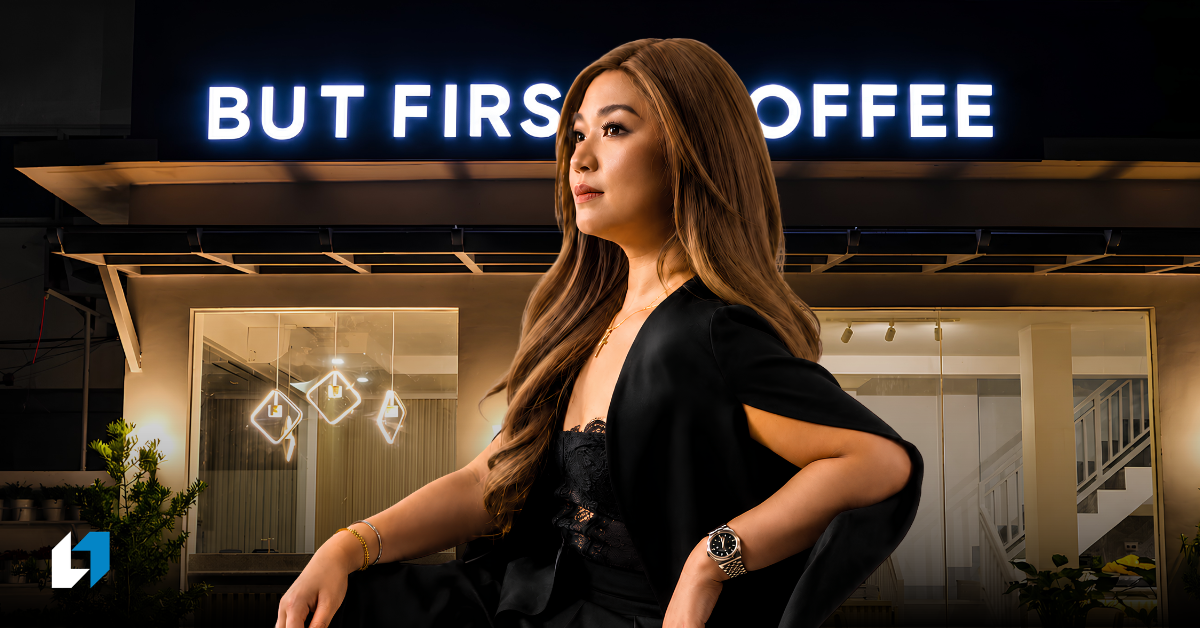
For Ana Magalona-Go, the founder of But First, Coffee, the idea to start a business did not come from a carefully planned strategy. It came from uncertainty.
Like many professionals during the early months of the pandemic, she suddenly found herself confronting a future that felt unpredictable.
“The pandemic came. Everyone was working from home, and parang maraming nala-lay off,” she recalls. “I had this uncertainty na baka ako next. Kasi no one knows—everything was really dependent on the status of the company.”
At the time, Magalona-Go was working in a fintech-oriented payroll software company where she served as a project manager handling lending-related initiatives. While her career had been progressing steadily, the sudden economic disruption created anxiety about job security.
“Grabe yung anxiety ko noon kasi hindi ko alam kung ano yung gagawin ko,” she says. “Lahat losses noong 2020 eh, majority talagang loss. Hindi alam ng mga tao ang gagawin kasi challenged na sila sa work nila. Anong mangyayari? May challenge pa sa health and all.”
During that period of uncertainty, she reached out to someone she trusted for advice—her father.
“Tumawag ako sa dad ko. Sabi ko, ‘Dad, grabe yung anxiety ko.’”
Her father’s response surprised her. Instead of offering a traditional career solution, he suggested she watch a film that focuses on mindset.
“Sabi niya, ‘Manood ka ng The Secret sa Netflix.’”
The film discusses the concept of the law of attraction, which emphasizes the power of mindset and positive thinking. While the advice initially seemed simple, the message resonated with her.
“Parang it’s more about the law of attraction, that your mind is very powerful,” she explains. “If grabe kang mag-overthink, then overthink the positive. Overthink what’s the best that could happen and what you really want to happen.”
Instead of focusing on the fear of losing her job, she began thinking about what could create stability.
“At that time, I just wanted to have a stable source of income. Gusto ko lang na mawala itong anxiety ko.”
With that goal in mind, she started exploring possible backup plans. The idea that eventually took shape was surprisingly simple: selling coffee online.
“So kung ano yung napanood ko, tina-try ko lang i-apply sa self ko,” she says. “Sabi ko, ‘Sige, wag kang mag-entertain ng any negative thoughts. Just focus on yourself, focus on what you do.’ Then, weeks after, napag-isipan ko na i-push yung online coffee business.”
Her inspiration partly came from her hometown.
“Kasi nung nasa Bacolod ako, maraming coffee shop,” she explains. “Mga P30 yung mga coffee don, masasarap na. Brewed coffee lang tapos condensed milk.”
In Bacolod, affordable coffee was common. But when she moved to Makati, she noticed that most coffee options were dominated by large international chains with significantly higher prices.
“There was no affordable coffee back then here in Makati. It was always the big chains, so it was hard for young professionals to grab a good cup of coffee without breaking the bank.”
That observation revealed a potential market gap.
“I wanted to offer good coffee at an affordable price.”
What she lacked in formal barista training, she compensated for with experimentation.
“Hindi ako marunong gumawa, wala akong experience na barista,” she admits. “Nag-Google lang ako.”
Her first steps were simple. She bought coffee beans online and started experimenting at home.
“Since coffeemaker lang naman siya, marunong akong gumamit ng coffeemaker. Bumili ako ng coffee sa Shopee. Online lahat, parang come what may lang. Diskarte-diskarte lang.”
She adjusted brewing ratios and flavors until she found combinations she liked.
“Nag-experiment ako. Inadjust-adjust ko lang siya sa ratio na gusto ko.”
The business began as a small, home-based operation. With limited resources during lockdown, she relied almost entirely on digital platforms to reach customers.
“The business was more of a home-based setup and I just maximized everything online, using Facebook and Instagram lang—dun lang ako.”
Instead of trying to compete directly with large coffee chains, she focused on two simple ideas: affordability and accessibility.
“While there were other coffee chains in the industry, the market gap I wanted to address back then was to offer free delivery service, and to offer a good cup at affordable price points.”
That concept became the foundation of But First, Coffee.
Looking back, Magalona-Go says the business began as nothing more than a backup plan during a time of uncertainty.
“I just wanted to have a back-up plan, just in case.”
Yet that small idea—born from anxiety and experimentation—would eventually grow into a coffee brand that resonated with young professionals looking for quality coffee without the premium price tag.
Her story highlights an insight many entrepreneurs only recognize in hindsight: sometimes the best business ideas do not begin with perfect certainty.
They begin with a simple question—how to move forward when the future feels unclear.

