

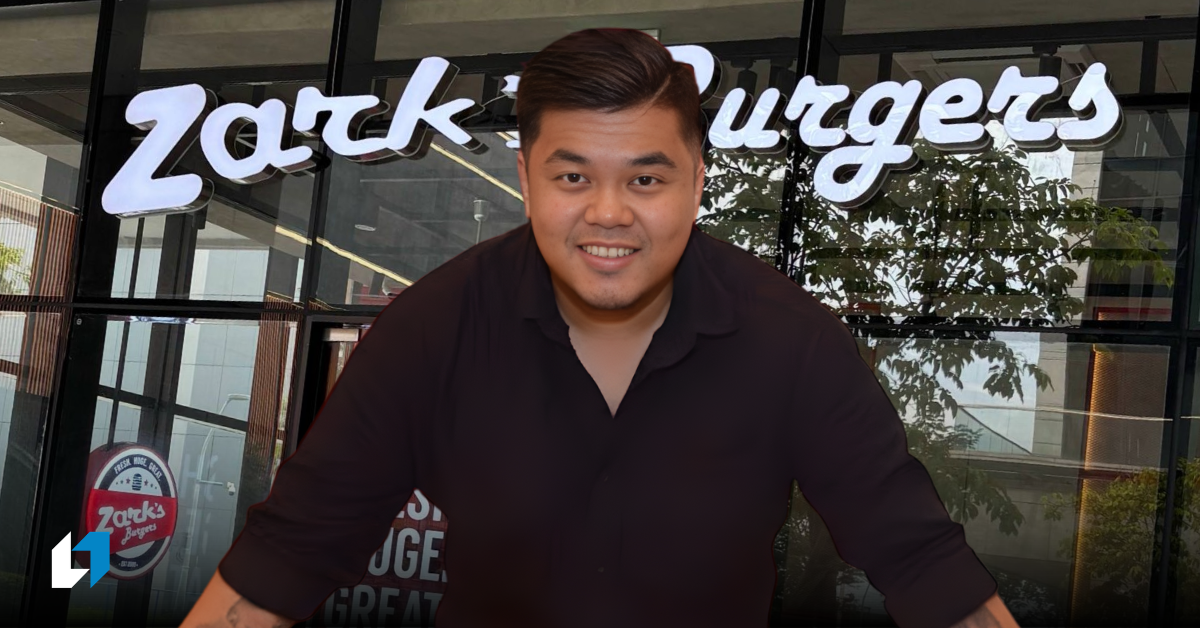
By the time Rolandrei Varona entered the workforce, he already knew that passion alone wouldn’t be enough to open a restaurant someday. What he needed was experience—real exposure to how kitchens operate, how systems are enforced, and how discipline shapes consistency. Fresh out of college, he was only 19 years old when he took his first professional step into the industry. “I graduated at 19 years old,” he says.
That step came through on-the-job training at Outback Steakhouse, which was then part of the Bistro Group. “Yung first job ko nag-OJT ako nun sa Outback Steakhouse, yung under Bistro Group pa dati,” Varona recalls. He stayed there for two years, absorbing the structure of a large restaurant operation even while performing the most basic tasks.
At that age, expectations were limited. “Syempre bata pa ako nun,” he says. His role in the kitchen reflected that reality: “Taga-luto lang ako ng French fries nun.” He wasn’t allowed near the more expensive dishes. “They won’t let me cook steak kasi mahal yun eh, baka magkamali,” he explains. “So French fries and salad lang.”
The work was repetitive, but Varona treated the experience as a learning ground rather than a limitation. While his hands were busy with routine tasks, his attention was elsewhere. “Habang nandun ako, I would always talk to the manager,” he says. He wasn’t just interested in cooking—he wanted to understand how restaurants actually ran. “Kasi I was very interested to learn the ins and outs of the restaurant business,” he adds. Without business mentors at home—“wala naman akong matanungan eh”—he learned by observing operations, asking questions, and watching how decisions were made on the floor.
As he grew older, opportunities began to expand beyond the local kitchen. When he turned 21, many employees from the Bistro Group were recruited to work abroad, and Varona became part of that group. “So nasama ako doon para mag-work sa cruise ship,” he says. The move took him to the United States, where he worked for Carnival Cruise Lines. “Nag-work ako sa cruise ship sa US, sa Carnival Cruise Lines.” Despite being “sobrang bata pa ako noon,” his long-term goal was already clear. “Naka-mindset na talaga ako noon na someday I want to open my own restaurant,” he says. The specifics didn’t matter yet—“hindi pa clear noon kung ano”—but the direction did. “Kasi gusto ko lang magka-restaurant.”
Working overseas wasn’t just about exposure; it was also about discipline. Varona made a deliberate decision to save everything he earned. “Ang ginagawa ko was to save all my salary,” he says, fully aware of how tempting it was to spend at that age. “Binata ako that time, 21 years old, nakaka-tempt gumastos, diba?”
But he resisted. “Pang-good time, pero I saved lahat ng salary ko.” He even took on side jobs to earn more. “Suma-sideline pa ako para may extra money.” After two years of working and saving—“I worked there for two years”—he felt ready to try building something of his own. “When I reached 23 years old, sabi ko, sige ano kaya, mag-try akong mag negosyo.”
What stands out in Varona’s journey is not how fast he moved, but how deliberately he waited. He didn’t rush into ownership or chase early recognition. Instead, he chose repetition, structure, and preparation—learning how kitchens function under pressure and how discipline shapes execution.
Before Varona ever tried to build a restaurant of his own, he made the quieter choice to prepare. His story shows that entrepreneurship doesn’t always begin with bold ideas or immediate independence. Sometimes, it begins with patience—doing unglamorous work, observing closely, and building confidence through discipline. Long before Zark’s Burger became a concept, the foundation was already being laid in kitchens where mistakes were costly and consistency mattered most.
This article includes quotes from an interview originally published by Esquire Philippines, authored by Henry Ong.

