

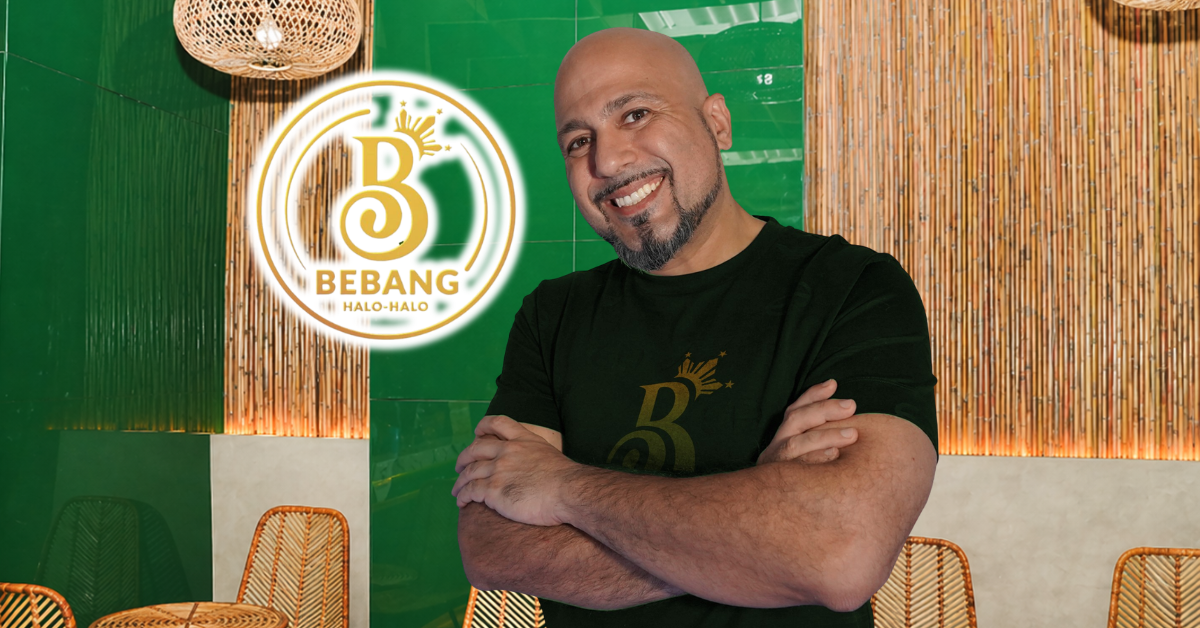
Before helping build the fast-growing dessert brand Bebang’s Halo-Halo, Sam Karazi was running a global e-commerce business that sold personalized wedding gifts to customers in the United States.
The business had an unusual international structure. The company was registered in Hong Kong, the products were sold in the United States, and the design team was based in the Philippines. For several years, the setup worked smoothly, allowing Karazi to build a profitable online operation.
The product—a personalized wedding gift—was popular with customers, and the business steadily expanded. At one point, the company had grown large enough that Karazi no longer needed to be involved in day-to-day operations.
“It was doing very, very well, until the pandemic happened,” Karazi says.
When the pandemic hit in 2020, the wedding industry around the world came to an abrupt halt. Events were cancelled, celebrations were postponed, and businesses connected to weddings were suddenly left without customers.
“We took a very big hit because our business was related to weddings, and most weddings were cancelled for almost two years,” he explains.
The sudden disruption placed the company under immense financial pressure. Despite the collapse in revenue, Karazi made a difficult decision about the people who had helped build the business.
“I was really spending money on the team without making any income,” he says.
At the time, the company had around 50 employees. Many entrepreneurs during the pandemic faced the painful choice of laying off workers or absorbing the losses themselves. Karazi chose to continue supporting his team.
“Like many business owners, we felt sorry for our people, so we didn’t want to let anyone go,” he says.
The decision came with a heavy cost.
“I kept 50 people for two years without making any single peso,” Karazi recalls. “I was paying all the salaries without making any money at all, which bled me technically for a long period of time.”
The experience forced him to rethink his situation. Before the pandemic, the success of the e-commerce business had allowed him to step back from daily work.
“I was almost retired,” he admits. “I had people running the company while I was living in Subic, like doing nothing most of my time.”
But the pandemic changed everything.
“The pandemic was more like a shake-up for me—a wake-up call,” he says.
Around that time, a friend approached him with a small home-based food business idea. Like many people during lockdowns, she had begun selling products from her home.
“Then a friend of mine started this business like many people did during the pandemic—selling products from their house or even from their garage,” Karazi says.
The product was simple: halo-halo.
His friend asked for help with marketing and promotions. With his background in digital advertising and online campaigns, Karazi agreed to assist.
“She was selling halo-halo and asked for my help,” he recalls. “I really wanted to step up and help because I’m very good at social media marketing and creating campaigns.”
At first, the goal was simply to expand the reach of the small neighborhood operation. Most home-based food businesses rely on nearby customers and word-of-mouth.
“When you run a business from home, you mostly just sell to your neighbors,” Karazi says. “That’s the extent of your reach—your friends, your connections.”
Karazi began helping build the brand’s online presence.
“So when I started helping—designed the logo, created the page, ran the ads—I saw a lot of good feedback from people,” he says.
The response from customers quickly caught his attention. Orders began increasing as more people discovered the product online.
“That’s when I saw the product’s potential,” Karazi explains.
Rather than rushing into expansion, he decided to approach the opportunity systematically.
“My reaction was: I want to test this properly for three months,” he says.
Testing meant investing more heavily in digital advertising, expanding the marketing reach, and closely monitoring how customers responded.
“Testing it properly meant going heavy on ads, investing more money, and seeing where it would go.”
But it did not take long for him to recognize an important signal that entrepreneurs often look for when evaluating a product.
“The most important indication that a product will work is when people buy it twice,” Karazi says.
Repeat customers confirmed that the demand was genuine.
“When someone orders from you and then returns after two days, orders again for their friends, and even brings them along, then it’s clear that something is really working.”
Soon the small operation began attracting more attention than expected. Customers started messaging the business online, sometimes even complaining about long waiting times.
“I even saw people arguing with the team on social media,” Karazi recalls. Some were asking why they could not place orders, while others were frustrated about waiting two or three hours for their desserts.
At the time, the business was still operating out of a small stall in Teachers Village in Quezon City.
“That’s when I told her, ‘It seems like you’re sitting on a gold mine. We really need to build this properly.’”
What began as a small pandemic-era food project would eventually grow into Bebang’s Halo-Halo, a brand that continues to attract long lines of customers eager to try its take on one of the Philippines’ most beloved desserts.
For Karazi, the experience reinforced an entrepreneurial truth: sometimes the biggest opportunities emerge when a crisis forces people to start looking in new directions.

