

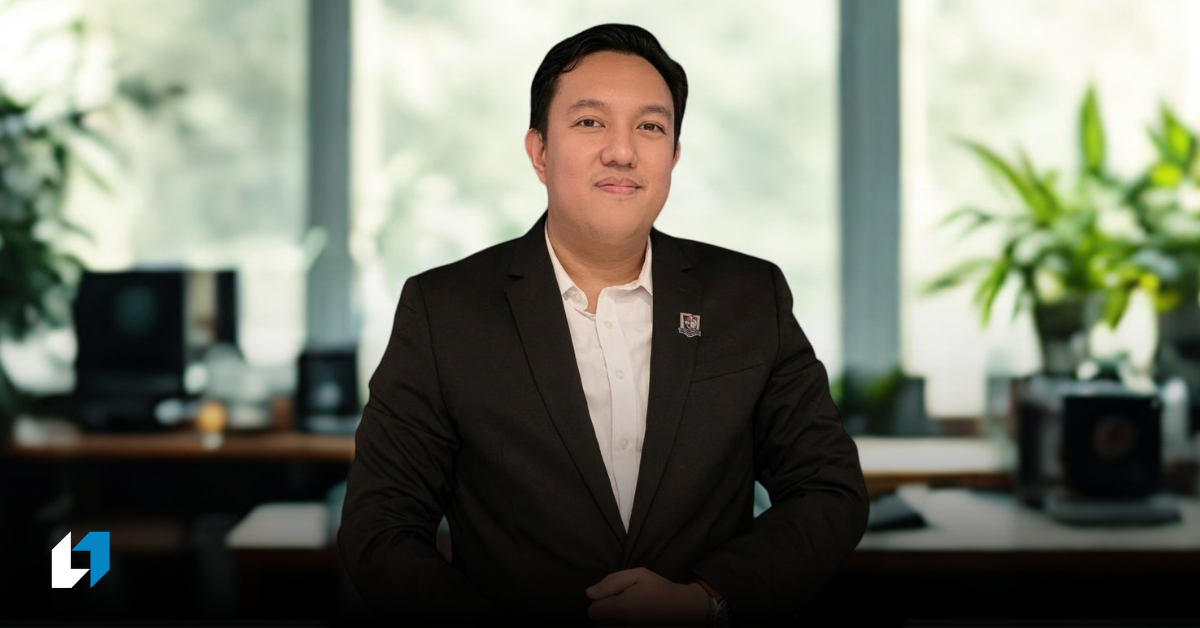
Nate Poblete, a Registered Financial Planner, didn’t grow up with a healthy relationship with money. In fact, his early beliefs were shaped by fear, scarcity, and misunderstanding.
“I constantly heard things like ‘We don’t have enough’ and ‘Money is the root of all evil,’” he recalls.
Those messages stayed with him for years, shaping how he viewed wealth and success.
Growing up, he believed that financial struggle was normal and unavoidable. Saving felt pointless because money always seemed to disappear when it was needed most.
“I carried the idea that life should be a struggle and that I had no control,” he says.
Every time he tried to save, unexpected expenses would wipe it out, reinforcing the belief that financial stability was out of reach.
That mindset didn’t change until life forced him to confront it. After going through multiple financial setbacks, he began questioning why money always seemed to slip away.
“Why did money always seem to have wings and fly away from me?” he recalls asking himself.
That question marked the beginning of a deeper search for answers.
One of the biggest lessons he learned early on was about cash flow. Income alone wasn’t the problem—how money was managed made the real difference.
“If you can’t manage ₱20,000, you won’t magically handle ₱100,000,” he says.
He realized that financial discipline, not income level, determines long-term success.
But his biggest turning point came in 2021, when a series of events tested him financially and emotionally. At the time, he was actively trading stocks and seeing strong returns.
“I thought I had it all figured out… until the market humbled me,” he says.
A sudden market sell-off wiped out six figures from his portfolio in just a few months.
The losses were only the beginning. At the same time, his family faced personal challenges that required both emotional and financial strength.
“My mother was hospitalized with COVID, and our bills reached almost half a million pesos,” he recalls.
To cover expenses, he withdrew investments, maxed out credit cards, and took on loans.
Not long after, his mother passed away. The emotional weight of that loss, combined with financial pressure, pushed him to his lowest point.
“It felt like life was testing every ounce of strength we had left,” he says.
Even attempts to recover financially, like starting a business, ended in further losses.
At his lowest, a simple question from his wife changed everything. It forced him to reflect on the life they were living and the direction they were heading.
“She asked me, ‘Is this really the life we wanted?’” he recalls.
That moment became a turning point, not just financially, but personally.
Soon after, he came across a message that shifted his mindset. It wasn’t about wishing for easier circumstances, but becoming stronger and more capable.
“Don’t wish it were easier; wish you were better,” he says, recalling the advice.
That idea helped him take responsibility for his situation and focus on growth.
Discovering the Registered Financial Planner program gave him the structure he needed. It helped him connect his experiences with a clear financial framework.
“It gave me clarity, discipline, and purpose,” he says.
For the first time, he began to see money not just as something to earn, but as something to manage with intention.
Today, his approach to money is more balanced and structured. He and his wife have systems in place to manage savings, investments, and expenses.
“Our savings, investments, and insurance are now automated,” he explains.
At the same time, they still enjoy life, knowing their finances are aligned with their goals.
One of the most important lessons he carries today is about discipline. Financial success is not about how much you earn, but how well you manage it.
“It’s not how much you earn—it’s how much you keep,” he says, quoting advice that stayed with him.
This principle now guides how he makes financial decisions.
He also learned to manage risk more effectively. Instead of chasing opportunities blindly, he focuses on understanding them first.
“Risk doesn’t come from investing—it comes from not knowing what you’re doing,” he explains.
Diversification and long-term thinking have become key parts of his strategy.
Looking ahead, his focus is on building a secure future. He and his wife are working toward long-term financial goals, including retirement.
“We realized we need around ₱50 million each to retire comfortably,” he says.
It’s an ambitious goal, but one grounded in planning and preparation.
For Poblete, financial freedom is no longer about quick wins or luck. It’s about discipline, learning, and consistency over time.
“Wealth is built through discipline, intention, and the courage to keep learning,” he says.
Because in the end, money is not just about what you have—it’s about how you manage and grow it.

