

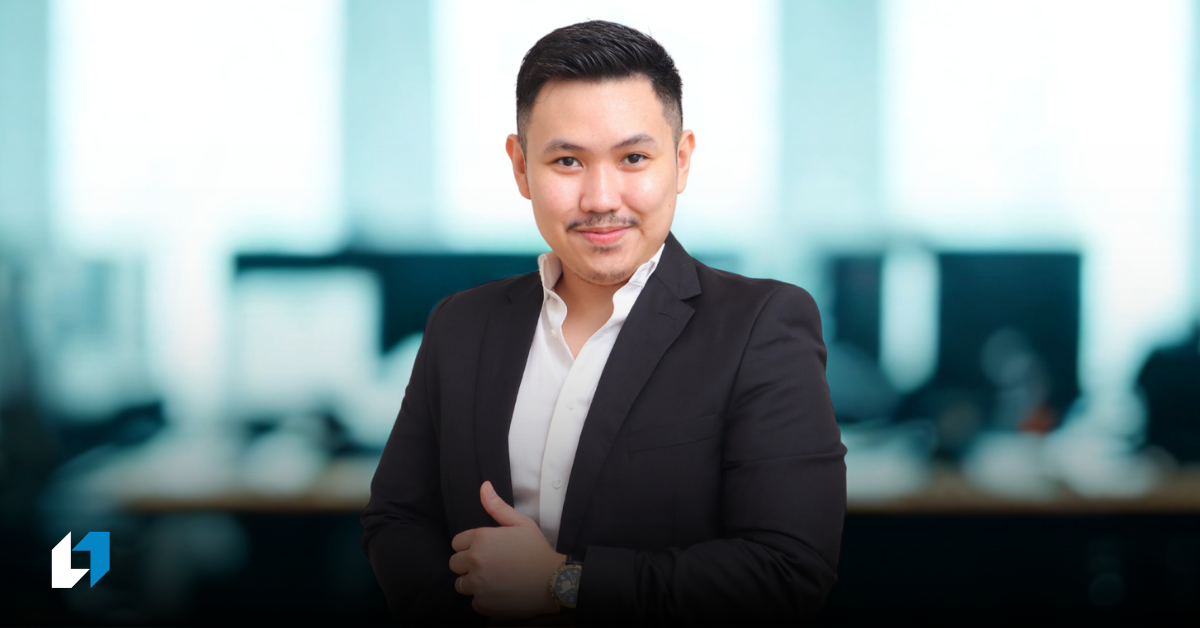
John Roger Gan, a Registered Financial Planner, didn’t learn about money in the usual way. While most kids were still figuring out basic concepts, he was already exposed to business, finance, and decision-making at a young age.
“My father used to bring me to Chamber of Commerce conferences when I was a kid,” he recalls.
Those early experiences gave him a front-row seat to how money moves and how businesses operate.
Even during school breaks, Gan would spend time helping out in his father’s cooperative. The work may have been advanced for his age, but it shaped how he thought about money early on.
“I tried to learn things that were way too advanced for my 7-year-old mind,” he says.
That exposure helped him understand a concept many only learn later in life.
“Money is a tool, and being responsible with it is a necessity,” he explains.
Growing up, he also saw how diversification and compounding worked in real life. Instead of just hearing about it, he observed it through the cooperative’s investments.
“I learned early how compounding works and the importance of diversification,” he says.
These lessons became the foundation of how he approaches wealth-building today.
His perspective deepened when he entered the stock market. Buying his first shares and attending a shareholder meeting became a defining moment in his journey.
“I understood that strong financial foundations open opportunities,” he recalls.
That experience reinforced the importance of patience and long-term thinking in investing.
Today, Gan clearly identifies himself as an investor. His approach is guided by strategy, structure, and a focus on long-term growth rather than short-term gains.
“I consider myself an investor,” he says.
For him, the goal is not just to earn, but to build sustainable wealth over time.
One idea that stayed with him came from an unexpected source. A line from a television series shaped how he views money beyond numbers.
“Money is a measure of a man’s choices,” he says, quoting a lesson that resonated with him.
That perspective shifted his focus from accumulation to decision-making.
When it comes to planning, Gan takes a structured but flexible approach. Instead of tracking every detail, he focuses on systems that adapt to change.
“I assign percentages for each plan instead of tracking every centavo,” he explains.
This allows him to maintain discipline without being overwhelmed by constant adjustments.
Like any investor, he has experienced setbacks. Not every stock decision worked as expected, and some investments didn’t go according to plan.
“Not every stock thesis I make is correct,” he admits.
These experiences reinforced the importance of managing risk carefully.
“Risk management is paramount,” he adds.
His approach to balancing risk and reward is tied to a larger vision. Every decision he makes is aligned with a long-term goal he is working toward.
“My goal is to build enough capital to start my own private equity,” he says.
This objective guides how he allocates resources and evaluates opportunities.
Becoming a Registered Financial Planner added another dimension to his journey. Beyond the technical knowledge, it was the people he met that made the biggest difference.
“It’s the network that really helped me,” he says.
The insights from mentors and colleagues strengthened his approach to both investing and financial planning.
One of the most valuable lessons he gained from the program is the importance of behavioral finance. Understanding emotions and decision-making patterns changed how he approaches money.
“I learned how to recognize behavioral risks and how to address them,” he explains.
This knowledge not only improved his own decisions but also became part of how he teaches others.
Today, Gan applies these lessons in his financial literacy programs. He emphasizes that managing money is not just about numbers, but about behavior and discipline.
“Behavioral finance is the most important topic,” he says.
By focusing on mindset first, he helps others build stronger financial habits.
Looking back, Gan’s journey shows how early exposure can shape long-term thinking. From business conferences as a child to structured investing as an adult, his perspective has evolved with experience.
For him, money is no longer just something to earn or save—it’s a tool for making better choices and building a meaningful future.

