
For many traders, the search for an edge begins with price charts. They analyze support and resistance levels, chart patterns, and indicators to determine where a stock might move next.
But according to Indonesian market strategist Gema Goeyardi, focusing only on price may leave out one of the most important elements in trading: time.
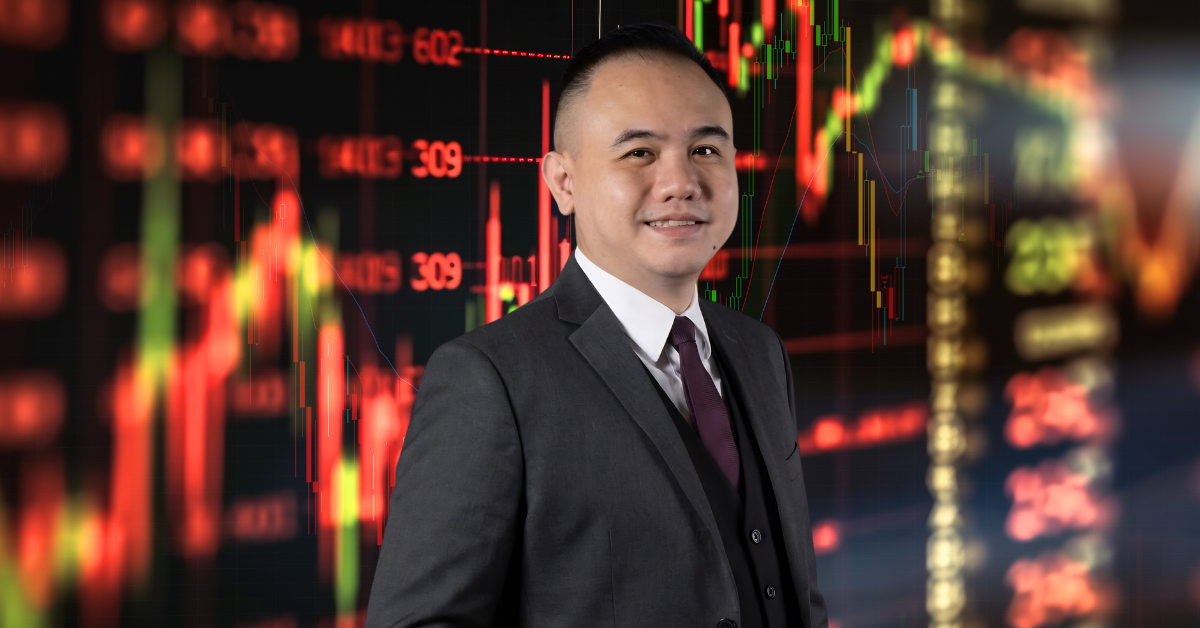
Speaking at the 3rd Market Traders Summit on March 21, 2026, organized by the Society of Technical Analysts Philippines, Goeyardi shared how his trading philosophy centers on identifying when markets are likely to move, not just where prices might go.
“Most traders focus on price,” he told participants during the summit. “But in trading, time is just as important as price.”
Goeyardi is the founder and CEO of Astronacci International, a research firm known for developing a method that combines astronomical cycles and Fibonacci analysis to forecast potential turning points in financial markets.
While the concept—often referred to as financial astrology—may sound unconventional, Goeyardi emphasized that his approach is not about predicting exact prices. Instead, it focuses on identifying periods when markets are statistically more likely to change direction.
In other words, traders should not only ask “Where will the market go?” but also “When is the market likely to move?”
A Different Way to Look at Markets
Goeyardi’s approach emerged from years of studying market cycles and patterns. Early in his trading career, he realized that many strategies focused heavily on price targets but offered little guidance on timing.
That insight led him to develop what he calls “time trading.”
The concept is based on the observation that financial markets often move in cycles. Some of these cycles are tied to economic trends, while others may be linked to broader behavioral patterns among investors.
By studying historical data and combining it with astronomical cycles—such as lunar phases and planetary alignments—Goeyardi attempts to identify windows of time when markets may be more likely to reverse direction.
“Price tells us what the market is doing,” he said. “Time tells us when the market may change.”
Lessons for Traders
During the summit, Goeyardi shared several lessons he believes traders should understand if they want to improve their decision-making.
One of the most important, he said, is that no single tool should be used in isolation.
Even though his research includes planetary cycles, Goeyardi emphasized that traders should combine multiple approaches—such as technical analysis, trend analysis, and Fibonacci levels—to confirm signals before entering trades.
The goal is to increase the probability of success rather than rely on any one indicator.
He also cautioned traders against trying to predict every market move. Instead, he encourages focusing on high-probability setups, where both price patterns and timing cycles align.
Another key lesson is patience.
Markets do not move in straight lines. Trends often unfold over time, and waiting for the right conditions can be more effective than constantly chasing trades.
Applying the Philosophy to Markets
During the summit, Goeyardi demonstrated how time-based analysis could be applied to the Philippine Stock Exchange Index, as well as several large Philippine companies.
Rather than attempting to predict precise price levels, he focused on identifying periods when markets might experience higher probabilities of reversal or volatility.
These windows, which he refers to as “vibrational dates,” serve as reference points for traders to monitor market behavior more closely.
When these timing signals align with traditional technical indicators, Goeyardi believes they can help traders identify more favorable entry or exit points.
A Different Perspective on Market Analysis
Whether one fully agrees with financial astrology or not, Goeyardi’s broader message resonated with many participants at the summit.
Markets are complex systems influenced by economic data, investor psychology, and global events. Because of this complexity, no single model can explain every price movement.
But exploring different ways of analyzing markets can sometimes lead to useful insights.
For Goeyardi, the key takeaway for traders is simple: understanding when markets are likely to move can be just as valuable as predicting how far they will go.
“Time and price must work together,” he said.
For traders navigating the volatility of financial markets—including those in the Philippines—that perspective may offer a reminder that timing can sometimes be the difference between an ordinary trade and a profitable one.

