

Close Menu

    Subscribe to Updates

    Get the latest creative news from FooBar about art, design and business.

    What's Hot

    He Once Feared Public Speaking—Now He Trains CFOs Across Asia

    August 20, 2026

    This Professor Says We’ve Been Thinking Too Small About Quality—Here’s What We’re Missing”

    August 20, 2026

    When AI Decides Who Gets a Job or a Loan, Who Should Be Responsible?

    August 20, 2026
    Facebook X (Twitter) Instagram
    Facebook LinkedIn
    Financial AdviserFinancial Adviser
    • Home
    • Success
      • Leadership & Growth
      • Entrepreneurship
      • Business Strategy
      • Inspiring Stories
    • Money
      • Investing
      • Personal Finance
      • Wealth Building
      • Financial Planning
    • Work
      • Career Development
      • Workplace Culture
      • Productivity & Efficiency
      • Management & Performance
    • Life
      • Relationships & Family
      • Health & Wellness
      • Mindfulness & Balance
      • Personal Growth
    • Inspiration
      • Vision & Purpose
      • Overcoming Adversity
      • Motivational Stories
      • Mindset & Motivation
    • Opinion
    Financial AdviserFinancial Adviser
    Home»Success»Entrepreneurship»How a Seaweed Trader Moved Up the Value Chain Into the Carrageenan Business
    Entrepreneurship

    How a Seaweed Trader Moved Up the Value Chain Into the Carrageenan Business

    FinancialAdviser.phJuly 8, 20264 Mins Read
    Share Facebook Twitter LinkedIn Email Copy Link
    Share
    Facebook Twitter LinkedIn Email Copy Link

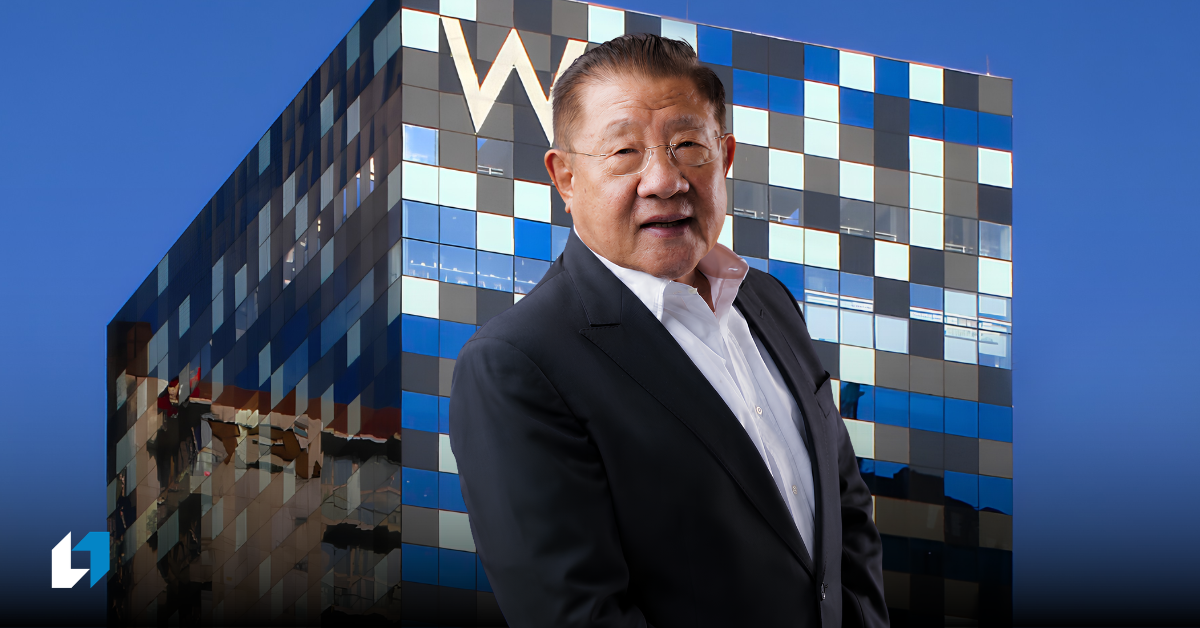
    Entrepreneurs often spend years searching for the next big opportunity, but sometimes it is hiding in plain sight. For Wee Lee Hiong, founder of W Hydrocolloids, Inc., the breakthrough came not from a laboratory, a consultant, or a business plan, but from observing his own customers. By taking the time to understand how overseas buyers processed the seaweed he exported, he discovered an opportunity to move up the value chain—from supplying raw materials to manufacturing carrageenan, a shift that would redefine the future of his business.

    “When we started the business in seaweed, I visited my buyers, sabi ko, ‘Anong ginagawa nyo sa seaweed?’ Nakita ko, aba, madali lang pala tangke-tangke lang and cooking lang eh. So when I went home, ginaya ko. Sabi ko pagawa mo kong tangke, but after that sabi ko, anong gagawin ko sa tangke?”

    That visit changed how Wee viewed the industry. He had entered the business as a trader, but seeing the production process showed him where most of the value was being created. Instead of remaining a supplier of raw seaweed, he began thinking about becoming a manufacturer of carrageenan, a processed ingredient that could command much higher prices.

    His response also reflected a practical form of entrepreneurial learning. He did not wait until he fully understood the technology before exploring the opportunity. He first identified the basic process, created the equipment he thought he needed, then looked for the expertise required to make the system work.

    “Luckily, there was this retiree na engineer from a friend in Japan. So I asked him to come to Zamboanga to teach us how to cook the seaweed. In six months, we were able to make carrageenan na for pet food.”

    The decision to bring in an experienced engineer was critical. Observation helped Wee identify the opportunity, but technical knowledge allowed him to turn it into a repeatable industrial process. This distinction matters because copying visible equipment is not the same as understanding formulation, temperature, timing, quality control, and consistency.

    Within six months, the company had moved from exporting seaweed to producing carrageenan. That shift represented a major upgrade in the business model because processed products usually offer stronger margins, greater control, and more defensible customer relationships than raw commodities.

    “And yung mga multinational naman were selling it for $12. My cost was only $2 at that time, so I looked for a market naman, and I was offering it at only $4. They were surprised—‘That’s impossible, Mr. Wee ah. You must be losing money?’ Sabi ko, but I’m already making 100 percent.”

    The numbers revealed the strength of Wee’s cost advantage. He did not need to charge close to the multinational price to earn an attractive return. By selling at $4 against a market price of $12, he could offer customers a compelling reason to switch while still doubling his production cost.

    This gave him more than a pricing advantage. It gave him strategic flexibility. A lower cost base allowed the business to enter markets aggressively, absorb competitive pressure, and expand without depending on premium pricing.

    The story also shows why entrepreneurs benefit from understanding their customers’ operations, not merely their orders. By asking what buyers did with the seaweed after purchasing it, Wee discovered that the most profitable part of the value chain was happening beyond his own business.

    His breakthrough was therefore not simply about copying a production process. It was about recognizing where value was created, acquiring the knowledge needed to reproduce it locally, and using a lower cost structure to compete against much larger companies.

    By moving from seaweed trading into carrageenan manufacturing, Wee transformed the economics and long-term potential of the enterprise that would become W Hydrocolloids. His story demonstrates that one of the most powerful forms of innovation is not always inventing something new—it is recognizing where value is created and having the vision to move there first.


    Loading

    Previous Article“I Put All My Savings on the Line”: How Ever Bilena Started With One Product and an All-In Bet
    Next Article In 1889 Rizal Asked a Dangerous Question: What Will the Philippines Become in 100 Years?

    Related Posts

    Entrepreneurship

    Why Echelon Philippines 2026 Wants Entrepreneurs to Move Beyond AI Hype

    August 19, 2026
    Entrepreneurship

    Before Angel’s Burger Took Off, Its Founders Tried Other Food Businesses

    August 19, 2026
    Entrepreneurship

    Bruno’s Barbers Started With No Feasibility Study—Just One Simple Question

    August 12, 2026
    Add A Comment

    Comments are closed.

    ATRAM AI Banner Ad
    Stay In Touch
    • Facebook
    • Twitter
    • LinkedIn

    Subscribe to Updates

      Get the latest updates from Financial Adviser about financial literacy and business acumen. Subscribe to our mailing list!

      By checking this, you agree to our Data Privacy Consent/Agreement and accept our use of such cookies.
      I agree to the Terms and Conditions

      Facebook X (Twitter) LinkedIn RSS

      Home

      Sucess

      • Leadership & Growth
      • Entrepreneurship
      • Business Strategy
      • Inspiring Stories

      Money

      • Investing
      • Personal Finance
      • Wealth Building
      • Financial Planning

      Work

      • Career Development
      • Workplace Culture
      • Productivity & Efficiency
      • Leadership & Management

      Life

      • Relationships & Family
      • Health & Wellness
      • Mindfullness & Balance
      • Personal Growth

      Inspiration

      • Vision & Purpose
      • Overcoming Adversity
      • Motivational Stories
      • Mindset & Motivation

      Contact Us

      Subscribe to Updates

        Get the latest updates from Financial Adviser about financial literacy and business acumen. Subscribe to our mailing list!

        By checking this, you agree to our Data Privacy Consent/Agreement and accept our use of such cookies.
        I agree to the Terms and Conditions

        Copyright © 2026 Financial Adviser. All rights reserved.

        • Privacy Policy

        Type above and press Enter to search. Press Esc to cancel.

        FINANCIALADVISER.PH USES COOKIES TO ENSURE YOU GET THE BEST EXPERIENCE WHILE BROWSING THE SITE.

        By continued use, you agree to our Data Privacy Consent/Agreement and accept our use of such cookies. For further information, click the link Data Privacy Consent/Agreement.