

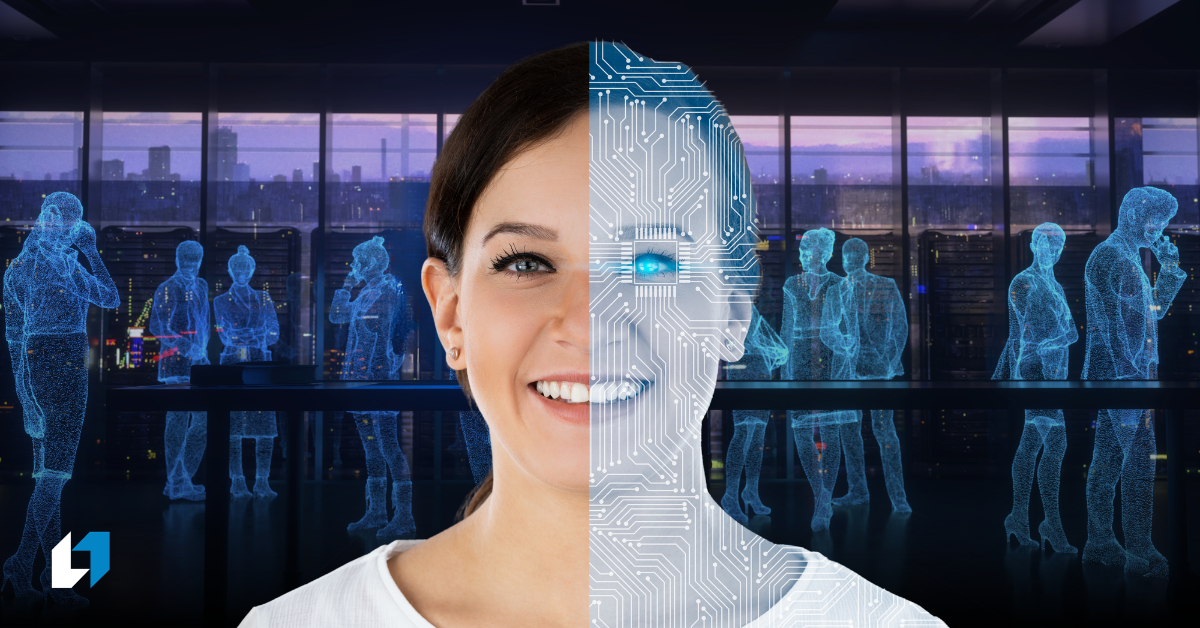
For most of human history, seeing was believing. A photograph served as evidence. A video recording captured reality. A person’s voice provided assurance that a message was authentic.
Artificial intelligence is beginning to challenge those assumptions. Today, AI systems can generate realistic images, create convincing videos, clone human voices, and produce written content that is often difficult to distinguish from material created by people.
As these capabilities continue to improve, a new question is emerging: Can we still trust what we see online?
In a recent interview with Financial Adviser PH at ATxEnterprise 2026, Professor Ian McLoughlin of the Singapore Institute of Technology warned that trust may become one of the most important challenges of the AI era.
Unlike many discussions about artificial intelligence that focus on productivity and automation, McLoughlin is also involved in online safety research. He serves as a theme lead and principal investigator within Singapore’s Centre for Advanced Technologies in Online Safety, or CATOS, where researchers study misinformation, disinformation, scams, and other digital threats.
The Age of Synthetic Reality
Artificial intelligence has dramatically lowered the cost of creating convincing content. A photograph no longer requires a camera. A voice recording no longer requires a speaker. A video no longer requires a physical event to have taken place.
While these technologies offer many legitimate applications, they also create opportunities for abuse. Fraudsters can impersonate individuals through cloned voices. False information can be supported by fabricated images. Fake videos can be used to manipulate public opinion, influence decisions, or damage reputations.
The challenge is not merely technological but psychological. People naturally trust what they can see and hear, and AI increasingly allows bad actors to exploit that instinct.
According to McLoughlin, this issue has become a major focus of research.
“We are developing technology to protect information, to detect faked information or misinformation and counter it.”
For countries like the Philippines, the risks are not theoretical. Filipinos have already encountered online investment scams, fake endorsements, manipulated social media content, and fraudulent messages designed to exploit public trust. As AI tools become more sophisticated, these threats are likely to become even more convincing.
Why Technology Alone Cannot Solve the Problem
Many people assume that if artificial intelligence can create fake content, another AI system will eventually be able to identify it.
The reality is more complicated.
As detection systems improve, so do the tools designed to evade them. The result is a continuous race between those attempting to deceive and those attempting to identify deception.
McLoughlin acknowledges this challenge directly.
“That technology cannot always be perfect, so some misinformation will always be present.”
This may be one of the most important observations in the AI debate. Many people assume that technological progress will eventually eliminate misinformation altogether. McLoughlin’s research suggests otherwise.
If misinformation cannot be eliminated entirely, society may need to focus not only on better technology but also on better judgment.
The New Importance of Critical Thinking
This is where McLoughlin’s work becomes particularly interesting.
Rather than focusing solely on detecting misinformation, some researchers are attempting to strengthen the public’s ability to resist it. He explained that certain projects aim to “inoculate” people against misinformation by teaching critical thinking skills that make them less susceptible to manipulation.
The concept is similar to a vaccine. Instead of trying to remove every piece of false information from the internet, researchers help individuals recognize common tactics used to spread misleading content.
The implications extend far beyond social media. Investors must evaluate financial claims. Consumers must assess advertising messages. Business leaders must verify information before making important decisions. Citizens must distinguish facts from misinformation in an increasingly crowded digital environment.
In many situations, the most effective defense may not be technology but judgment. As artificial intelligence becomes more powerful, critical thinking may become one of the most valuable skills people possess.
The Next Generation of Trust
While misinformation presents significant challenges, new technologies are also emerging to help verify authenticity.
McLoughlin highlighted the growing importance of C2PA, a global standard designed to establish the provenance and authenticity of digital content. The objective is to allow users to verify where content originated and whether it has been altered.
In the future, images, videos, and documents may increasingly carry digital credentials that help establish authenticity. Rather than relying solely on visual appearance, users may increasingly rely on verification systems that confirm the source and history of digital content.
Such developments could fundamentally change how trust operates online. Just as secure websites, digital signatures, and verification badges became commonplace in earlier phases of the internet, content authentication tools may eventually become standard features of the digital world.
Can Regulation Keep Up?
Technology alone cannot determine how artificial intelligence is used. Governments, businesses, educators, and society all play important roles in shaping its impact.
McLoughlin believes some degree of regulation will ultimately be necessary.
“Ultimately, some degree of regulation is needed, and this begins with an ethical framework and shared understanding of what is and what is not acceptable in terms of AI adoption.”
The challenge is finding the appropriate balance. Excessive restrictions could limit innovation, while insufficient safeguards could increase risks. As AI systems become more capable and more deeply integrated into everyday life, policymakers around the world will face increasingly difficult decisions.
At the same time, McLoughlin argues that ethics cannot be treated as an afterthought. Technology may advance rapidly, but society must still decide how that technology should be used.
Beyond Jobs and Productivity
Much of the discussion surrounding artificial intelligence focuses on economic questions. Will jobs disappear? Which industries will benefit? How can businesses improve productivity?
These are important issues, but McLoughlin’s research highlights another challenge that may prove equally significant.
The AI era may not simply transform how people work. It may transform how people determine what is true.
For centuries, trust was built largely through direct observation. People believed what they could see, hear, and experience for themselves. Artificial intelligence is making those assumptions increasingly difficult to maintain.
In the years ahead, the most valuable skill may not be the ability to create information. It may be the ability to evaluate it. And in a world filled with increasingly convincing digital content, society’s ability to distinguish truth from fiction may become one of its most important assets.

