

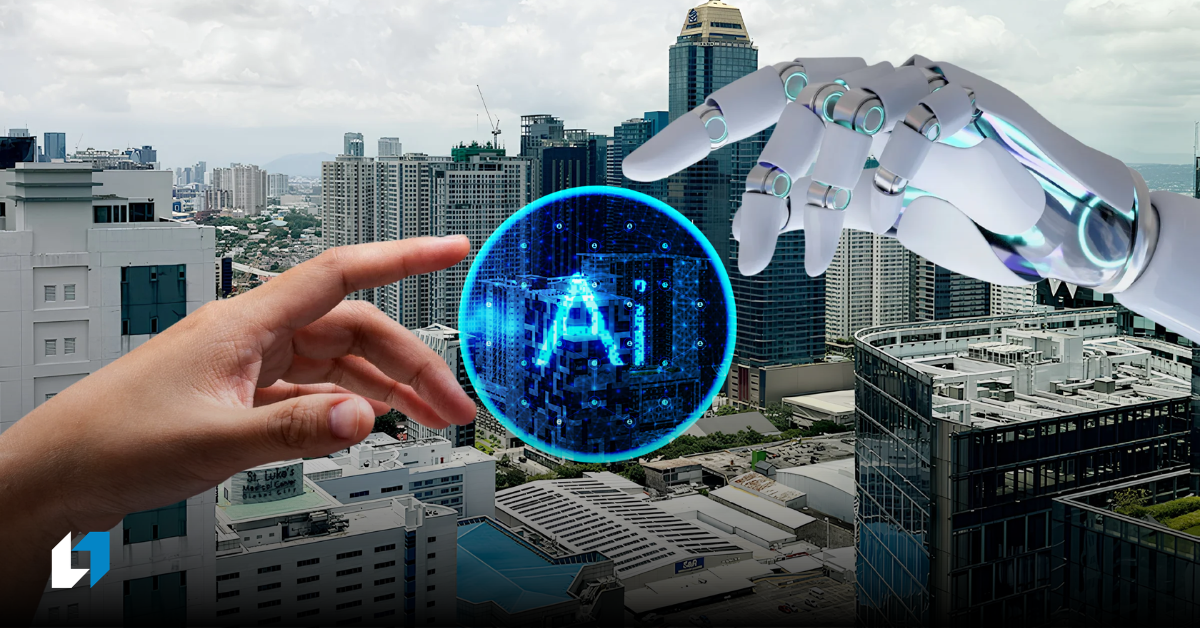
For years, discussions about artificial intelligence have focused on technology itself. New models, new applications, and increasingly powerful systems have dominated headlines around the world.
Yet for countries like the Philippines, the more important question may not be what artificial intelligence can do. The more important question is what it could mean for jobs.
The Philippines has built one of the world’s largest outsourcing industries. Millions of Filipinos work in call centers, business process outsourcing firms, administrative services, information processing, and other knowledge-based professions. These industries have become major contributors to economic growth and employment over the past two decades.
The rise of artificial intelligence is now forcing many businesses and workers to reconsider how secure those jobs may be in the future.
In a recent interview with Financial Adviser PH at ATxEnterprise 2026, Professor Ian McLoughlin of the Singapore Institute of Technology said he believes the transformation has already begun.
From Machine Learning to Artificial Intelligence
McLoughlin traces the origins of modern AI to a simple idea: creating systems that could learn from data rather than relying solely on rules programmed by humans.
He explained that machine learning originally emerged as a way to solve problems where human understanding remained incomplete or where precise mathematical descriptions were unavailable.
As he noted, machine learning can often infer “workable solutions” in situations where traditional approaches struggle.
Over time, however, these systems evolved from being merely a backup tool into approaches that often outperformed traditional algorithms. In McLoughlin’s words, machine learning evolved from a “second-class backup method” into technology capable of producing better solutions than conventional systems.
Today, artificial intelligence has evolved far beyond those early systems. In many cases, it is no longer simply helping people perform tasks. It is beginning to perform some of those tasks itself.
Lessons from the Industrial Revolution
To understand where AI may be heading, McLoughlin believes it is useful to look at an earlier technological transformation: the Industrial Revolution.
As he put it: “Old jobs => human. Currently => human + AI. Future => AI.” He believes the pattern is not entirely new.
“The same happened in the Industrial Revolution.”
Workers were eventually assisted by machines, and many tasks that once required human labor became increasingly automated.
The transition, however, also created new opportunities. As economies industrialized, new jobs emerged to build, operate, maintain, and manage the machines that transformed production.
McLoughlin believes AI could follow a similar path. “Much the same pattern could be expected from the advent of AI.”
The comparison is particularly relevant to the Philippines because many of the jobs that fueled the growth of the outsourcing industry fall into categories that artificial intelligence is beginning to automate.
Is the BPO Industry at Risk?
When asked which occupations are most vulnerable, McLoughlin’s answer was blunt.
He pointed to “menial information processing work” as among the areas most exposed to AI-driven disruption.
He added that “call centres” could eventually face similar pressures if AI becomes sufficiently cost-effective.
The impact, however, may not stop there.
McLoughlin noted that combining AI with robotics could eventually affect a much broader range of occupations, including transportation, security, maintenance, and other operational roles.
Such observations may sound alarming, particularly for a country that has invested heavily in becoming a global outsourcing hub. Yet McLoughlin does not believe the future is simply a story of disappearing jobs.
As with previous technological revolutions, new opportunities are likely to emerge alongside disruption.
The more immediate challenge is ensuring that workers develop the skills needed to work alongside AI rather than compete against it.
The Rise of the AI-Bilingual Professional
How should workers prepare for this transition?
One of the most important concepts emerging from Singapore’s workforce development efforts is what policymakers describe as AI bilingualism.
McLoughlin emphasized the importance of staying current with developments in the field.
As he noted, professionals should be “speaking the language of AI alongside your profession.”
This idea may have profound implications for Filipino professionals.
In the future, an accountant may need to understand both accounting and AI. A lawyer may need to understand both law and AI. Engineers, financial advisers, marketers, entrepreneurs, and managers may all face similar expectations.
Perhaps the most provocative observation from McLoughlin concerns hiring itself.
“The company would be hiring you plus AI and not just you.”
That single observation may capture the fundamental shift now taking place in the labor market.
In his view, employers may increasingly value a candidate’s ability to use AI effectively alongside traditional qualifications and experience.
If that prediction proves correct, many traditional assumptions about education and career development may need to change.
For decades, students were encouraged to focus primarily on academic credentials and technical knowledge. Those qualities will remain important, but they may no longer be sufficient on their own.
What Universities May Need to Teach Next
If the workplace is changing, educational institutions may also need to evolve.
Many schools continue to debate whether students should be allowed to use AI tools. Meanwhile, some universities are already integrating AI into virtually every area of instruction.
McLoughlin described how his institution has responded.
“All modules that we teach have an AI component. Essentially we teach students to use AI, and to use it ethically.
We keep track of what AI is being used in each profession that we are educating for, and equip students accordingly.”
While many institutions continue to treat AI as a potential threat to academic integrity, others increasingly view it as a professional tool that students must learn to use responsibly before entering the workforce.
The Two Skills That May Matter Most
Yet McLoughlin also warns against blind dependence on technology.
In his view, workers should embrace AI without allowing their own capabilities to deteriorate.
The future still belongs to people who possess uniquely human strengths.
When asked which skills will become more valuable in an AI-driven world, his answer was surprisingly simple.
“There are only two.
The first is the human touch, where a human is necessary or advantageous.
The second is AI mastery, the ability to design, use and employ AI well.”
That observation may ultimately provide the most useful framework for understanding the future.
As artificial intelligence becomes increasingly capable, many routine tasks may become automated. At the same time, human empathy, judgment, trust, creativity, leadership, and relationships may become even more valuable.
The future may therefore belong neither to humans alone nor to artificial intelligence alone. It may belong to those who can successfully combine both.
If so, the challenge facing Filipino workers may not be whether AI arrives, but how quickly they can adapt to it.
Learning to Surf the AI Wave
For Filipino workers, entrepreneurs, and students, the lesson is straightforward.
Artificial intelligence is no longer a distant possibility. It is already reshaping workplaces around the world.
Those who learn to use it effectively may gain a significant advantage. Those who ignore it may eventually find themselves competing not only against other workers, but against workers who have learned how to amplify their capabilities through AI.
McLoughlin offers a simple piece of advice.
“My advice for anyone would be to try out AI, get familiar with it, and remain familiar as it rapidly improves in the years ahead.
Don’t sink under the tidal wave of AI, instead learn to surf it by keeping abreast with the latest in your field.”
For the Philippines, that may be one of the most important challenges of the next decade.

