

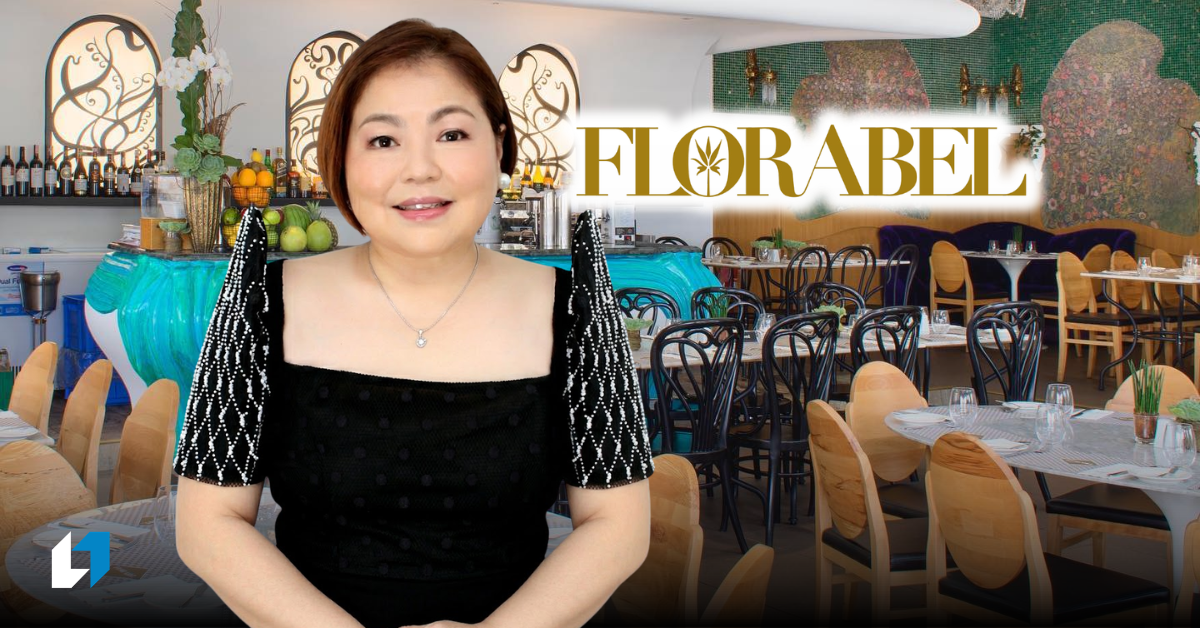
Long before Chef Florabel Co-Yatco opened her first restaurant, she took deliberate steps to determine whether she was truly ready to become an entrepreneur. While she already had years of professional kitchen experience, she understood that ownership required a different kind of discipline—one that went beyond cooking skills and technical knowledge. For her, the question was not whether she could cook well, but whether she could sustain the responsibility of running a business.
Even before committing to a restaurant of her own, she began cooking independently to test herself. “Bago pa ko nag-open ng restaurant, nagluluto-luto na ko sa bahay,” she says. What started as informal cooking soon became more structured. “Nagke-cater, cater na ako,” she adds, explaining that she gradually accepted catering work as a way to experience the pressures of delivering food consistently, on time, and to other people’s expectations. During that period, she also began preparing South Beach diet meals. “Ako nag-start nung South Beach diet meals (dito),” she recalls.
These efforts were not meant to grow into a large operation. They were small by design. The purpose was validation, not expansion. “Nagluluto-luto ako,” she says. “Tiningnan ko muna kung kaya ko.” For Co-Yatco, this phase allowed her to assess not just her technical ability, but her stamina, focus, and consistency. Catering and small food projects required planning, sourcing, execution, and follow-through—without the safety net of a formal restaurant structure.
She was careful not to confuse professional experience with readiness for ownership. Even with years spent working under respected chefs, she knew that entrepreneurship demanded a different mindset. “Kasi kahit mag-aral ka pa, iba ang experience,” she says. Running small, self-directed operations helped bridge that gap between working in a restaurant and being responsible for one. It forced her to confront real constraints—time, energy, and limited resources—before committing to something larger.
Despite growing confidence, Co-Yatco did not rush. She understood that readiness also depended on circumstances beyond skill. “Kasi my feeling was, I needed to learn how to operate a restaurant,” she explains. But more than that, she wanted a clear signal that the timing was right. “But the only sign that I wanted was finding a restaurant na okay yung rent.” For her, that condition mattered as much as culinary readiness.
After resigning from her previous role, she gave herself space rather than pressure. “So at that time, after resigning from Chef Jessie,” she recalls, “sabi ko mag re-restaurant na ko.” Even then, she did not act immediately. “It took me like mga one year pa na nagluto-luto,” she says. During that year, she continued cooking and observing, waiting for the right opportunity rather than forcing one. She was clear about her standards. “Sinabi ko na kailangan meron akong makitang lugar na okay talaga.” The space had to be practical and manageable. “Yung dapat maayos and walang problema.”
This period of waiting was not indecision—it was intentional. By testing herself through manageable commitments and refusing to rush into ownership, Co-Yatco refined her expectations of both the business and herself. When she finally moved forward, it wasn’t driven by pressure from others or excitement alone. It was grounded in experience she had already lived.
Chef Florabel Co-Yatco’s journey into entrepreneurship did not begin with a grand opening or a bold declaration. It began with quiet self-assessment. By cooking on her own, catering in small ways, and waiting patiently for the right conditions, she reduced risk without suppressing ambition. Her story highlights an often-overlooked truth: readiness for entrepreneurship is not something you announce—it is something you prove to yourself, through deliberate testing, restraint, and time.
This article includes quotes from an interview originally published by Esquire Philippines, authored by Henry Ong.

