

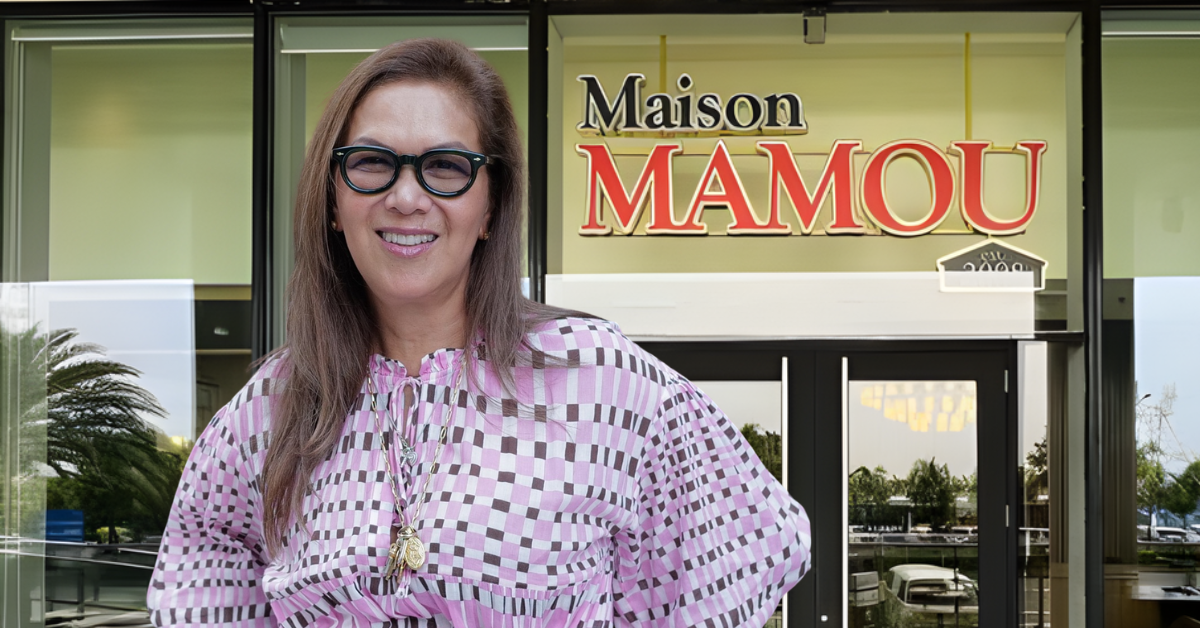
Before Mamou existed as a restaurant, its food already existed—in Malou Fores’ home kitchen. The dishes that would later define the brand were not designed for customers or menus. They were cooked for family, inspired by travel, and shaped by personal taste.
Malou recalls how travel became a consistent source of inspiration.
“Then, when we traveled, I would always cook something that I liked from my trips.”
What stood out to her were not trends, but specific meals that left an impression.
“For example, in California, there’s this restaurant that I really like—yung prime rib at Lawry’s—so I tried making Lawry’s at home.”
Cooking became a way to bring those experiences back with her.
“And after that, there were steaks. I really love steaks, like yung Peter Luger in New York, mga ganyan.”
Rather than following recipes formally, Malou relied on memory and instinct.
“Inuuwi ko yung idea, and then after that, I tried to replicate it at home.”
At this stage, cooking had nothing to do with business. It was part of daily life—something she enjoyed doing for people she cared about. The kitchen became a space for experimentation, repetition, and refinement.
Her husband, Oye Fores, describes how natural this habit was.
“My wife by nature really likes to cook.”
Weekends often revolved around food and company.
“She would cook for our family and friends. We would probably spend weekends, you know, when she would invite our barkada and cook for them.”
These gatherings were informal, but they created a feedback loop. Friends tasted the food, reacted to it, and kept coming back—not as customers, but as guests.
Despite the confidence she was building in the kitchen, Malou had no professional culinary background.
“It was a hobby of hers. She was un-schooled, not trained by a culinary school or anything like that.”
That lack of formal training would later shape Mamou’s identity. The food wasn’t meant to showcase technique or complexity. It was meant to feel familiar.
When Malou and Oye eventually discussed turning her cooking into something more, they framed it carefully.
“But when she decided she wanted to pursue and start this restaurant business, we thought, ‘Why don’t we try that as a concept?’”
The idea was not to open a restaurant that felt distant from its origins.
“Luto na galing sa bahay, not necessarily lutong bahay.”
The distinction mattered. The food came from home—not as comfort food, but as dishes cooked with intention and pride, without pretension.
For Oye, Mamou began as a low-pressure experiment.
“We saw it as pretty much a passion project—something na, sige, let’s try it. It’s a small place.”
There were concerns, even then, about what turning a hobby into a business would require.
“Actually, we thought it would be an issue because it would sort of curb our lifestyle.”
Travel had been a big part of their lives.
“We used to travel a lot back in the day.”
And they knew what opening a restaurant would demand.
“We knew that if she started a restaurant, it would be a 24/7 business, right?”
It wasn’t a decision taken lightly.
“It’s not something where you can just clock out at 5 p.m. or take off for a month or two on vacation, especially not in the beginning.”
Still, the food already had a clear identity. It wasn’t chasing novelty or fusion. It was rooted in memory—of meals eaten abroad, recreated at home, and shared repeatedly with the same people.
Long before Mamou opened its doors, its menu had already been tested—not in a commercial kitchen, but around a dining table. The concept wasn’t built on trends or training, but on lived experience.
Mamou’s food did not begin as a business idea. It began as a habit—one shaped by travel, refined through repetition, and validated by the people Malou cooked for long before anyone ever paid for a meal.
This article includes quotes from an interview originally published by Esquire Philippines, authored by Henry Ong.

