

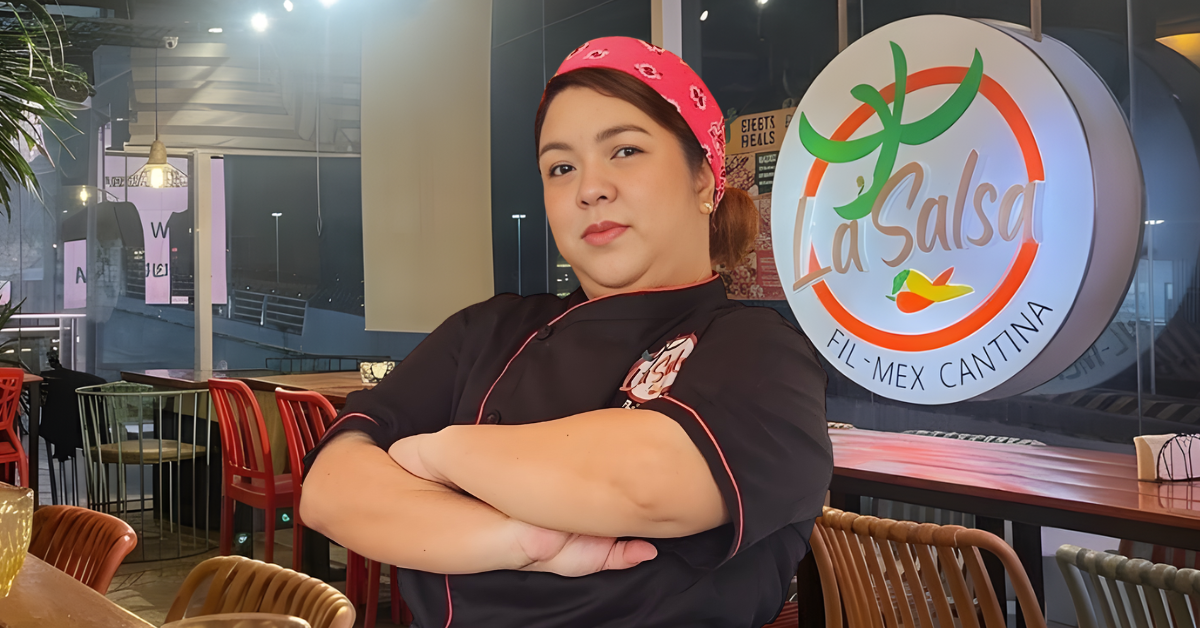
Long before she founded La Salsa FilMex Cantina, Atlee Chan’s entrepreneurial journey began in a small kitchen at home.
She was born in Zamboanga City but grew up in Cebu, where life was far from easy. Her mother worked hard to support the family, baking and cooking food to sell to coworkers. Watching that example shaped Chan’s work ethic at an early age.
“As the eldest, I learned to cook and bake to sell to our school,” she recalls. Even while she was still in elementary school, she was already preparing food and selling it to classmates.
What started as a necessity slowly became a passion.
Working her way through culinary school
When Chan entered college, she discovered that cooking was more than just a practical skill—it was something she wanted to pursue professionally. She enrolled in culinary studies, even though the tuition fees were difficult for her family to afford.
To pay for her daily expenses and help support her education, she worked nights as a call center agent while studying during the day.
After graduating, she gained experience working in restaurants and hotels. Those early years exposed her to the demanding realities of professional kitchens.
At the time, female chefs were still uncommon in many kitchens, and the work environment could be intense.
“Working in a restaurant proved to be far more demanding than I expected,” she says. Kitchens were hot, the hours were long, and the culture could be harsh.
But instead of discouraging her, the experience strengthened her resolve.
Chan admired the restaurant owners she worked for and began to imagine what it would be like to run her own place one day.
A first step into entrepreneurship
Her first opportunity came when two friends invited her to join them in starting a catering business.
They hired her as their chef and later made her a business partner. The experience gave her an introduction to the business side of food—something that would later prove invaluable.
Not long after, another turning point arrived.
Chan’s future husband encouraged her to move back to Zamboanga City. At first, she hesitated. She had already built her career in Cebu and was unsure what opportunities awaited her there.
But the move eventually became the foundation for a shared dream: opening their own restaurant.
With only modest savings from side ventures—Chan doing catering and her husband running a mobile bar—the couple decided to take the leap.
In 2011, they opened their first restaurant.
The operation was small and simple. Chan worked as the chef, supported by a kitchen helper and a dishwasher. Her husband handled bartending, cashiering, and waiting tables.
Even the restaurant’s equipment reflected their limited resources.
San Miguel supplied aluminum tables and chairs, Coca-Cola provided a refrigerator, and her husband’s parents helped with renovation materials and supplies. They even borrowed a home sound system for the restaurant.
Despite these humble beginnings, the restaurant survived—and eventually thrived.
Fifteen years later, that first restaurant, now called Pasta Mama, is still operating.
The risky birth of La Salsa
The idea for La Salsa FilMex Cantina emerged years later during the pandemic.
At the time, Chan was running Bigdawgs Bistro, another restaurant she had opened. When lockdowns began, food delivery platforms had not yet reached Zamboanga City.
Instead of waiting for customers to return, she improvised.
Many of her staff owned motorcycles, so she asked them to work as delivery riders.
Only a handful of restaurants in the city were offering delivery at the time, and demand quickly surged.
Orders poured in.
“We eventually needed around five to seven full-time riders each day to deliver everything,” Chan says.
As the restaurant grew, customers began asking for something new: tacos, quesadillas, burritos, and nachos.
But Chan realized that authentic Mexican flavors did not always match local taste preferences.
Her solution was simple but creative.
Instead of copying traditional Mexican recipes, she adapted them for Filipino palates—braising taco meats with flavors inspired by dishes like beef caldereta.
The fusion approach quickly became popular.
Starting again with limited capital
When the opportunity came to open a new concept restaurant, Chan decided to create La Salsa FilMex Cantina.
But launching the restaurant proved financially stressful.
“We had very limited capital when we started,” she says.
Trying to stretch her budget, Chan initially planned to do much of the construction work herself and avoided hiring professional planners.
As the opening approached, however, the costs piled up faster than expected.
Eventually, the budget ran out completely.
“I even got to a point where I had to break my piggy bank—yes, the real piggy bank where I drop my daily savings—just for me to be able to finish the construction,” she recalls.
To keep the project alive, she also borrowed funds from the daily earnings of her existing restaurant.
Suppliers played a crucial role in helping her get through the difficult period. Some extended favorable payment terms for initial stocks, trusting her reputation and business.
Looking back, Chan says the support she received during that time made a lasting impression.
Turning doubt into determination
Even as the restaurant was taking shape, Chan often questioned herself.
She had experienced failed businesses before, and the fear of disappointing investors weighed heavily on her mind.
“A lot of times I doubted myself,” she admits.
But the thought of giving up never lasted long.
She reminded herself that many people had placed their trust in her—investors, employees, suppliers, and customers.
“I didn’t want to fail the people who believed in me,” Chan says.
That determination became her driving force.
From a small cantina to a growing brand
Today, La Salsa FilMex Cantina has grown far beyond its modest beginnings.
The brand now operates through a mix of company-owned branches, franchising, and partnerships as it expands across the Philippines.
Chan’s long-term vision goes even further.
Her goal is to eventually bring the FilMex concept to international markets.
For someone who once had to break open a piggy bank just to finish building her restaurant, the journey is a reminder that entrepreneurship often begins with small, uncertain steps.
But for those willing to take those steps, those humble beginnings can grow into something much larger than imagined.

