

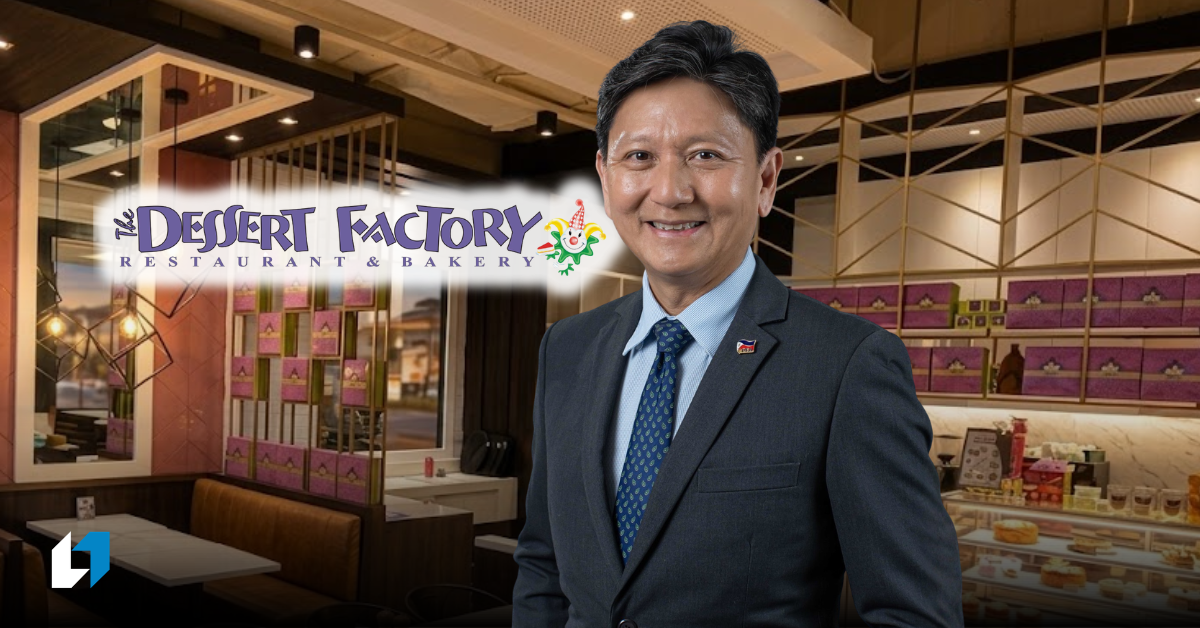
When Kenneth Lim decided to open a restaurant more than two decades ago, he did not begin with a grand business plan or a carefully mapped expansion strategy. The idea behind Dessert Factory started from something far more personal: the desire to build a stable future.
“Dessert Factory was started literally as a love project,” Lim recalls. “I wanted to marry my girlfriend at that time and I felt I needed to start something of my own to support a family. A restaurant seemed like a good idea to start at that time.”
What began as a practical decision to provide for a future family would eventually grow into a recognizable dessert and casual dining brand that has operated for more than 26 years.
Lim’s connection to food started long before he became an entrepreneur. He grew up in a household where cooking and baking were part of daily life.
“My mom is a terrific cook and baker which means I grew up eating really good food and cakes,” he says.
Those early experiences shaped his appreciation for quality ingredients and well-prepared dishes. Even as a student, Lim was already experimenting with entrepreneurship. During the holidays, he began selling cakes to friends and acquaintances, a small venture that hinted at what would eventually become his career.
After spending a short period in the corporate world, Lim realized that he wanted a different path.
“I eventually went to culinary school after a short stint in the corporate world,” he says.
The move into culinary training marked the moment when a hobby and interest began to turn into a profession.
Starting a restaurant, however, quickly proved to be far more demanding than Lim initially expected. In the early days of Dessert Factory, the operation was small, which meant that he had to perform almost every role in the business himself.
“The biggest initial challenge was keeping up with the demands of the business,” he explains. “I worked 18 hour days at the start—buying raw materials, baking, opening the store, manning a cooking station for lunch and dinner, then cleaning and closing the store.”
This experience reflects a reality that many first-time entrepreneurs encounter. In the early stages of a small business, there is rarely a clear separation between owner and employee. The founder must often become the baker, the manager, the purchasing officer and the cleaner all at once.
The intensity of those early years also taught Lim an important lesson about what it takes to survive in the restaurant industry: discipline and consistency.
While many food businesses attempt to attract attention through novelty or constantly changing menus, Lim focused on something simpler but harder to sustain—consistent quality.
“We are driven by the three P’s: Product, People and Place,” he explains.
For Lim, the first priority is the product itself.
“Product means sourcing the best quality ingredients at the best price and then preparing them in-store consistently,” he says.
Rather than outsourcing many components of the menu, Dessert Factory produces several items internally to maintain control over quality.
“By making as many items in-house such as our chocolate syrup, chili sauce, breads and even yogurt, we maintain quality and consistency.”
The second element of the framework is people.
“People means putting our customers and staff first,” Lim says.
In the restaurant business, customer loyalty is often shaped not only by food but also by service and relationships with staff. Employees interact with guests daily, making them a crucial part of the brand experience.
The third element is place.
“Place means keeping our stores in good shape,” he explains.
Clean, comfortable spaces reinforce the perception of quality and professionalism that customers expect from a dining brand.
These principles may sound straightforward, but maintaining them over decades requires discipline. Many restaurants struggle with consistency as they grow or expand into multiple locations.
For Dessert Factory, however, Lim says the commitment to consistency has remained central to the brand’s identity.
“Quality is paramount,” he says. “We have not changed our recipes and portion sizes in 26 years of operation.”
That philosophy highlights an important insight about long-lasting food brands. In an industry where trends change quickly and new concepts appear every year, longevity often depends less on constant reinvention and more on delivering the same reliable experience that customers expect.
The restaurant industry is notoriously competitive. Many establishments open with excitement but disappear after only a few years.
Lim’s experience shows that building a durable brand in this environment requires a combination of passion, persistence and operational discipline.
What began as a small “love project” intended to support a future family eventually evolved into a restaurant business that has survived more than two decades of changing consumer tastes, economic cycles and industry competition.
The story of Dessert Factory illustrates a lesson that many entrepreneurs eventually learn: successful businesses often start with simple motivations, but they endure only through years of consistent execution.

