

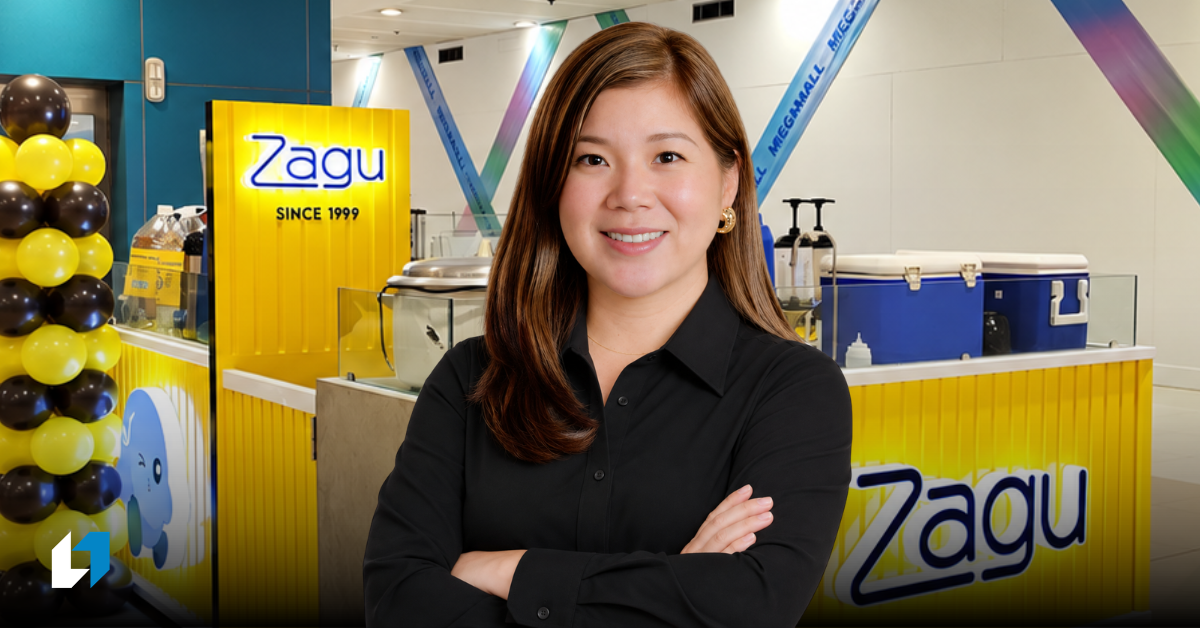
When Genevieve Lim-Santos first explored the idea that would eventually become Zagu, she wasn’t thinking about building a brand. She wasn’t even thinking about entrepreneurship. What she had was curiosity, exposure, and a question that kept coming back: could this work in the Philippines?
The idea took shape while she was still in Canada, spending time with friends in places that felt familiar and routine.
“So I found myself back in Canada again, and my friends and I would frequently visit bubble tea places. That’s where we would hang out, and we became so addicted to the boba.”
At first, it was simply a shared habit. But over time, the idea began to feel transferable.
“We thought, ‘This is good, parang this could work in the Philippines.’ Kasi we’re not foreign naman to sago—we have sago, right? The white one, so sabi namin, parang magcli-click ito.”
What made the concept compelling wasn’t novelty alone. It was familiarity. Lim-Santos saw a connection between what they enjoyed abroad and something already embedded in Filipino food culture.
Testing before committing
When she returned to Manila, Lim-Santos didn’t immediately launch a business. Instead, she looked for a practical, low-risk way to see if people would actually buy the product. That opportunity came through her family.
“So I came back again, and at that time, my Dad had acquired the operation of a coffee shop in Green Valley. We operated the coffee shop there.”
Rather than opening a standalone concept, she used the existing setup as a testing ground.
“Since we had a coffee shop, that’s where I test-marketed the drinks. I already had the materials kasi nag-uwi na ako.”
She didn’t overwhelm customers with options. She deliberately limited the offering.
“At that time, I was only preparing two flavors—Taro and Honeydew, so parang in-include lang nila sa menu and offered them to the bowlers, yung clientele lang ng bowling alley.”
The audience was small and specific, but that was the point. Lim-Santos wasn’t looking for scale yet—she was looking for signals.
The response was immediate and encouraging.
“The reception was very positive, which gave me more courage to pursue the business. They enjoyed the drink, na parang hinahanap-hanap nila.”
For Lim-Santos, that reaction mattered more than theory or market studies. Customers weren’t just curious—they were coming back.
“So ang feeling ko meron nga talagang potential yung product.”
Selling the idea before selling the product
Even before putting up a cart of her own, Lim-Santos tried to see if established food businesses would be interested in carrying the product. Her approach was simple: she would supply the drinks, and they would handle the selling.
“It was very interesting. In fact, even before I put up the cart, I was already offering it to some establishments, like Goldilocks.”
She remembers trying to explain the concept and gauge interest.
“I remember trying to sell them the idea, and then I would just supply the product to them.”
But the response revealed how unfamiliar the product still was at the time.
“Pero I remember one of them saying, ‘Black sago? Food na black?’”
The hesitation wasn’t about taste—it was about perception.
“They weren’t interested kasi it was something new, and people didn’t really eat black-colored food, especially 25 years ago.”
For many entrepreneurs, early rejection can be enough to stop an idea in its tracks. For Lim-Santos, it became part of the learning process. She had already seen real customers respond positively in a real setting, and that validation carried more weight than institutional hesitation.
From test product to business
What started as a simple menu addition in a coffee shop would eventually grow into Zagu, now a familiar name across malls and commercial centers in the Philippines.
Looking back, Lim-Santos’ approach reflects a disciplined way of building a business. She didn’t rush into branding or expansion. She tested the product where she could, with the resources she had, and paid close attention to how people reacted.
The idea wasn’t proven in boardrooms or pitch meetings—it was proven one cup at a time.
Her story highlights a lesson many aspiring entrepreneurs overlook: testing doesn’t have to be grand or expensive. Sometimes, it starts with two flavors, a small audience, and the willingness to listen.
And in her case, that was enough to begin.
This article includes quotes from an interview originally published by Esquire Philippines, authored by Henry Ong.

