

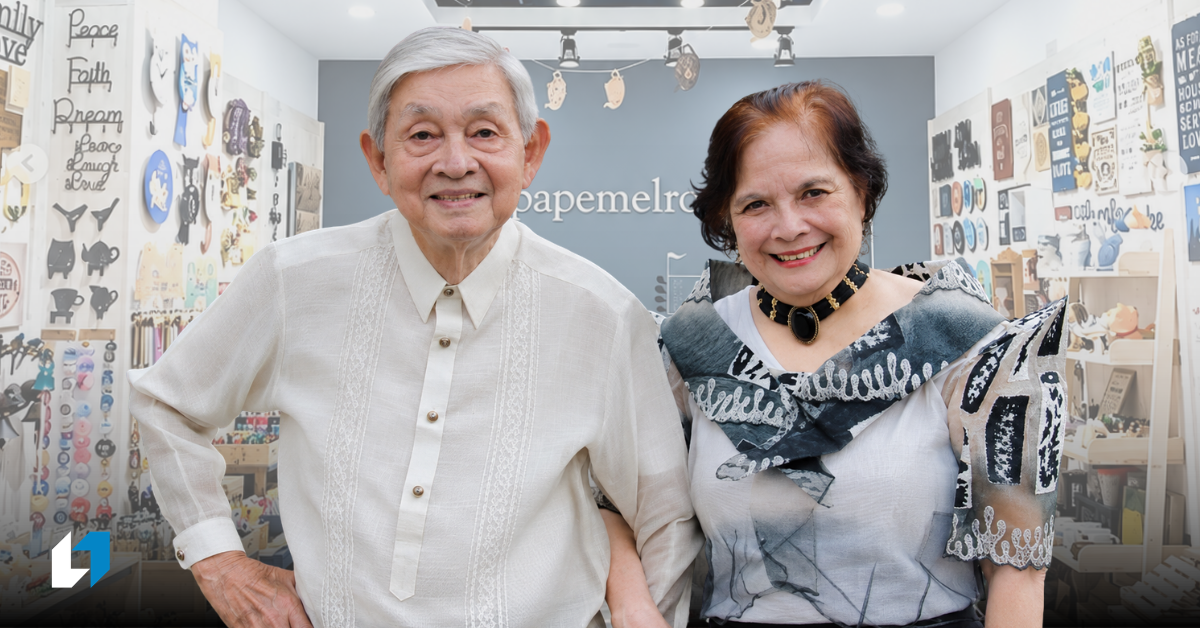
Papemelroti is known today for its handcrafted gifts, decorative pieces, and inspirational items found in malls and gift shops across the Philippines. But the business began as a small family effort built on creativity, experimentation, and resourcefulness.
According to Patricia “Patsy” Alejandro-Paterno, one of the children of the founders, the store’s early years were shaped largely by her mother’s creativity.
“My mom was very creative,” Patsy recalls.
In the beginning, the small store had very limited capital. Instead of purchasing large inventories of finished products, Patsy’s mother began making items herself using whatever materials she could find.
“She made things by hand—she would buy retasos, secondhand clothes, and use them to make stuffed toys,” Patsy says.
These handmade toys often reflected imaginative themes and familiar characters.
“Her stuffed toys were like Santa Claus with a sack filled with all sorts of things, or Goldilocks with the three bears.”
For many entrepreneurs, creativity becomes a substitute for capital. When a business does not have the resources to compete with larger stores, the founders often differentiate themselves through original products and handcrafted items.
That was exactly how Papemelroti began to develop its identity.
The early products were not always perfect.
“Eventually, she got into making figurines, although they were a bit distorted because she didn’t know how to make perfect ones yet,” Patsy says.
But perfection was never the priority in the early stages. What mattered was experimentation and the willingness to improve.
Many successful businesses begin this way. Founders create early versions of products, test them with customers, and gradually refine them over time.
The business also quickly became a family enterprise.
“The important thing was, we were always involved—us five siblings,” Patsy says.
As the store grew, each of the children became involved in helping the business in different ways.
“I’m Patsy, this is Peggy, and then there’s Meldy, Robert, and Tina.”
Family participation is common in many small businesses. In the early stages, when resources are limited, family members often become the first helpers, learning the business while contributing to its growth.
The store’s original name even reflected the partnership between the founders.
“The first store was named Corben, after my mom and dad’s name, Corit and Benny.”
During those early years, the business operated largely as a flexible buy-and-sell shop.
“It was very slow in the beginning because she would buy dolls na walang damit, then she would dress them up,” Patsy says. “It was a buy-and-sell business. All sorts. Kahit ano.”
This flexibility allowed the store to experiment with different products and gradually discover what customers liked.
Later on, Patsy’s father also began contributing more directly to the development of the business.
“And then my dad—before, it was easier to import—so he would import samples,” she says.
The imported products helped make the store more interesting and expanded its product selection.
“The store became quite interesting with all the imported goods like Fugal glass, art and text, miniature animals, Christmas décor.”
Over time, the business began to develop a clearer identity centered on gifts and decorative items.
“It was always for gifts and decorative accessories, which is what we continue today,” Patsy says.
Eventually, however, the family decided to focus more on locally made products.
“But later on, we stopped importing. Daddy took up ceramics—and we decided to do local. Local stuff.”
Patsy describes her father as someone who loved learning new crafts and exploring creative ideas.
“My dad likes learning things, starting things, new things.”
While he experimented with ceramics and other crafts, her mother continued developing the store’s product line. The combination of their strengths helped shape the creative direction of the business.
“He was the one who studied so they complement each other,” Patsy explains.
Together they began producing handmade items such as wooden figurines—many of which remain part of Papemelroti’s product offerings today.
“They made wood pieces for figurines so the things that we used to sell before, a lot of them, we still sell now.”
Looking back, Papemelroti’s growth reflects how many family businesses evolve—not through large investments or formal strategies, but through creativity, experimentation, and the combined efforts of family members.
What began as a small family store eventually grew into a brand known for its handmade gifts and decorations, built on the creativity and collaboration of the people behind it.

