

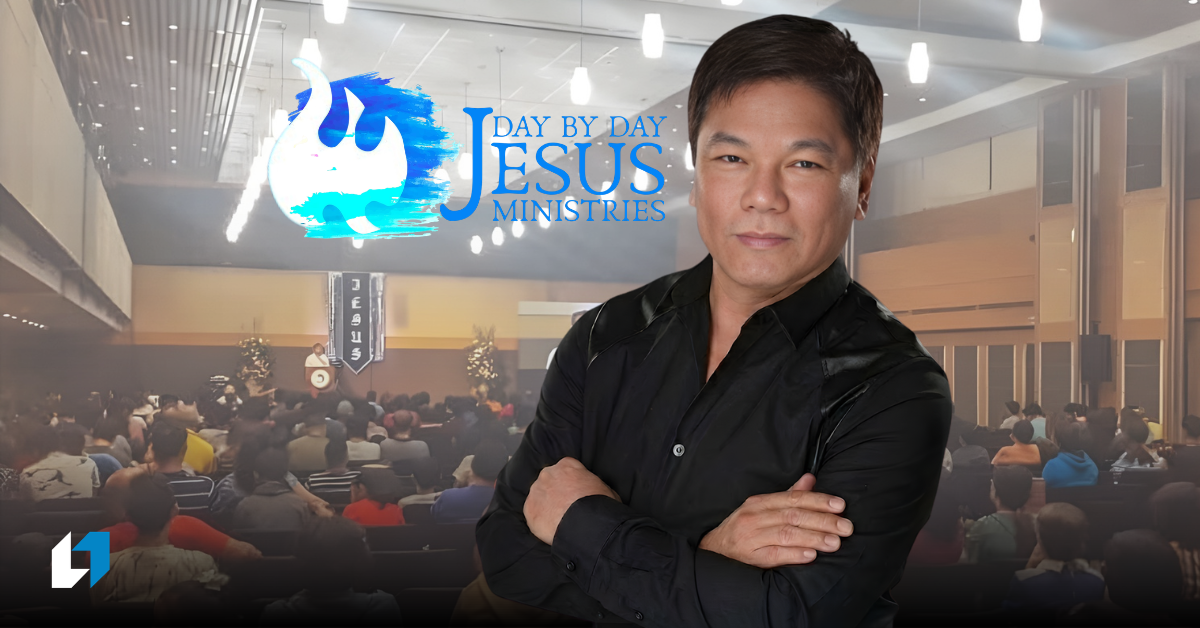
By the time Ed Lapiz was 39, he was already leading a fast-growing congregation. Day by Day Jesus Ministries was thriving, spreading across the Philippines and abroad. But instead of settling into success, Lapiz did something unexpected: he went back to college.
“I was 39 and I went back to college as a sophomore,” he told Financial Adviser PH. “For a while I thought I’d be a UP dropout forever.”
It had been more than a decade since he last attended classes at the University of the Philippines. Still, he returned, determined to finish what he started.
Going back, starting over
Lapiz enrolled in Philippine Arts at UP Diliman, balancing full-time ministry with university life.
“I did bachelor’s, then I thought, why don’t I do MA? So I did master’s in Philippine Studies. Then PhD in Philippine Studies. History, arts, culture, social issues, politics,” he recalled.
His return wasn’t about chasing prestige or credentials. “I didn’t go to school to make a degree,” he explained. “It just happened that I made a degree.”
The need to be among “people who think”
So why did he go back? For Lapiz, it was about sharpening his mind and immersing himself in new environments.
“I had a personal need to be in the same room with people who think,” he said. “I needed to be among academicians who problematize society and culture and find solutions. I don’t get that in the religious community. So I had to be in the university.”
This hunger for intellectual engagement drove him to complete not just a bachelor’s degree, but also a master’s and a PhD.
Learning outside the box
Lapiz’s academic journey also shaped how he read scripture and taught others. Unlike many pastors, he never went to seminary.
“I think that my strength is that I never went to any religious school,” he said. “I intentionally did not because I did not want to be strongly influenced by any sectarian thinking. That’s why I could approach scripture from a fresh perspective. I never really got into the box to begin with.”
For him, academic training — history, culture, politics — gave him tools to think critically and independently. “Because I’m a historian, I’m an academician. I write theses, I write dissertations. You would know how to problematize an issue, how to ask questions.”
Lessons for professionals and entrepreneurs
Lapiz’s story highlights a principle that resonates beyond ministry: knowledge is wealth. Even when he was already successful, he knew he needed to keep learning.
“I had no credentials. I had no need for it,” he said. “I had a need to learn. I had a need to discuss with brightness. That was a personal need.”
For professionals, entrepreneurs, and leaders, the lesson is clear: success is never the end of learning. Surrounding yourself with people who stretch your thinking is as valuable as any financial investment.
Lifelong learning as legacy
Looking back, Lapiz sees his academic journey not as a detour but as a vital part of his ministry and leadership.
“You cannot just stay in one environment,” he said. “You have to be with people who think. You have to problematize culture and find solutions.”
At 39, he went back to school. Decades later, that decision continues to shape how he teaches, leads, and challenges others to think differently.

