

In the fast-moving technology industry, market leadership rarely lasts long.
New competitors emerge, consumer preferences evolve, and innovation constantly reshapes the competitive landscape. Yet Acer Philippines has managed to maintain its position as the country’s No. 1 laptop brand for more than two decades.
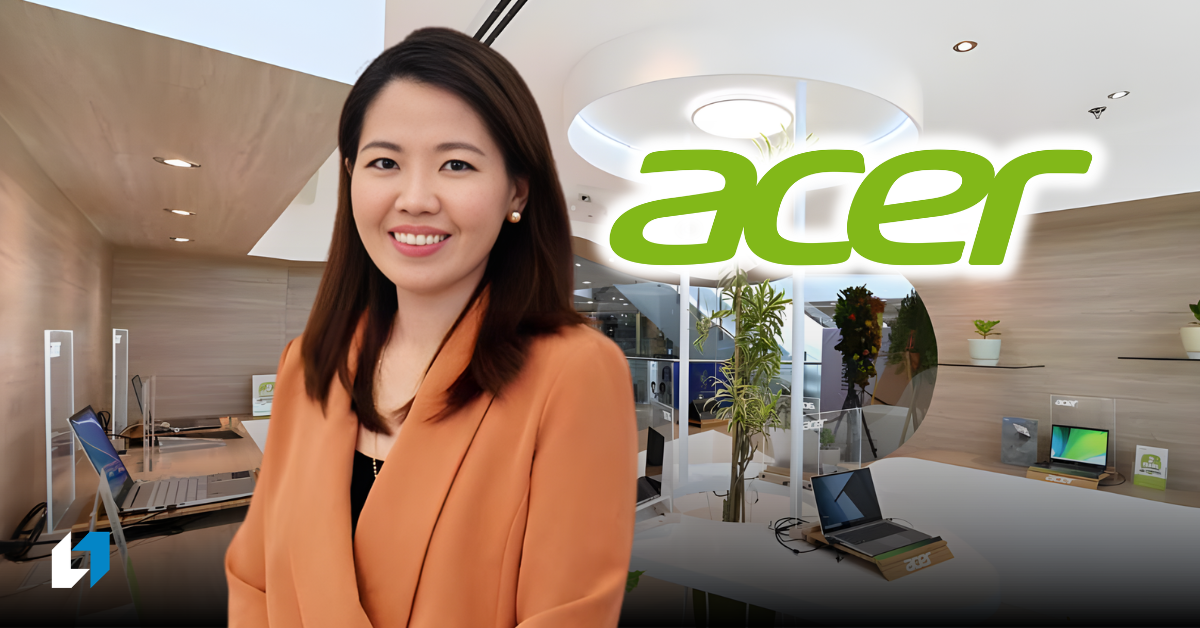
For Sue Ong-Lim, Managing Director of Acer Philippines, the company’s sustained leadership is not the result of a single breakthrough product. Instead, it reflects a long-term strategy built around three core principles: availability, accessibility, and affordability.
These principles—what Acer internally calls the “three As”—have guided the company’s approach to serving Filipino consumers across different market segments.
“Acer has been very deliberate in building and protecting its brand equity despite the ever-changing and highly competitive technology landscape,” Ong-Lim says.
The results speak for themselves. In 2025, Acer achieved a record-high market share of 37.3% in the Philippines, reinforcing its leadership in the laptop category.
Strategy #1: Availability
The first pillar of Acer’s strategy focuses on making its products widely available across the country.
Unlike many markets where distribution can be concentrated in a few major cities, the Philippines presents a unique logistical challenge. As an archipelago with thousands of islands, reaching customers requires a strong distribution network.
“Given that the Philippines is an archipelagic country, ensuring that our products are widely available across different regions has been critical to our success,” Ong-Lim explains.
To address this challenge, Acer invested heavily in building a nationwide ecosystem of retail partners, distributors, and technology stores.
The goal is simple: ensure that customers can easily find Acer products wherever they live.
By expanding its presence beyond major urban centers, Acer positioned itself to serve a broader customer base than many competitors.
Strategy #2: Accessibility
The second element of Acer’s strategy focuses on accessibility—making technology easier for more people to adopt.
Despite rapid digitalization, the Philippines still has relatively low personal computer penetration compared with many neighboring countries in Asia.
For Acer, this gap represents both a challenge and an opportunity.
“The country still has one of the lowest PC penetration rates compared to its neighboring countries in Asia, which means there are still unserved and underserved markets,” Ong-Lim says.
Bridging that gap requires more than simply selling devices.
Acer also invests in educating consumers about how technology can improve productivity, communication, and learning.
“Helping educate Filipinos as technology continues to evolve is important so they can better understand, adopt, and maximize the benefits of these innovations in their daily lives,” Ong-Lim explains.
By focusing on accessibility, Acer aims to ensure that technology becomes a practical tool rather than a luxury product.
Strategy #3: Affordability
The final pillar—affordability—does not simply mean offering the cheapest products in the market.
Instead, Acer focuses on delivering the right product at the right price for different types of users.
“It doesn’t mean simply offering cheap products, but providing the right products at the right price points for the right market segments,” Ong-Lim says.
These segments include students, professionals, gamers, creators, and general consumers.
By maintaining a broad portfolio, Acer ensures that customers can find devices suited to their specific needs and budgets.
This approach helps the company remain relevant across multiple demographics and use cases.
Adapting global strategies to local markets
As a global technology brand, Acer benefits from worldwide research, product development, and manufacturing scale.
But success in individual markets still requires adapting strategies to local conditions.
Ong-Lim describes Acer’s approach as “glocal”—combining global capabilities with local market insight.
“While we benefit from Acer’s worldwide product innovation and scale, our local team carefully studies the unique profile of Filipino consumers,” she says.
This includes understanding purchasing power, usage behavior, and evolving technology needs.
By combining global innovation with local market expertise, Acer is able to tailor its sales and marketing strategies specifically for Filipino customers.
Staying competitive in a rapidly evolving industry
Maintaining market leadership for more than two decades requires constant adaptation.
Technology trends continue to reshape how people use computers in their daily lives.
Laptops are no longer optional tools used only by professionals. They have become essential devices for work, education, communication, and entrepreneurship.
“Since the pandemic, laptops and PCs have evolved from being discretionary goods to becoming essential tools for work, education, and everyday productivity,” Ong-Lim says.
This shift has expanded the role of technology in Filipino households and businesses alike.
As more people study online, work remotely, or run digital businesses, the demand for reliable computing devices continues to grow.
The foundation of long-term leadership
In competitive industries, short-term victories are common. Sustained leadership is far more difficult.
For Acer Philippines, the combination of availability, accessibility, and affordability has helped create a durable competitive advantage.
The strategy focuses not only on selling devices but also on expanding digital access across the country.
The result is a brand that remains relevant to multiple generations of users—from students buying their first laptop to professionals building careers in a digital economy.
For Ong-Lim, the lesson is simple: long-term leadership is built not on a single product or campaign, but on consistently meeting the needs of customers.
When companies remain focused on those needs, growth often follows.

