

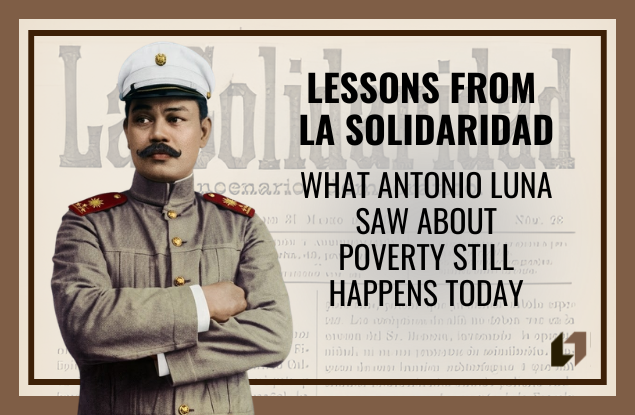
In August 1891, a short essay titled “Slow Death” appeared in the reformist newspaper La Solidaridad. Written under the pseudonym Taga-Ilog, widely associated with Filipino intellectual Antonio Luna, the piece tells a deeply tragic story about poverty, illness, and the quiet suffering of a family.
Unlike Luna’s other essays that mocked vanity or social hypocrisy, this story reads almost like a medical and social case study. It describes how financial hardship can slowly destroy a household—not through sudden catastrophe, but through a gradual decline driven by illness and lack of resources.
The tragedy begins with a widow named Julia and her daughter Paquita.
When Poverty Slowly Consumes a Family
Julia’s life had already been difficult. Forced into widowhood, she struggled to maintain her household and raise her daughter. Over time, financial pressures accumulated. Medical needs, education costs, and daily expenses slowly pushed the family into debt.
Luna describes how these pressures create a familiar downward spiral.
Social pride prevents families from openly admitting their hardship. Concern over “what would others say”, combined with rising expenses, gradually leads to financial ruin. As Luna writes, such circumstances often result in “extravagance, the unwise expenditure of allowances, and the family slips gradually… into the morass of debts and mortgages until it falls into the clutches of creditors.”
What begins as temporary difficulty slowly becomes financial collapse.
Illness Becomes the Final Blow
The true tragedy unfolds when Julia’s daughter Paquita becomes seriously ill. Her sickness requires proper food, medical care, and treatment—all things that cost money the family no longer has.
When Julia anxiously asks the doctor about her daughter’s condition, he gives what seems like simple advice:
“Good food — meat, plenty of meat and there is nothing to worry about.”
But the prescription reveals the cruel reality of poverty. The treatment may be simple, yet it is impossible for a family that can barely afford basic necessities.
Julia understands this immediately. She closes the door and rushes back to her daughter, realizing that the cure requires resources she simply does not possess.
A Disease Made Worse by Poverty
Luna describes Paquita’s illness in haunting detail. The young girl is pale, weak, and exhausted. Her body is slowly deteriorating, not only because of disease but because of the conditions surrounding her life.
He explains that illnesses like hers are common in large cities, especially among the poor. Poor nutrition, exhaustion, lack of sleep, and unhealthy living conditions weaken the body over time.
In one passage, Luna writes that these conditions “exist like poison ivy” in poverty-stricken societies.
The body slowly loses strength, the blood weakens, and the nervous system deteriorates. What might have been treatable in a healthier environment becomes fatal in a household without resources.
When Debt Replaces Compassion
The story reaches its most devastating moment when the family’s financial options finally disappear.
Medical bills begin to accumulate. The pharmacy refuses to provide medicine on credit. Even the doctor eventually abandons the patient, declaring coldly:
“I do not make calls for those who do not pay.”
Luna then asks a painful question: where are the friends who once expressed affection and concern?
“Where are the generous souls with outstretched hands and frequent expressions of love and regard?” he writes.
The answer is brutal. Friends vanish quickly “like peace-loving citizens… running away at the sound of musket fire.”
In moments of true hardship, social support often disappears.
The True Meaning of “Slow Death”
The title of the essay refers not only to illness but to the slow destruction of hope itself.
Julia watches her daughter weaken day after day. She knows that better food, clean air, and proper medical care might save the girl. Wealthy families could send their children to health resorts or spas where doctors recommend fresh air and nutrition.
But for Julia, those options remain distant dreams.
Poverty closes every door.
Why Luna’s Story Still Matters Today
Although Antonio Luna wrote “Slow Death” more than a century ago, the reality he described continues to affect many families today.
Across the world, financial vulnerability remains one of the greatest risks households face. Medical emergencies, loss of income, and unexpected expenses can quickly push families into debt. When savings and protection are insufficient, even treatable problems can become devastating crises.
Luna’s essay reminds us that financial security is not merely about wealth—it is about resilience.
The Financial Lesson Behind the Story
“Slow Death” ultimately shows how poverty can quietly destroy a family through a chain of small but relentless pressures: illness, debt, social pride, and disappearing support systems.
For modern readers, the story highlights the importance of preparation. Savings, insurance, and financial planning are not abstract concepts—they are tools that protect families during the moments when life becomes most unpredictable.
More than a century ago, Antonio Luna described how a young girl’s illness became fatal because her family lacked resources.
His story remains a powerful reminder that financial stability can mean the difference between recovery and tragedy.

