

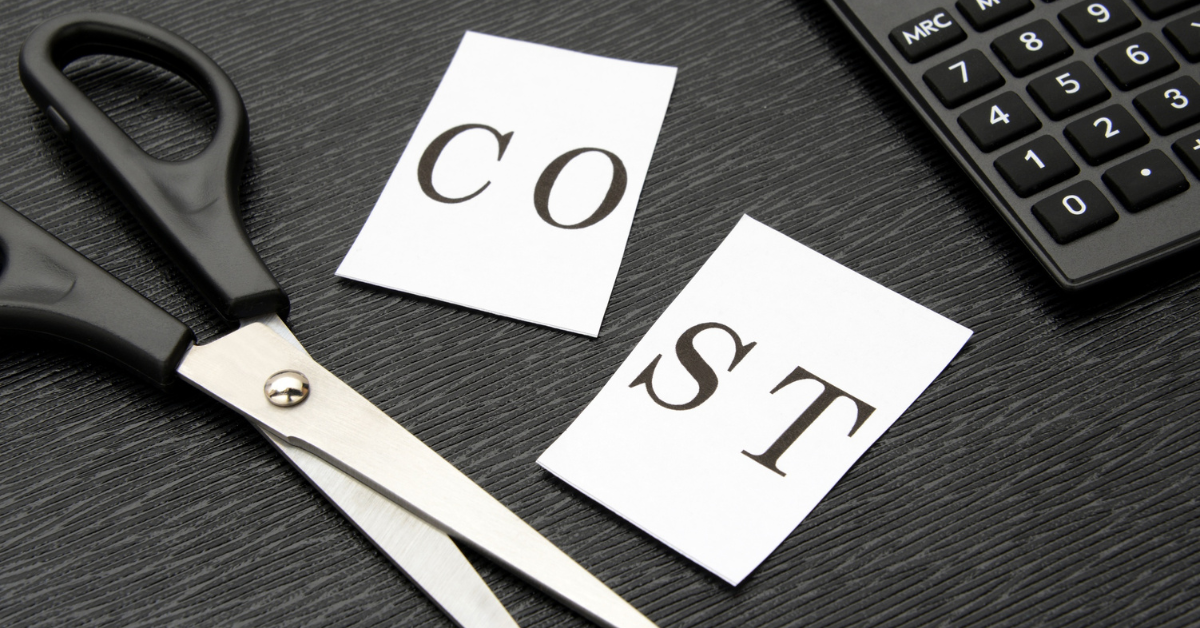
For decades, companies have been trained to believe that quality improvement is about eliminating defects, streamlining processes, and satisfying standards. But Rene T. Domingo, a respected operations consultant and adjunct professor at the Asian Institute of Management, says that’s not enough anymore.
“In principle, good quality should result in lower costs due to lower defects, returns, reworks, and inspection man-hours,” Domingo explains in an exclusive interview with Financial Adviser PH. “But these savings are often converted to profits and staff bonuses. Seldom are they translated into a reduction of the cost of goods and their prices to enhance their value for money and competitiveness.”
That’s why Domingo believes it’s time to rewrite the rules of quality improvement.
Why ‘Cut Cost’ Belongs in the Quality Playbook
Domingo proposes a bold revision to two of the most widely used quality improvement methodologies: PDCA (Plan-Do-Check-Act) and DMAIC (Define-Measure-Analyze-Improve-Control).
His take? Add “Cut Cost.”
“PDCA can be reformulated as Plan-Do-Check-Act-Cut Cost, and DMAIC as Define-Measure-Analyze-Improve-Cut Cost-Control,” he suggests.
Why the change? Because many companies treat cost management as an afterthought—after they’ve improved the product. But in today’s market, where buyers demand both performance and affordability, cost and quality must improve together.
What Happens to the Savings?
Let’s say your company improves its defect rate and reduces rework. That’s great. But Domingo warns that unless those savings are passed down to your customers through lower prices or better value, you’re not gaining a competitive edge.
“The sharing of quality cost savings with buyers is not explicitly incorporated into quality improvement programs,” he says. That’s a problem—especially in industries where customers are highly price-sensitive.
Companies must reinvest quality gains into pricing strategies, cost structures, and long-term customer relationships—not just into the bottom line.
Can You Cut Costs Without Cutting Corners?
Absolutely, Domingo says—but you have to do it right.
“Cutting costs does not mean cutting profits, nor does it mean cutting corners to cheapen the product and cheat customers,” he emphasizes. Instead, cost-cutting should be driven by removing waste, unnecessary features, and inefficiencies—not by lowering standards.
He points to proven tools like:
- Value Analysis / Value Engineering (VA/VE) – to eliminate non-essential product features
- Design for Manufacturing (DFM) – to simplify production
- Mistake-proofing (Poka-Yoke) – to reduce inspection costs
- Lean – to eliminate waste in processes
Each of these methods helps reduce cost without sacrificing quality or customer trust. The result? Products that are more affordable, more efficient, and more competitive.
Quality Isn’t Complete Without Cost Control
In the past, you could win by just making things better. Today, you also have to make them cheaper—without compromising your values.
“Quality improvement without a simultaneous improvement in costs and value for money may result in a vicious cycle of price discounting, sacrifice of margins, indiscriminate cost cutting, and cutting corners,” Domingo warns.
By baking cost efficiency into your quality programs, you don’t just improve your product—you improve your business.

