

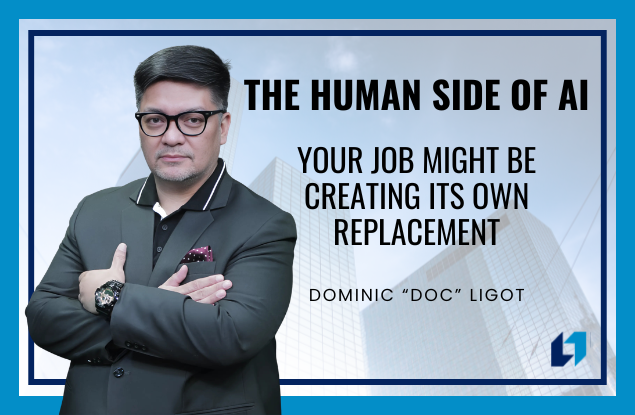
The future of automation may depend less on AI hype and more on how businesses capture and structure human knowledge.
For many workers, artificial intelligence feels like an approaching storm. Especially in industries built around repeatable processes, there is understandable concern about automation. But the truth is more complicated than the headlines suggest.
AI does not replace work automatically. It replaces work only after companies build enough data to accurately model how humans perform tasks. That distinction matters.
A powerful line from the CNA Insider documentary (check it out here: https://www.youtube.com/watch?v=7MVfAVnUF9Y) captures this tension clearly: “I help improve the work of AI and now the AI replaced my job.”
That statement reflects an uncomfortable reality of modern automation. The same workers performing tasks today may also be generating the data needed to automate those tasks tomorrow. In many BPO and customer service environments, this process is already happening.
As the documentary explains:
“Recordings of real help desk calls have been used to train AI on how to respond to customer requests.”
This is how machine learning develops practical capability. AI systems study human examples. They identify patterns. They learn workflows. They simulate responses. Over time, enough data allows companies to model processes with increasing accuracy. Only then does viable automation become possible.
This is why the bridge between simulation and automation is data. Without comprehensive and reliable data, AI systems remain limited. This is also why not every BPO role disappears overnight.
Many operational environments still contain too much complexity, inconsistency, and human nuance for full automation. Customers behave unpredictably. Business rules change. Systems fail. Emotions shape conversations. Human judgment still matters.
As a result, the future of work will likely involve gradual augmentation rather than immediate replacement. AI may automate repetitive tasks while humans continue managing exceptions, escalation, and relationship-building. The same principle appears beyond customer support.
Those CAPTCHA systems that ask users to identify traffic lights or pedestrian crossings? Most people viewed these as simple security tools. But they also helped train object detection systems. Humans labeled the world first. Machines learned from those labels later.
This pattern appears repeatedly across AI development. Human activity creates data. Data enables machine learning. Machine learning enables machine doing.
From a business perspective, this has major implications. Organizations with strong operational data may gain advantages in AI adoption. Companies that can accurately document workflows, capture interactions, and structure process knowledge will likely move faster toward automation.
At the same time, businesses must think carefully about workforce transition. Employees are no longer simply labor inputs. Their behavior, decisions, and interactions may become long-term strategic assets for machine learning systems. That creates ethical and economic questions about transparency, retraining, and value creation.
For financial leaders and business managers, the key lesson is this: AI success depends less on futuristic promises and more on operational discipline. The organizations best positioned for automation may not be those with the most advanced AI models. They may be the ones with the best data foundations.
The future of AI will not arrive through magic. It will arrive through millions of captured examples of how humans work.
And once those examples become structured enough, machine learning slowly becomes machine doing.
Dominic “Doc” Ligot is one of the leading voices in AI in the Philippines. Doc has been extensively cited in local and global media outlets including The Economist, Channel News Asia, South China Morning Post, Washington Post, and Agence France Presse. His award-winning work has been recognized and published by prestigious organizations such as NASA, Data.org, Digital Public Goods Alliance, the Group on Earth Observations (GEO), the United Nations Development Programme (UNDP), the World Health Organization (WHO), and UNICEF.
If you need guidance or training in maximizing AI for your career or business, reach out to Doc via https://docligot.com.

