

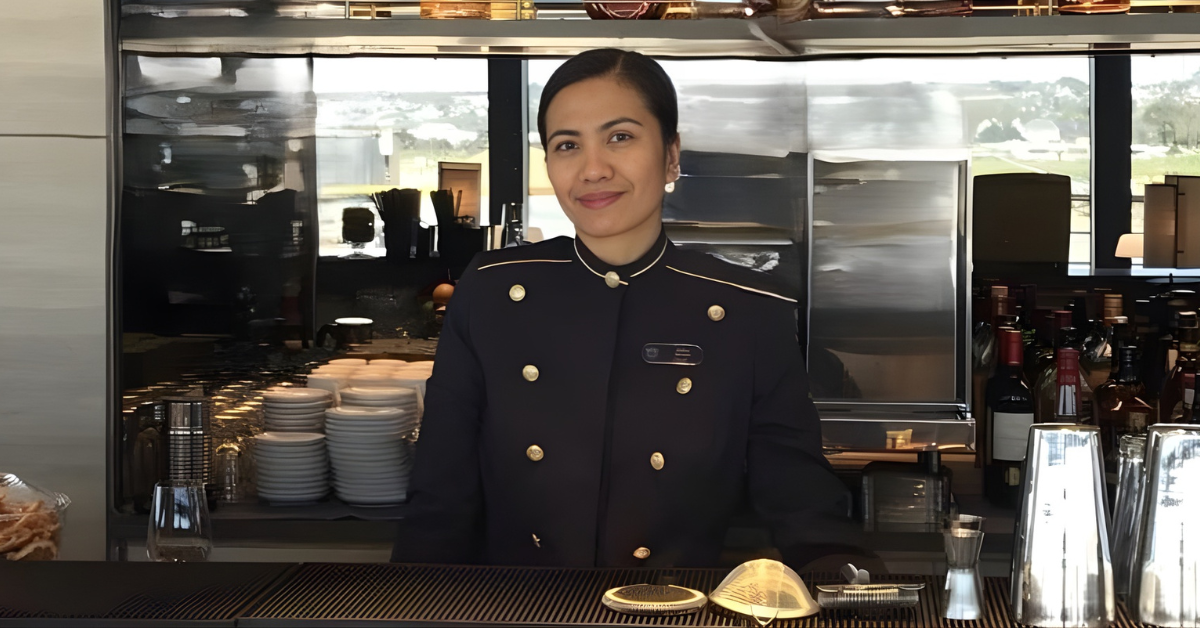
The tourism and service industries thrive on movement—busy shifts, unpredictable hours, and constant interaction with people. For Juriz Andrea Malinao, a Certified Hospitality Professional, that fast pace was once her everyday reality. She worked in an environment that demanded sharp instincts, teamwork, and the ability to perform under pressure. But over time, she realized that the skills she was building could serve a different purpose—one that went beyond the bar and into the classroom.
Her career journey reflects a belief she holds strongly today: adaptability and learning are not just survival tools, they are engines for growth.
Learning to thrive in fast-moving environments
Malinao describes tourism and service work as environments that test professionals daily. Success, she explains, depends on more than technical competence. “The tourism and hospitality industries are characterized by dynamic, fast-paced environments,” she says, where “competence, knowledge, teamwork, and adaptability emerge not only as essential skills but as fundamental pillars of a resilient and high-performing workforce.”
Working in such settings taught her how to respond quickly, collaborate effectively, and remain composed even under stress. These experiences shaped her mindset early on and became skills she would later bring into leadership and education.
Staying competitive by staying open
Rather than relying on routine, Malinao learned to lean into change. She credits her ability to stay competitive to her openness to growth. “My willingness to learn and adapt in a fast-paced environment… is an essential skill for success,” she says, adding that adaptability and continuous learning together become “a powerful engine for both personal and professional growth.”
That mindset would eventually guide one of the most important decisions of her career.
A piece of advice that changed her direction
While serving as a panel member at a research symposium, Malinao received advice that stayed with her. The lead panelist—who was also part of her master’s thesis defense committee—encouraged her to think long-term. His words were simple but impactful: “A PhD will open doors of opportunities.”
Now pursuing a Master of Research Studies in Australia, she says that advice continues to shape her plans. What began as a suggestion became a serious consideration—one that reframed her view of what was possible beyond frontline service roles.
From bartending to the classroom
The transition from bartending to academia was not an easy one. Moving into a university teaching role required a complete shift in rhythm and responsibility. “Moving from the fast-paced world of bartending to the academic setting of a university professor was a significant shift,” she says.
Suddenly, she was designing modules, creating assessments, and standing in front of a classroom—tasks far removed from her previous environment. The adjustment was demanding, but she found meaning in applying lived experience to theory. Teaching, she discovered, allowed her to translate real-world lessons into learning moments. Over time, it became deeply fulfilling.
Why people—not facilities—define great service
Despite her move into education, Malinao remains grounded in what she believes is the heart of service-driven careers. “In the hospitality and tourism sector, the essence of a memorable guest experience lies not just in the quality of the facilities, but in human interaction,” she explains.
For her, a standout professional brings more than credentials. A “pleasing personality,” she says, marked by warmth, intelligence, and confidence, becomes an indispensable asset in connecting with people and delivering meaningful experiences.
Leading through example and accountability
As a leader, Malinao emphasizes people management—especially in high-pressure environments. She believes leadership must be visible and grounded. “The ability to handle pressure, inspire their team, and lead by example,” she says, is what ultimately drives employee satisfaction and exceptional service.
When conflict arises, she intentionally shifts conversations away from blame. “Communication must shift from focusing on problems to collaboratively finding solutions,” she explains, creating an environment where team members feel safe addressing concerns constructively.
Inspiring performance, for her, starts with example. “I inspire the team by leading as an example,” she says, emphasizing consistency, strong work ethic, and customer-first thinking. By encouraging idea-sharing and continuous learning, she fosters a team culture that evolves rather than stagnates.
Recognizing effort—even when outcomes fall short
One leadership lesson stands out in her journey: recognition matters, regardless of results. “Recognizing the effort of your team, regardless of the outcome,” she says, helps people feel valued. Acknowledging long hours and dedication builds resilience and encourages learning rather than fear of failure.
This philosophy guided one of the toughest decisions she made as a leader. When mistakes occurred, she chose accountability over deflection. “To protect my team, I took responsibility for their mistakes,” she says. What followed was not punishment, but reflection—open discussion on what went wrong and how to improve moving forward.
Balancing performance with well-being
For Malinao, employee well-being and organizational success are inseparable. “Employee satisfaction is crucial for business success,” she says, especially in service-driven industries where experience defines reputation. Motivated, well-trained teams deliver better service, which leads to trust, loyalty, and long-term growth.
Looking back, her journey—from bartending to teaching—reflects a broader truth about modern careers. Skills gained on the frontline do not lose value when roles change. Instead, when paired with learning, accountability, and purpose, they open doors to entirely new paths.
And for Malinao, the decision to step into education was not a departure from her past—it was a continuation of it, shaped by experience and guided by growth.

