

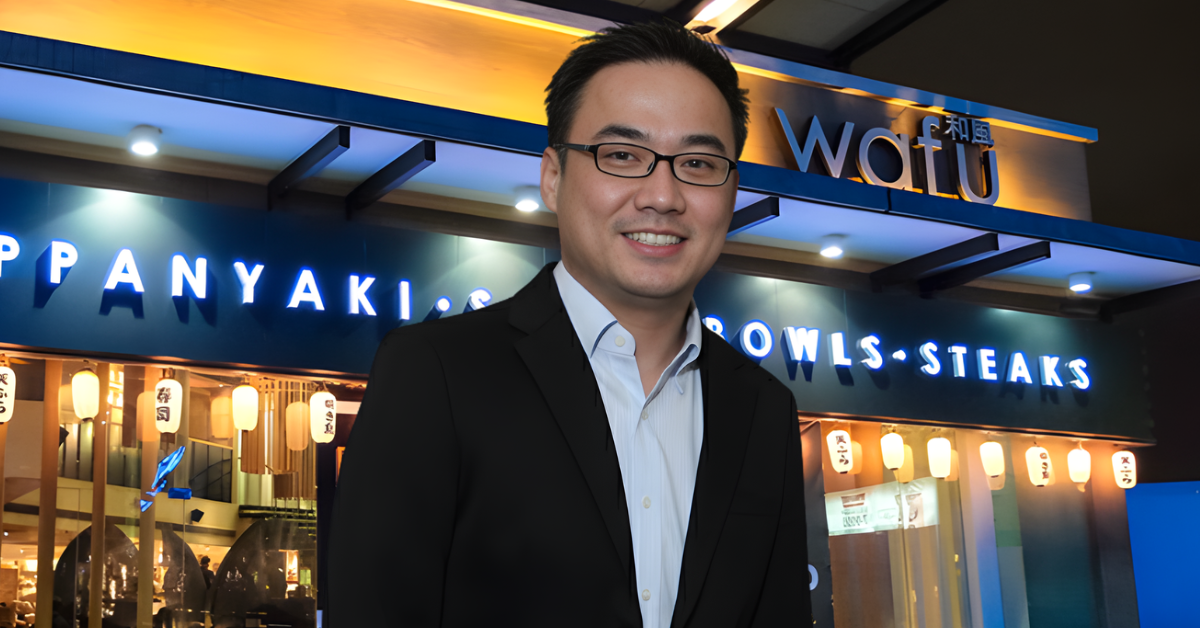
When entrepreneur Brian Tiu launched Wafu, an upscale Japanese restaurant in Greenhills, he envisioned it as a refined take on modern Japanese cuisine. The interiors were sleek, the food presentation was intricate, and the concept leaned toward the Nobu-style fusion experience.
But after five years of operating, Tiu quietly shut it down.
“I tried to be more upscale—but I think it’s not in me,” he admitted.
The decision wasn’t emotional. It was strategic.
A Market Misalignment
While Wafu was praised for its ambience and culinary ambition, it struggled to achieve traction in its location. Greenhills is a shopping and family-oriented district, and foot traffic leaned more casual than luxury.
“I wanted to introduce something new to Japanese,” he said, referring to the French-Japanese fusion concept behind Wafu. “Pero sa Greenhills market, hindi talaga nag-work.”
Despite his years of experience with Japanese concepts, Tiu felt the upscale positioning of Wafu clashed with the more accessible dining habits of the area. The mismatch between product and place became harder to ignore.
“There were days na kumikita, pero mas marami ‘yung hindi,” he shared. “End of the day, I realized I couldn’t grow a brand I wasn’t fully aligned with.”
Learning to Let Go
Tiu isn’t sentimental about brands—he’s strategic. He made the call to “park” the Wafu brand and repurpose the space. No drama. No press release.
“Emotionless dapat. Kung hindi nagwo-work, huwag ipilit,” he said.
Instead of tweaking the high-end concept further, he opted to return to something more grounded: a new Japanese comfort food concept centered on kamameshi and yakitori—dishes he felt were closer to the Filipino-Japanese fusion that works in everyday settings.
“Gusto ko bumalik sa basics. ‘Yung simple, pero quality. ‘Yun ang tumatagal,” he said.
The Power of Realignment
Closing Wafu wasn’t a failure. For Tiu, it was a reset.
“You can’t force a market to want something just because it looks nice,” he explained. “Ang mahalaga, bagay sa panlasa at budget ng customer mo.”
By going back to basics, Tiu is doing what he does best—creating concepts that are rooted in real behavior, not just aspirational branding.
And that’s what has kept him relevant in an industry where trend-chasing often leads to burnout.
This story is based on an interview originally conducted for Esquire by Henry Ong. Some quotes in this article may not have been published previously.

