

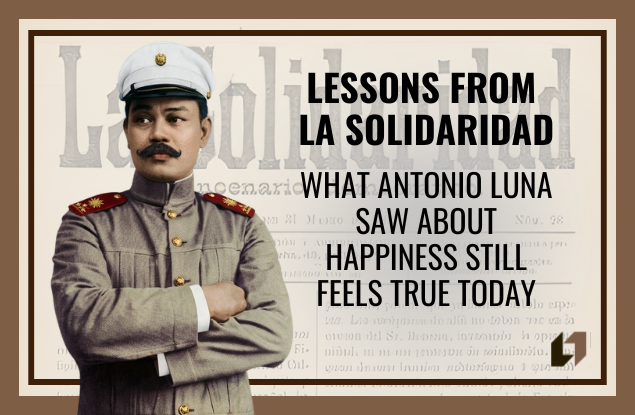
More than a century before social media turned vacations, relationships, and gatherings into public displays, a Filipino writer had already noticed something familiar about human behavior: people often perform happiness in front of others.
In 1891, Filipino intellectual and future revolutionary general Antonio Luna published an essay titled “A Day in the Country” in the reformist newspaper La Solidaridad.
At first glance, the piece appears to be a simple description of a countryside outing. Groups of people leave the crowded city to spend the day in nature, hoping that fresh air and open space will restore their spirits.
But as Luna quietly observes the scene, the essay reveals something deeper. What looks like a carefree gathering slowly becomes a portrait of social life itself — where appearances, expectations, and roles shape how people behave in public.
More than 130 years later, the scene he described still feels surprisingly familiar.
A Countryside Escape That Isn’t Quite Idyllic
Luna begins by describing the countryside, but he quickly dismantles the romantic image many people attach to it.
Instead of a lush paradise, the landscape shows signs of hardship. The land appears exhausted under a harsh sun, the mountains dry and barren, as if burned by heat.
Even the countryside — supposedly a place of escape — carries traces of struggle.
Yet visitors continue to arrive in search of relief from the city. Groups run through the fields laughing loudly, breathing deeply, eager to enjoy what they believe is the healing power of fresh air.
But the real story of the day is not the landscape.
It is the people.
Romance Under Supervision
Throughout the day, Luna observes young couples wandering through the countryside together.
They walk slowly along rustic paths, whispering to one another and holding hands. Sometimes they slip briefly behind bushes or hedges, searching for privacy.
Everywhere he looks, couples cling to each other “like loving doves,” filling the air with laughter, songs, and excited voices.
But the romance is not entirely carefree.
Many of the young women are accompanied by watchful mothers whose task is to supervise the courtship. Luna humorously describes these mothers chasing after their daughters and their suitors, trying to preserve propriety while pretending to remain calm.
“Come here, girls!” one mother shouts.
Another anxiously warns her daughter not to wander too far.
The mothers hurry after the couples, gasping for breath, attempting to maintain control over the situation while keeping up the appearance of respectable leisure.
The scene gradually begins to resemble a carefully managed social ritual.
The Invisible Figures in the Gathering
As the day continues, Luna shifts his attention to the most overlooked figures in the gathering — the mothers themselves.
While the young couples walk arm in arm, the mothers trail behind, struggling to keep pace. Eventually they gather together on benches or along the edges of the festivities, forming their own quiet group of observers.
They are present, yet strangely invisible.
The daughters speak happily with their partners while the mothers sit silently nearby. In Luna’s words, they become almost a “secondary figure in the social situation,” present mainly to ensure that appearances remain respectable.
When the Performance Ends
The illusion lasts only as long as the day does.
As evening approaches and the sun begins to set, the mood shifts. The laughter fades, conversations grow quieter, and the excitement that filled the countryside slowly disappears.
People begin preparing to return to the city.
Luna observes how quickly the joyful energy evaporates. The lively crowds that earlier seemed animated and carefree now move in subdued silence, as if the happiness of the day had dissolved with the fading light.
What remains is fatigue — and the quiet end of the performance.
A Surprisingly Modern Observation
Although Luna wrote this essay in 1891, the behavior he described remains strikingly recognizable today.
Human beings have always used social gatherings as stages for presenting a certain image of themselves. In Luna’s time, these performances took place during countryside excursions, promenades, and public outings.
Today they often unfold through carefully curated photos, travel posts, restaurant visits, and online displays of relationships and lifestyle.
The setting has changed, but the instinct remains the same.
People still feel the need not only to experience happiness, but to show it.
The Insight Behind a Simple Day
What makes Luna’s essay remarkable is its quiet understanding of human behavior.
By observing an ordinary day in the countryside, he reveals how much of social life revolves around appearances and expectations. Couples must appear romantic. Parents must appear respectable. Everyone must appear content.
In the end, Luna suggests that everyday gatherings can reveal as much about society as grand political events.
More than a century ago, he recognized something that still shapes human behavior today:
Sometimes happiness is genuine.
But very often, it is carefully staged.

