

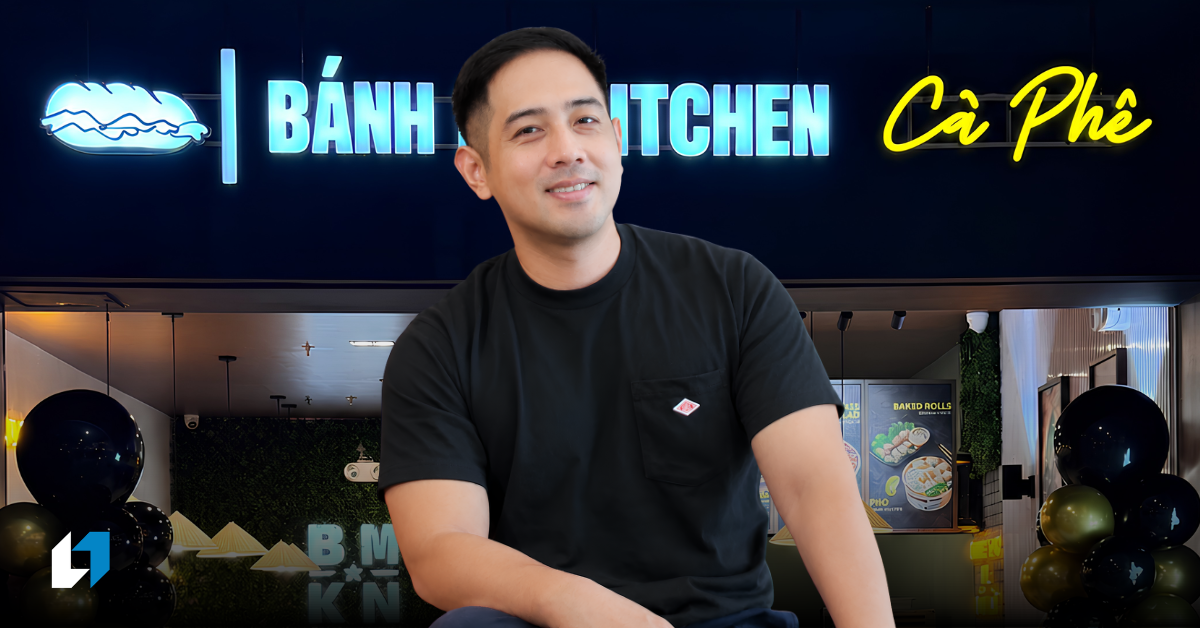
Before Mon Santos became the founder and CEO of Banh Mi Kitchen, he learned what it meant to grow up without a safety net. Long before entrepreneurship entered the picture, he experienced loss, responsibility, and survival at an age when most children were still being taken care of.
“I lost my parents at an early age,” Santos says. “I lost my dad when I was seven and then my mom when I was in high school.” His father passed away young. “My dad got lung cancer because of smoking. He was 40 years old lang.” At the time, his parents were small traders, both working in the fish business. “He used to sell fish in Divisoria, so doon sila nag-meet ng mom ko,” he recalls. “So yong mom ko naman nagba-buy and sell din ng fish.”
When his father died, the family’s structure changed overnight. His mother became the sole provider, responsible for keeping the household afloat. Santos remembers watching his mother do whatever was necessary to survive. “When my dad died, she was the sole provider,” he says. “Gagawin nya, bili sya ng fish sa Divisoria and then ire-resell nya sa village namin, sa garahe namin, para meron siyang pang support samin.”
The effort did not stop there. His mother diversified out of necessity. “Kasi lahat kami Ateneo nag-aral eh so medyo mahal,” Santos explains. To make ends meet, she took on more work. “Tapos nagtayo rin sya ng parang ready-to-wear na mga clothes sa palengke.” There was no long-term plan—only the urgency to provide.
Loss came again while Santos was still young. His mother was diagnosed with breast cancer and later passed away. “My mom naman had breast cancer,” he says. “I think she was 53 years old when she passed away.” With both parents gone, responsibility shifted to the older siblings.
“Luckily yung eldest namin, my ate, was very responsible,” Santos recalls. “Siya yung nag-alaga sa amin. Parang siya yung kasama naming lumaki.” His brother, much older than him, stepped into another role. “My kuya naman, medyo malayo din ang age gap. I think 10 years, so medyo siya naman parang father figure.”
Their grandmother became a crucial pillar for the family. “I grew up with my siblings with the support of my lola,” Santos says. “Siya yung nagpapa-aral samin.” Education, in that household, was not optional—it was survival.
Despite being surrounded by constant effort, Santos did not grow up with exposure to entrepreneurship or corporate careers as aspirational paths. “Wala talaga akong exposure sa kahit anong business or corporate,” he admits. “Walang nag-guide sakin.” What stayed with him instead was a clear message from his mother.
“My mom used to say wala kaming mapapamana sayo,” Santos recalls. “Yung education lang talaga yong mapapamana ko sayo.” It was not said with regret, but with realism. Santos and his siblings took it seriously. “We took that seriously,” he says. “So, we really studied hard.”
That belief became his anchor. In a life shaped by uncertainty, education represented something permanent—something no one could take away. It became the foundation that later allowed him to move forward with confidence, even without guidance.
Looking back, Santos does not frame his childhood as a hardship story alone. It was formative. Watching his mother hustle, seeing his siblings step up early, and growing up without guarantees shaped his sense of discipline and accountability.
His drive did not come from ambition alone. It came from knowing early on that nothing was promised—and that preparation mattered.
Long before he founded Banh Mi Kitchen, Mon Santos learned how to stand on his own. That lesson, forged through loss and responsibility, became the foundation of his entrepreneurial journey.
This article includes quotes from an interview originally published by Esquire Philippines, authored by Henry Ong.

