

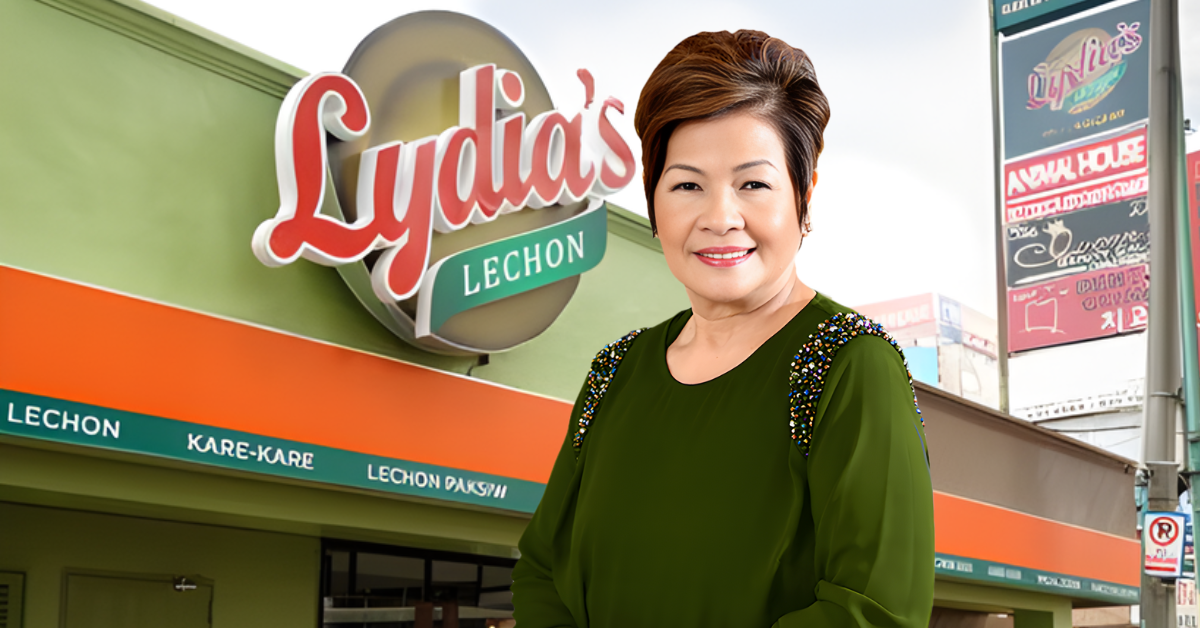
Long before Lydia’s Lechon became a household name, Lydia de Roca was selling whatever she could—wherever she could—just to survive.
“Nag-umpisa ako, vendor-vendor lang ako,” she says. “Nagtitinda ako ng kung ano-ano. Sipag at tiyaga talaga.”
In the 1960s, money was scarce and options were fewer. Lydia sold turon for ₱10 per tray. Every peso mattered.
“Mahalaga ang pera nung araw,” she recalls. “Eh laki ka sa hirap. Mahirap ang mga magulang ko, wala namang mga trabaho.”
She grew up in squatter areas around Baclaran, moving from one place to another whenever rent went up or conditions worsened.
“Twenty-seven squatters area natirhan ko,” she says. “Pag tinaasan ang renta, lilipat ako. ₱35 lang ang renta dati. Tapos after ilang months, tutulo naman yung ihi ng bata sa taas. Lilipat na naman ako.”
It was an unstable life—but one that taught her resilience early.
Choosing Hustle Over Comfort
Lydia didn’t come from a supportive home environment. Her parents struggled with their own demons.
“Yung tatay ko butcher, pero lasingero, sugarol, babaero. Lahat nasa kanya na,” she says. “Nanay ko naman sugal-sugal din.”
Watching this shaped her resolve.
“Sabi ko, hindi ako dapat maging ganito,” Lydia says. “Kaya gumawa ako ng sarili kong strategy sa buhay.”
That strategy was simple but uncompromising: don’t wait for anyone.
“Hindi ako pwedeng mag-antay sa magulang ko,” she says. “Walang itinuturong tama. Kasi kung ano yung nakikita mo, yun ang tinuturo sa’yo.”
College by Day, Sidewalk by Week
Lydia enrolled in college at the University of Santo Tomas, studying banking and finance. But education competed with survival.
“Undergraduate ako, third year college,” she says. “Pero palagi akong absent kasi nasa bangketa ako tuwing Miyerkules, tuwing araw ng palengke. Pera ang hinahabol ko eh.”
She knew schooling alone wouldn’t solve her immediate problem.
“Sabi ko, hindi ako magkakapera sa eskwela,” Lydia explains. “Magkakapera ako dito kung makatapos ako ng pag-aaral. Pero paano ko matatapos ang pag-aaral ko kung wala akong pang-tuition?”
The question was practical, not philosophical.
When Lechon Was Just an Idea
With no capital, Lydia relied on what was available—her father’s skill as a butcher.
“Sabi ko sa tatay ko, ‘kaya mong magkatay ng baboy?’” she recalls. “Sabi ko, bigyan mo ako maski limang kilo.”
At the time, lechon wasn’t even a concept she knew well.
“Hindi pa uso yung word na lechon nung araw,” Lydia says. “Iihawin natin, ititinda natin.”
Her father doubted her.
“Sabi niya, ‘sinong magtitinda?’ Sabi ko, ‘ako.’ Sabi niya, ‘ang liit-liit mo, magtitinda ka?’”
She didn’t hesitate.
“Syempre kaya ko yan,” she says. “Kaya ko.”
Building a Business With Almost Nothing
Capital was so tight that even ingredients were improvised.
“Wala naman akong alam pantimpla kundi asin lang at saka dahon ng saging,” Lydia says.
She learned by observing, experimenting, and correcting mistakes on the spot.
“Naglalagay kami ng dahon at asin para lumobo, lumaki ang baboy,” she explains. “Ina-absorb ng katawan niya.”
When she tried brushing the meat with barbecue sauce, she noticed something was off.
“Sabi ko, ‘parang hindi appetizing,’” she recalls. “Parang hindi gaganahan ang kakain.”
So she tried something else.
“Bumili tayo ng buko,” she told her father. “Ipahid natin yung sabaw.”
The result surprised her.
“Pagkaluto, crispy. Red-orange. Wow. Perfect.”
The Grind No One Sees
Selling lechon on the sidewalk wasn’t glamorous.
“Alas-kwatro ng madaling araw kailangan nasa pwesto ka na,” Lydia says. “Naglalakad ka dala mo yung dahon.”
Cooking took hours.
“Mga alas-otso hanggang alas-diyes pa maluluto,” she says. “Pero ang pag-aayos ng pwesto—mahirap.”
Still, she showed up every day.
Refusing to Stay Poor
Lydia never romanticized hardship—but she never surrendered to it either.
“Ayokong lumaki ng ganito,” she says. “Squatters area, ang dumi. Sabi ko, hindi ako pwedeng manatili dito.”
What drove her wasn’t luck, capital, or connections.
It was refusal.
Refusal to wait.
Refusal to rely.
Refusal to stay poor.
“Sipag at tiyaga lang,” Lydia says simply.
From a sidewalk vendor with no capital to the founder of one of the Philippines’ most iconic lechon brands, Lydia de Roca’s story is proof that some businesses don’t start with money.
They start with hunger—and the decision to do something about it.

