

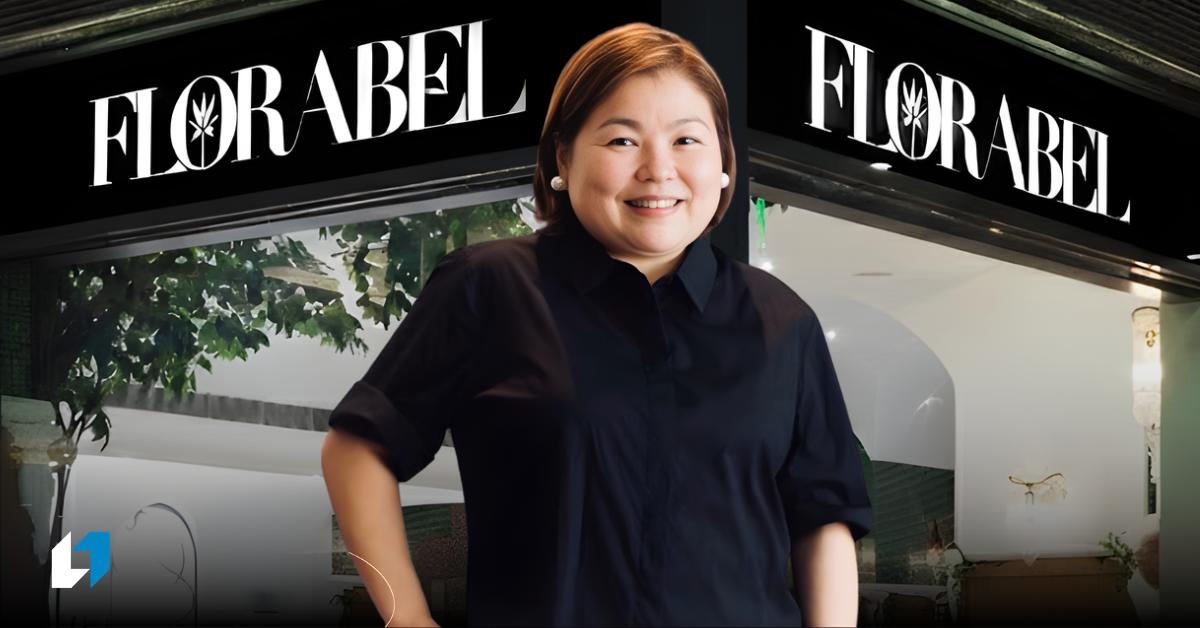
After years of preparation and self-testing, Chef Florabel Co-Yatco knew she wanted to open a restaurant—but she was equally clear about how she wanted to do it. For her, entrepreneurship was not about chasing the biggest space or the most impressive setup. It was about finding something workable, manageable, and realistic given the resources she had at the time.
By then, she already understood restaurant operations and had tested her own readiness. What she needed next was a place that made sense. “Kasi my feeling was, I needed to learn how to operate a restaurant,” she explains, emphasizing that the decision to open one wasn’t emotional or impulsive. She also knew exactly what signal she was waiting for. “But the only sign that I wanted was finding a restaurant na okay yung rent.”
After resigning from her role under Chef Jessie, she began seriously looking for a location. “So at that time, after resigning from Chef Jessie,” she recalls, “sabi ko mag re-restaurant na ko.” But even then, she did not move immediately. She gave herself time to cook, observe, and wait. “It took me like mga one year pa na nagluto-luto,” she says. That year was spent being selective, not hesitant. “Sinabi ko na kailangan meron akong makitang lugar na okay talaga.” For her, the space had to be straightforward and free of unnecessary complications. “Yung dapat maayos and walang problema.”
One of the first locations she considered was in a restaurant-heavy area. “At first, we went to see yung tapat ng Podium,” she says, referring to El Pueblo. “Yung El Pueblo, puro restaurants yun eh.” On paper, it looked promising. She even secured a spot. “May nakuha akong pwesto dun,” she recalls. But the reality of the numbers quickly surfaced. “Kaso sobrang laki,” she says, referring to the space. The required investment was far beyond what she was comfortable with. “Tapos ang laki ng investment because you have to renovate.”
For Co-Yatco, that was a clear signal to step back. “Then, sabi ko ay hindi ito pwede,” she says. The decision was not about ambition—it was about discipline. “Kumbaga I have to work on the money that I have lang at that time.” Rather than stretching herself thin or taking on excessive risk, she chose to walk away from a location that didn’t align with her financial reality.
The turning point came when a more practical option emerged. “Tamang-tama si Podium in-offeran ako na minimal lang yung renovation,” she says. Compared to other spaces she had seen, the offer made sense. It required less capital and fewer structural changes, allowing her to focus on operations rather than construction. Her background also shaped how she approached the decision. “We weren’t a rich family,” she explains. “We were just a normal, average family.”
That awareness grounded her expectations. “So syempre, kung gusto mong mangarap to have your own restaurant, you have to have enough money,” she says. At the same time, she didn’t do it entirely alone. Her family stepped in to support her vision. “So my uncle and my aunt helped me parang, ‘Oh you want to have a restaurant? Here’s some money.’” The assistance wasn’t framed as excess—it was enabling her to take a calculated, realistic step forward.
Once the space was turned over to her, the work became deeply collaborative. “After na turnover sa akin yung space,” she recalls, “as in lahat tumulong sa ‘kin.” Friends played a crucial role in getting the restaurant ready. “Friend ko tumulong sa construction,” she says. Others helped her navigate unfamiliar territory. “Yung isang friend ko naman, tumulong sa mga supplies on where to buy kasi I didn’t know where to buy.” At that point, she was honest about what she knew—and what she didn’t. “Basically ang alam ko pa lang at that time was magluto.”
In 1995, all of those efforts came together. “In 1995, I opened my own restaurant, Florabel in Podium.” The opening was not the result of a grand launch or heavy marketing. It was the outcome of careful choices, financial restraint, and the willingness to ask for help when needed.
Chef Florabel Co-Yatco’s first restaurant was not built on excess—it was built on limits. By walking away from oversized opportunities and choosing a space that fit her means, she protected both her business and herself. Her story underscores a quiet but powerful lesson in entrepreneurship: success is not always about how much you can take on, but about knowing how much is enough. By working within her constraints, she created the foundation for something that could last.
This article includes quotes from an interview originally published by Esquire Philippines, authored by Henry Ong.

