

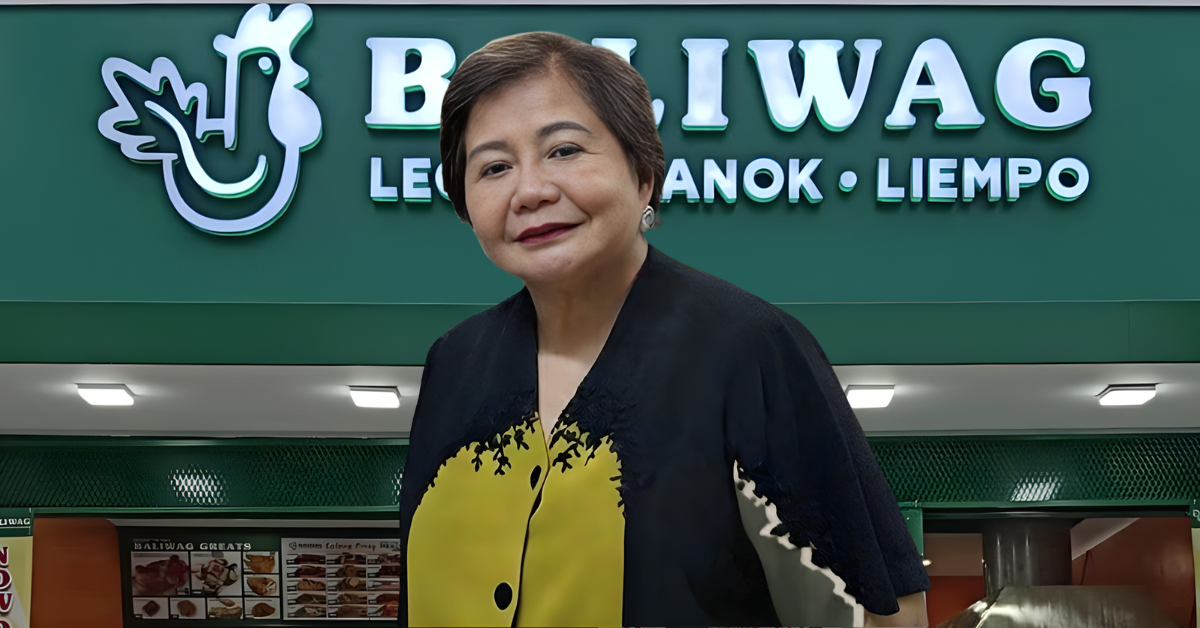
Long before Baliwag Lechon Manok became a familiar name, its beginnings were shaped by timing, trend awareness, and a willingness to experiment. For Dolores Salcedo and her husband, entrepreneurship did not begin with a grand plan—it began with opportunity, practicality, and the courage to leave stable jobs behind.
“When we were in college, mag-boyfriend na kami,” Salcedo recalls. At the time, both were working regular jobs. “I used to work sa travel agency sa Escolta and my husband was an employee in a tile shop factory.” Despite the stability, they made a decisive move. “Nag-resign kami to start a business.” Their first venture had nothing to do with food. Instead, they followed what was popular at the time. “We started a Betamax rental shop in QC.”
Betamax was booming then, and they leaned into the trend. “Betamax was uso,” their daughter Sarabeth Soriano explains. They even named the shop after Dolores. “They named the Betamax shop after me, Sarah Betamax.” Location played a quiet but important role. The shop was in Project 8, along Shorthorn Street—an area that would later shape their next decision. “It so happened their Betamax business was in Project 8, so it was the street kung saan ang daming litsunan na dumami,” Soriano says.
From that vantage point, a new idea emerged. “So they decided, ‘Eh there’s space pa in front. There’s a big parking space, so lagyan natin.’” Since the Betamax shop was already operating, adding another business felt practical rather than risky. “Since nandito naman na yung Betamax business nila, lagyan natin ng lechon manok dyan.”
For Salcedo, the idea wasn’t about originality—it was about observation. “Marami kaming suki dun eh, then nakita namin merong litsunan,” she says. Roasted chicken stalls were multiplying, and demand was clearly there. “Yan yung trending at that time, nanggaya kami.” That decision marked a turning point. “That was the start.”
At the time, their focus was simple: keep the business running and growing. “At that time, parang gusto lang namin makapag-concentrate sa business,” Salcedo explains. The location helped. “Yung puwesto namin kasi nasa harap ng mga buses, yung yellow buses, sa West Avenue.” Foot traffic and visibility worked in their favor, reinforcing the idea that they were in the right place at the right time.
By 1985, lechon manok had fully taken hold as a nationwide trend. “Yung lechon manok really became a fad in 1985,” Soriano says. Roasted chicken stalls began appearing everywhere. “Nagsulputan talaga lahat ng roasted chicken.” Rather than watching from the sidelines, Salcedo and her husband leaned in. “So they decided, ‘Hey, why don’t we try and put up our own lechon manok?’” They started modestly. “So it was lechon manok and liempo.”
The business did not start with large capital or external backing. “They really started from scratch,” Soriano explains. To get things moving, they relied on family support. “They borrowed P10,000 from their parents.” Operations were as grassroots as they came. “Yun so the suppliers and everything were really handled in our own house, in our own home.” Preparation happened where they lived. “Dun sila magra-wrap ng liempo tapos from there kukunin ng delivery truck.”
Everything unfolded in close quarters. “This was all happening right in our own backyard in West Avenue,” Soriano recalls. Mornings were especially hectic. “Kaya tuwing umaga the place was so busy.” At the time, the family was still young. “They had been married for about four years, and I was just three years old.”
Even as the lechon manok business gained traction, the Betamax shop continued to operate. “The Betamax business went on for mga two years,” Soriano says. They didn’t abandon it immediately. “They didn’t close it when lechon manok was there.” For a while, both ventures ran side by side. “So it was both simultaneously—the Betamax was there and then the lechon manok.”
Eventually, the contrast became clear. “But when the lechon manok grew bigger, dun na sila nag-focus,” she explains. At the same time, the Betamax trend faded. “Syempre, nawala na sa uso yung Betamax.” The decision followed naturally. “So they didn’t continue it.”
The early story of Baliwag Lechon Manok is not about invention—it is about attention. Salcedo and her husband built their business by noticing what people wanted, where foot traffic flowed, and when a trend had real staying power. By starting with what was popular and being willing to pivot when the moment demanded it, they turned a food fad into a foundation. Their journey shows that entrepreneurship often begins not with disruption, but with the discipline to observe, adapt, and commit at the right time.
This article includes quotes from an interview originally published by Esquire Philippines, authored by Henry Ong.

