

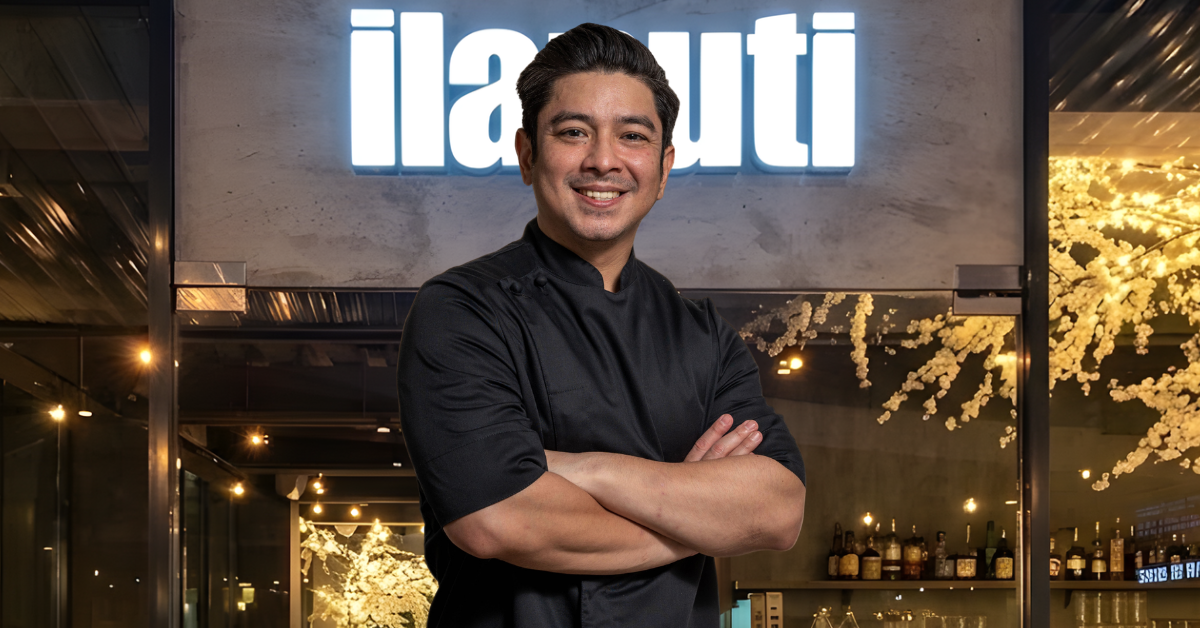
When Jan Rodriguez returned to the Philippines after working in the United States, opening a restaurant was not part of a carefully designed business plan. His decision to come home came shortly after the tragic events of September 11—a turning point that prompted many overseas Filipinos to rethink stability, family, and long-term priorities.
Back in Cebu, Rodriguez explored different business ideas, unsure which direction to pursue. The breakthrough came not from market opportunity, but from a problem at home.
His son refused to eat rice.
“I started learning how to cook so I could make something my son would actually eat,” Rodriguez recalls. “It really began from one recipe.”
That recipe—a Chinese-style fried rice inspired by Peking duck flavors—was never meant to become a commercial concept. It was simply a father experimenting in the kitchen. But the experience awakened something unexpected: creativity grounded in necessity.
Within a year of returning home, Rodriguez decided to test the idea publicly. He imagined opening a small kiosk near a university where students could grab affordable meals. For weeks, he searched for space without success—until an internet café across a pedestrian crossing suddenly shut down.
Instead of waiting for a smaller, safer location, Rodriguez took a risk.
“I couldn’t even find a kiosk,” he says. “Then suddenly this much bigger space became available. I just gambled and took it.”
That gamble became Ilaputi.
Listening Instead of Defending the Original Idea
In its earliest days, Ilaputi looked nothing like the restaurant it would later become. The menu featured familiar karinderya dishes—adobo, fried chicken, bola-bola, and pinakbet—alongside only two made-to-order items.
Very quickly, customers made their preference clear.
“They kept choosing the short-order items,” Rodriguez says. “So every time something didn’t move, we removed it and added something new.”
Instead of protecting his original menu, Rodriguez allowed customers to reshape the restaurant. Within weeks, two short-order dishes grew into eleven.
The evolution happened organically, driven not by trend forecasting but by observation.
“The lesson was simple,” he explains. “You have to pay attention to what people are actually ordering—not what you think they should order.”
This willingness to adapt became Ilaputi’s defining operating philosophy. The restaurant was never frozen around a single concept. It evolved continuously alongside its diners.
Hospitality Beyond Food
Rodriguez’s understanding of hospitality did not begin with Ilaputi. Early in his career, he worked as a Guest Service Officer at Shangri-La Mactan and later gained exposure to hotels and restaurants in the United States.
Those experiences shaped how he viewed dining.
“Hospitality is about creating a memorable experience for the guest,” he says. “Food is only one part of that.”
As Ilaputi gained traction, chefs and restaurant professionals began visiting, helping spread word of mouth across Cebu’s dining community. The customer base gradually expanded—from university students to call-center employees, young professionals, couples, and eventually entire families.
Many of the original student customers now return decades later with children of their own.
Reinventing the Concept Without Losing Identity
In 2011, Rodriguez made a major operational shift: Ilaputi moved from self-service to full-service dining. Larger shared plates were introduced—many of which remain signature offerings today.
At the same time, the cuisine evolved into what Rodriguez calls Asian “soul food.”
“We focus on dishes inspired by Southeast Asian cuisines,” he explains. “But we use non-traditional techniques and flavors introduced to the Philippines through trade—like Indian or Spanish influences.”
The approach allowed innovation without alienating customers. Familiarity remained, even as techniques evolved.
Rodriguez treats creativity as an ongoing process rather than a finished achievement.
“Once a dish gets copied,” he says with a smile, “I evolve it—or remove it—and create something new.”
Systems Behind Creativity
As Ilaputi expanded, Rodriguez discovered that innovation alone could not sustain growth. Consistency became the harder challenge.
“Ensuring consistency is the most difficult challenge in the kitchen,” he admits. “Training, procedures, communication, and quality assurance are everything.”
He personally interviews and trains team members, often hiring individuals with little experience and developing them internally.
Leadership, for Rodriguez, is less about authority and more about education.
“Leadership is constant learning and constant sharing of knowledge,” he says. “You lead by example.”
Promotion from within became central to Ilaputi’s culture, creating long-term loyalty in an industry known for employee turnover.
Success, he adds, is measured differently.
“Creating opportunities for our team—seeing them grow from having no experience to becoming some of the best—is success for me.”
Growth Through Experience, Not Advertising
Unlike many modern restaurant brands, Ilaputi relied minimally on traditional marketing.
“For all our restaurants, we rely on word of mouth,” Rodriguez says. “Guest experience is the most powerful marketing strategy.”
Customer feedback remains central to decision-making. Mistakes are treated as learning opportunities rather than failures.
“We make mistakes too,” he says candidly. “We adjust what needs adjusting and improve our products or service.”
The philosophy reflects a broader entrepreneurial belief: relevance comes from continuous refinement rather than perfection.
Building for Longevity
More than two decades after opening, Ilaputi continues to evolve. Rodriguez still draws inspiration from travel, research, reading, and family meals.
“I love what I do,” he says. “I enjoy cooking for my family—that’s where many ideas still come from.”
As the brand approaches its 24th year, plans now include expansion beyond Cebu, including a potential Manila presence.
Yet Rodriguez’s advice to aspiring restaurateurs remains grounded.
“Think big, but start small,” he says. “Learn your numbers—and learn more about people.”
Looking back, Ilaputi’s story reveals that enduring businesses rarely begin with perfect strategy. They grow through curiosity, responsiveness, and the courage to adapt.
What started as a father solving a personal problem ultimately became one of Cebu’s longest-standing restaurant brands—built not by chasing trends, but by listening carefully to customers, empowering people, and evolving without losing soul.
And perhaps that origin explains its longevity best.
Sometimes, the strongest businesses begin not with ambition—but with care.

