

If markets often seem unpredictable, some analysts believe the answer may not lie solely in charts or economic indicators—but in the sky.
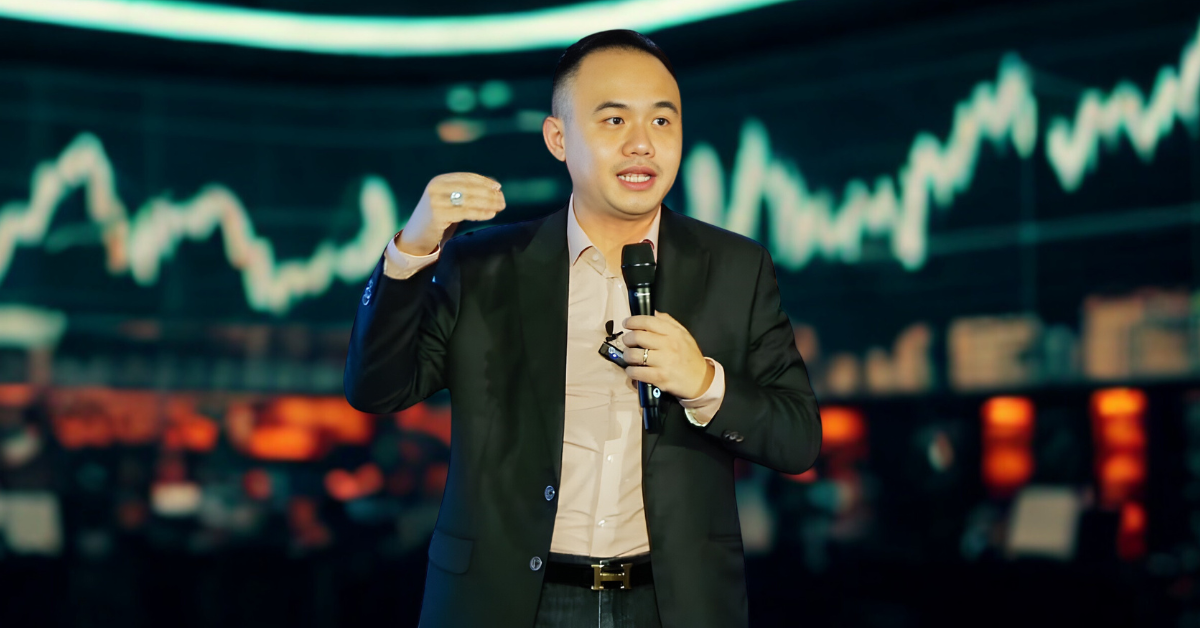
At the 3rd Market Traders Summit held on March 21, 2026, organized by the Society of Technical Analysts Philippines, Indonesian market strategist Gema Goeyardi presented an unconventional approach to market timing known as financial astrology.
Goeyardi is the founder and CEO of Astronacci International, a financial research firm that focuses on market timing using a combination of astrology cycles and Fibonacci analysis. The method, which he calls Astronacci, attempts to identify potential turning points in financial markets by studying planetary cycles and astronomical data.
Born in Surabaya, Indonesia, Goeyardi began studying the stock market in 2007 and later developed Astronacci after years of self-study in technical analysis and financial markets. His work has been featured in Forbes and Fortune, and he has received recognition in Indonesia for developing a trading method that combines financial astrology and Fibonacci analysis to forecast market timing.
During his presentation in Manila, Goeyardi explained that his strategy focuses on what he calls “time trading”—the idea that timing market cycles can be just as important as identifying price patterns.
“Astronacci is astrology and Fibonacci,” he said during the summit. “The idea is how we combine time and price to improve our trading decisions.”
Traditional technical analysis often focuses on price behavior—support and resistance levels, chart patterns, and trend lines. But Goeyardi argues that many traders overlook an important variable: time cycles.
Planetary positions, lunar phases, and other astronomical data can be calculated years in advance. By studying historical relationships between these cycles and financial markets, Goeyardi believes traders can identify periods when markets are statistically more likely to reverse direction.
His concept is simple but ambitious.
“Imagine if someone from the future could give you a newspaper showing what markets will do in the next few months,” he told participants. “You could make better decisions today.”
According to Goeyardi, financial astrology attempts to replicate that idea by using known astronomical cycles as a proxy for future timing signals.
During the summit, he presented several examples from his research and trading experience across different markets, including equities, commodities, and cryptocurrencies.
One example involved the Indonesian stock market index, where he projected a specific target price within a defined time window using a combination of Elliott Wave analysis, Fibonacci levels, and planetary cycles.
He also cited a forecast during the COVID-19 market crash in March 2020, where he identified a key turning point date for markets based on planetary alignments.
Beyond equities, Goeyardi has applied the same framework to commodities and digital assets. He shared that he began trading gold with a $2,000 account and eventually grew it to more than $6 million over several years using time-based strategies.
Another example he discussed involved the U.S. nonfarm payroll report, one of the most closely watched economic indicators in global markets. According to Goeyardi, analyzing planetary cycles helped him anticipate price reactions around the monthly economic release.
In 2024, he said his trades around nonfarm payroll announcements achieved a 100% winning rate across all twelve months, a result he attributes partly to the timing signals derived from astronomical cycles.
The underlying theory behind financial astrology, Goeyardi explained, relates to human psychology.
Financial markets are ultimately driven by human decisions—buying, selling, fear, and optimism. He suggests that natural cycles, such as lunar phases, may influence human mood and decision-making.
For example, the moon’s gravitational pull affects ocean tides. Because the human body is largely composed of water, some researchers believe lunar cycles may subtly affect biological rhythms and behavior.
“When we talk about the market, we talk about human decisions,” Goeyardi said. “Human mood and psychology influence whether people buy or sell.”
During the summit, he also shared research on the Philippine Stock Exchange, suggesting that certain planetary alignments and moon phases historically coincided with turning points in the market.
In his framework, price analysis tells traders what the market is doing, while astronomical cycles may help identify when a change in direction is more likely.
For traders searching for an edge, Goeyardi believes combining both approaches can improve probability.
“Time and price must work together,” he said.
Whether financial astrology ultimately proves reliable remains a subject of debate among market professionals. But the concept highlights an important idea familiar to experienced traders: understanding when markets may turn can be just as valuable as predicting where they will go next.

