

Many entrepreneurs spend years searching for the secret to building a successful business.
Some enroll in business schools. Others attend seminars, read books, or hire consultants. Joel Torre’s most important business lesson came from a different source.
It came from his customers.
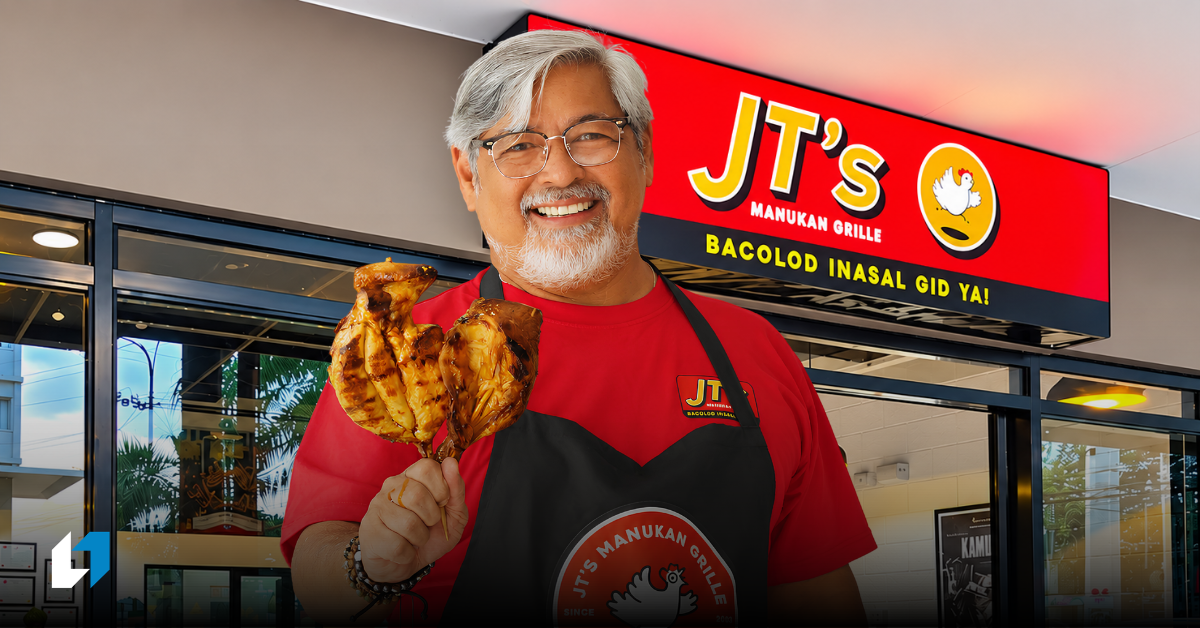
Long before JT’s Manukan became one of the country’s most recognizable chicken inasal brands, Torre was a newcomer to the restaurant industry. Although he had already established himself as one of the Philippines’ most respected actors, he readily admits that he was still learning the fundamentals of running a business.
Fortunately, some of his earliest customers were willing to share what they knew.
Learning Business One Customer at a Time
When Torre opened the first JT’s Manukan branch in 2003, the operation was modest.
The restaurant started as a small establishment with only a few tables near Santolan in the Ortigas area. The concept was simple: serve authentic Bacolod-style chicken inasal using a recipe that he and his team had worked hard to develop.
The food quickly attracted customers.
Among the earliest regulars were Filipino-Chinese businessmen and executives from nearby Greenhills.
“Our first customers were the Filipino-Chinese businessmen and CEOs from Greenhills,” Torre recalled.
Unlike many restaurant owners who remain behind the scenes, Torre enjoyed spending time with his customers.
“I would often hang out with them.”
Those conversations would prove far more valuable than he initially realized.
An Unexpected Business Education
As the customers returned, Torre began observing something that impressed him.
“Grabe pala ang networking ng Chinese.”
He noticed how quickly information traveled within the community. When customers enjoyed the food, they told friends. Those friends told other friends. Recommendations spread naturally through personal relationships.
“Once they like the place, tatawagan yan sila, tapos sasabihin nila sa kaibigan nila.”
Word-of-mouth became one of the restaurant’s most effective marketing tools.
But referrals were not the only thing Torre gained from these interactions.
Many of the businessmen who frequented the restaurant were experienced entrepreneurs. As they ate and socialized, they shared ideas, observations, and advice about running a business.
“I was learning a business from them.”
The conversations often took place casually over meals and drinks.
“They would share their business acumen, and they would tell me being an upstart, ‘Ganito gawin mo, ganito ganyan.'”
For Torre, the restaurant unexpectedly became a classroom.
“Everybody had advice.”
Unlike a formal business course, the lessons were practical, direct, and rooted in real-world experience.
The Lesson That Stayed With Him
Among the many pieces of advice he received, one lesson stood out above all others.
“Konti kita pero tuloy-tuloy.”
The phrase translates loosely to making a smaller profit consistently rather than chasing large profits occasionally.
For many entrepreneurs, the temptation is to maximize margins. Charge more. Earn more per transaction. Focus on short-term profitability.
The businessmen who advised Torre saw things differently. They believed consistency mattered more than occasional windfalls.
Torre recalls how they compared his restaurant to higher-end establishments.
“Yung high-end restaurant nga, pag weekend daming tao, pag weekday konti lang.”
A restaurant might enjoy strong sales on weekends but struggle during the rest of the week. Revenue could fluctuate dramatically depending on seasonality, trends, or special occasions.
A business that generated steady traffic every day, even at lower margins, could often produce better long-term results.
“Sabi nila, minsan hindi sila kita, ikaw araw-araw may kita.”
The lesson resonated with Torre. The goal was not to make the largest possible profit from every customer. The goal was to create a business that customers would continue supporting day after day, year after year.
Building Around Repeat Customers
The philosophy fit naturally with JT’s Manukan.
Chicken inasal was not positioned as an occasional luxury purchase. It was affordable, familiar, and accessible. Customers could enjoy it regularly rather than reserving it for special occasions.
As a result, the business benefited from repeat visits.
People returned because they enjoyed the food. They brought family members, friends, and colleagues. New customers arrived through recommendations from existing customers.
The model reflected the lesson Torre had learned from the businessmen who frequented the restaurant during its early days.
Rather than focusing exclusively on maximizing profit per transaction, the business focused on creating value that would encourage customers to come back.
Over time, that approach helped build a loyal customer base and supported the restaurant’s growth.
Learning From People Who Had Done It Before
One of the most interesting aspects of Torre’s story is that he never presents himself as a business expert.
Instead, he speaks openly about learning from people around him.
“So, thank God, there were people who were really sincere in helping me out.”
In addition to the Filipino-Chinese businessmen who became his customers, Torre also learned from an Indian friend who had been involved in business for many years.
“My barkada from high school hanggang college was Indian. Negosyante rin. I learned from him a lot too about financial literacy.”
The lessons ranged from basic concepts such as supply and demand to understanding the relationship between sales, expenses, and profits.
Yet despite everything he learned, Torre’s own philosophy remained remarkably simple.
“Sa akin eh, start with a good company with a good product and if it sells, then you can make money.”
A Lesson Beyond Restaurants
Looking back, the most valuable lesson Torre received was not about accounting, marketing, or finance.
It was about sustainability.
Many entrepreneurs become obsessed with maximizing short-term profits. The advice he received pointed in a different direction.
A business does not necessarily need the highest margins to succeed.
Sometimes it is better to earn a little less per customer if it means creating a product and experience that customers will continue supporting for years.
More than two decades after opening his first restaurant, that lesson remains relevant.
The advice did not come from a business school professor, a consultant, or a textbook.
It came from customers sharing meals, stories, and business wisdom over plates of chicken inasal.
For Joel Torre, those conversations became one of the most valuable business educations he ever received.

