

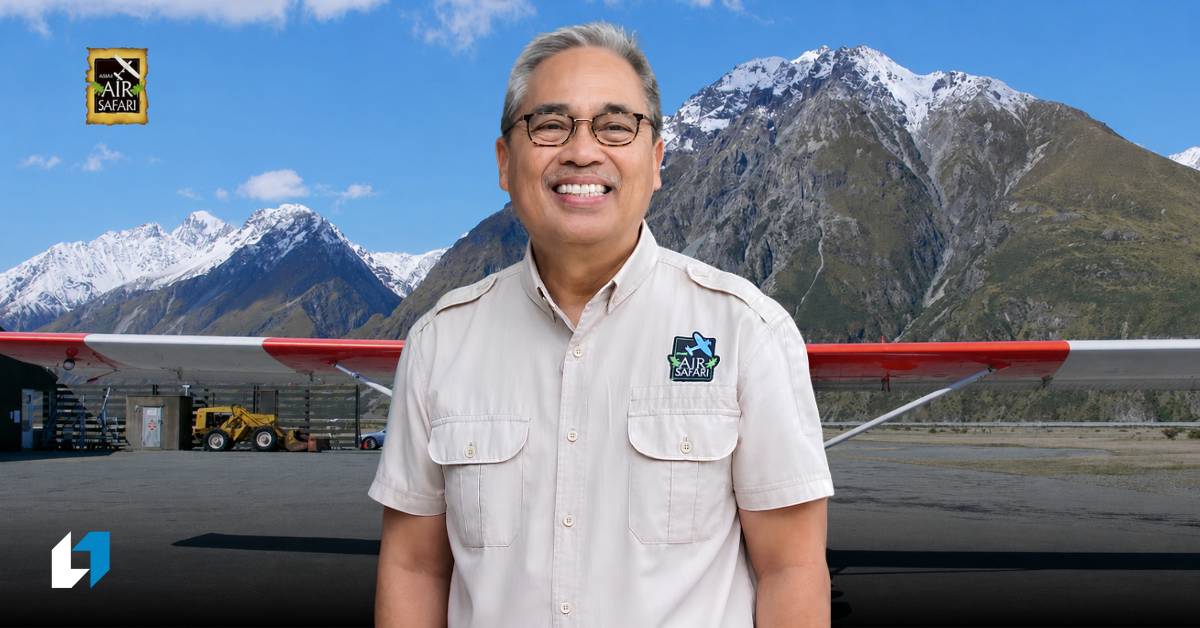
In aviation, planes may be the stars, but people keep them flying. For Captain Joy Roa, founder of Asian Air Safari, the secret to building a business that lasts isn’t just equipment or strategy—it’s culture.
“I have always treated everyone as family teaching them to deal with everyone including ourselves with sincerity and humility,” Roa told Financial Adviser PH. “Selflessness instead of selfishness.”
That mindset has helped him retain staff who have stayed for decades, a rarity in an industry known for constant turnover.
Leading with values, not ego
Roa believes leadership begins with how you treat people day to day. In aviation, where safety and precision matter, the way leaders set the tone trickles down through the entire operation.
By emphasizing humility and sincerity, he created an environment where employees felt more like partners than just staff. “Selflessness instead of selfishness,” he repeated, making it clear that in his company, collaboration beats competition.
This isn’t just about kindness—it’s about business. Aviation requires absolute trust between pilots, mechanics, and ground crew. By fostering a culture of mutual respect, Roa ensured his teams were not just compliant, but committed.
Hiring the right people
Part of sustaining that culture has been choosing the right people from the start. Roa has always had a clear philosophy when it comes to recruitment.
“Always looking for the most intelligent applicants, well mannered, with good family backgrounds and are eager to work and contribute to the team,” he explained. “Someone with a passion for aviation or filming.”
Notice that he doesn’t mention just skills or technical expertise. For him, character and passion come first. Skills can be trained, but values and drive are harder to teach.
By looking at how candidates carry themselves and where their motivations lie, he builds a workforce that not only performs but also fits seamlessly into the company’s culture.
Why people stay
In an era when job hopping is the norm, what makes employees stay for decades? For Roa, the answer lies in how people feel when they show up to work.
He makes sure they feel seen, respected, and treated like family. It’s not just about paychecks—it’s about belonging. In an industry that demands high pressure and constant vigilance, that sense of family can mean the difference between burnout and loyalty.
And because he personally embodies the values he asks of others—sincerity, humility, and passion—employees trust him. They see that leadership isn’t lip service; it’s lived out every day.
Culture as a competitive advantage
In aviation, it’s easy to obsess over hardware—new planes, new facilities, or new technologies. But Roa proves that human capital is just as critical. Planes can be bought, but loyalty can’t.
The fact that his staff has stayed with him through decades of ups and downs—economic crises, regulatory hurdles, and even industry-wide downturns—shows that culture can be a powerful shield.
Employees who feel like family will go the extra mile in times of turbulence. They won’t just clock out at the first sign of trouble. They’ll stand by the business, just as the leader has stood by them.
Lessons for leaders
Roa’s approach carries clear lessons for entrepreneurs and executives in any industry:
Culture starts with the leader. If you want humility, sincerity, and selflessness in your team, you have to model it first.
Hire for values, not just skills. Intelligence, manners, and passion can be more important than technical expertise when building a lasting team.
Family isn’t just a metaphor. Treating employees like family isn’t about being soft—it’s about creating loyalty that outlasts paychecks.
The takeaway
“I have always treated everyone as family teaching them to deal with everyone including ourselves with sincerity and humility,” Roa said. That philosophy has helped him build not just an aviation business, but a community that has stayed together for decades.
In an industry built on engines and metal, Roa proves the real foundation is people.

