

Artificial intelligence has become impossible to ignore.
In just a few years, AI has moved from being a niche technology into boardroom conversations, startup pitch decks, marketing campaigns and everyday business operations. Nearly every company now claims to be integrating AI into its products or workflows, while founders increasingly describe themselves as AI-first businesses.
Yet amid all the excitement, many entrepreneurs continue to wrestle with a more practical question.
Beyond the headlines and demonstrations, how can AI actually help build a better business?
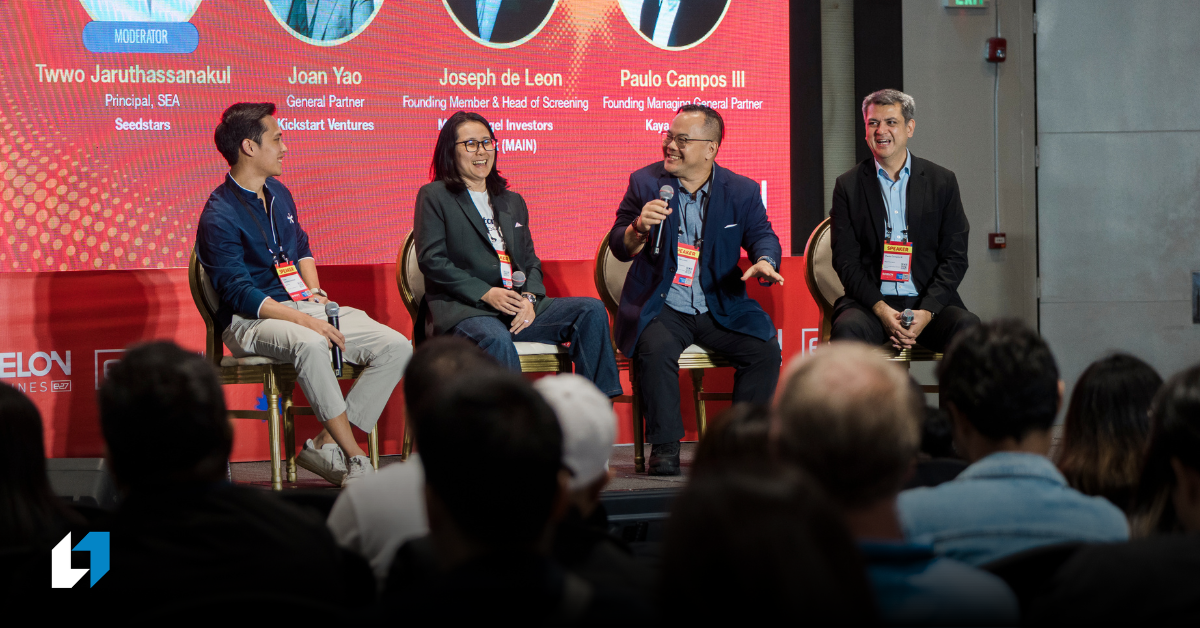
That question sits at the center of Echelon Philippines 2026, one of the country’s largest gatherings of entrepreneurs, investors, startup founders and technology leaders. Rather than focusing on AI as a trend, this year’s event is built around a more practical challenge: how businesses can grow in what organizers call the Age of the AIpreneur.
For Jonathan So, CEO of e27, the organization behind Echelon, the conversation has to move beyond curiosity.
“Echelon Philippines 2026 is designed around one question: how do we actually build and grow businesses in the Age of the AIpreneur? This year, we’re moving beyond the hype around AI and focusing on what it means for founders and businesses on the ground.”
The first wave of AI adoption was largely about experimentation. Companies explored tools like ChatGPT, image generators and coding assistants simply because they were new. Today, however, businesses are under growing pressure to demonstrate that AI can improve productivity, lower costs and create new revenue opportunities.
The question is no longer whether businesses should adopt AI. The question is whether they know how.
From experimentation to execution
The rapid growth of AI has created a new type of entrepreneur.
Today’s founders have access to capabilities that previously required entire departments. Marketing campaigns can be developed in hours instead of weeks. Software prototypes can be generated through AI-assisted coding. Customer service can operate around the clock using intelligent agents. Product research can be accelerated through AI-powered analytics.
These developments have lowered barriers to starting a business, but they have also created new challenges.
Technology alone rarely creates a competitive advantage. The businesses that succeed are often those that understand how to combine technology with sound strategy, customer insight and disciplined execution.
This is one reason why Echelon’s organizers deliberately shifted the conversation away from simply asking what AI can do.
“The more important question is ‘What can businesses actually do better, faster, and cheaper with it?'” So explained.
Instead of treating AI as an abstract concept, the event aims to show founders how it can improve products, operations, customer experience and business models.
Learning by doing
One noticeable difference at this year’s event is the emphasis on practical application.
The two-day conference will feature a Showcase Stage, where companies demonstrate actual products and technologies rather than simply discussing ideas. Attendees will also have access to Sandbox Sessions, smaller workshops that explore practical topics such as AI-assisted product development, customer feedback analysis, startup finance, enterprise matchmaking and usability testing.
Sessions like Codex for Founders and “Looks Good, But Does It Work?” organized by UXPH are designed to help entrepreneurs understand how AI can become part of their day-to-day decision making instead of remaining an experimental tool.
The event will also feature Spotlight booths where startups including MUSTA, Savvycore, Anakloud, Investbanq, Apper.ph and Shoppable will demonstrate their products directly to attendees.
For entrepreneurs, the value lies less in watching presentations and more in seeing how other companies are already applying technology to solve real business problems.
Building businesses, not just startups
Although Echelon has long been associated with the startup ecosystem, its organizers believe the lessons extend well beyond venture-backed technology companies.
Many established businesses are now confronting the same questions that startups face.
How can AI reduce operating costs? How can customer experience improve without significantly increasing headcount?
Which processes should remain human, and which should become automated?
How should companies redesign products for customers whose expectations are rapidly changing?
These are no longer technology questions. They are business questions.
This broader perspective explains why Echelon continues to bring together founders, corporate executives, investors and technology leaders under one roof.
Among this year’s speakers are leaders from companies such as PayMongo, PalawanPay, Kaya Founders, Founders Launchpad, Indelible Ventures, AIFirst, ChatGenie, JLL Philippines, Yield, Sofi AI, UX Philippines, 917Ventures and several emerging startups.
Rather than focusing solely on success stories, the discussions aim to examine the decisions, experiments and lessons that accompany the process of building companies.
“We’re not bringing people together simply because they have impressive titles,” So said. “We’re looking for people who have actually built, invested, experimented, and learned—and who can share those lessons with the ecosystem.”
The value of being in the same room
One of the challenges facing entrepreneurs today is information overload.
Business owners have access to thousands of online tutorials, AI demonstrations and startup podcasts. Knowledge itself has become abundant.
What remains scarce are meaningful conversations. While technology can provide information, it cannot easily replace the trust that develops when founders, investors, customers and partners meet face to face.
This is one reason conferences continue to matter despite the growth of digital learning.
For startups, one conversation with a potential investor may shape the next funding round. A meeting with a corporate executive could become the beginning of a commercial partnership. Feedback from an experienced founder may help avoid costly mistakes.
Those opportunities rarely appear on an agenda. They often emerge because the right people happen to be in the same room.
The opportunity
Artificial intelligence will undoubtedly continue reshaping business over the coming years.
The companies that benefit the most, however, may not be those with access to the most advanced technology.
Instead, they are likely to be the ones that learn how to apply it with the greatest discipline.
That is the challenge Echelon Philippines 2026 hopes to address. The event is not asking whether AI will change business. It is asking something far more useful.
How can entrepreneurs use it to build better companies today?
As So put it:
“The Age of the AIpreneur isn’t about predicting the future. It’s about building it.”
For entrepreneurs trying to move beyond AI experimentation toward practical execution, that may prove to be the most valuable conversation of all.

