

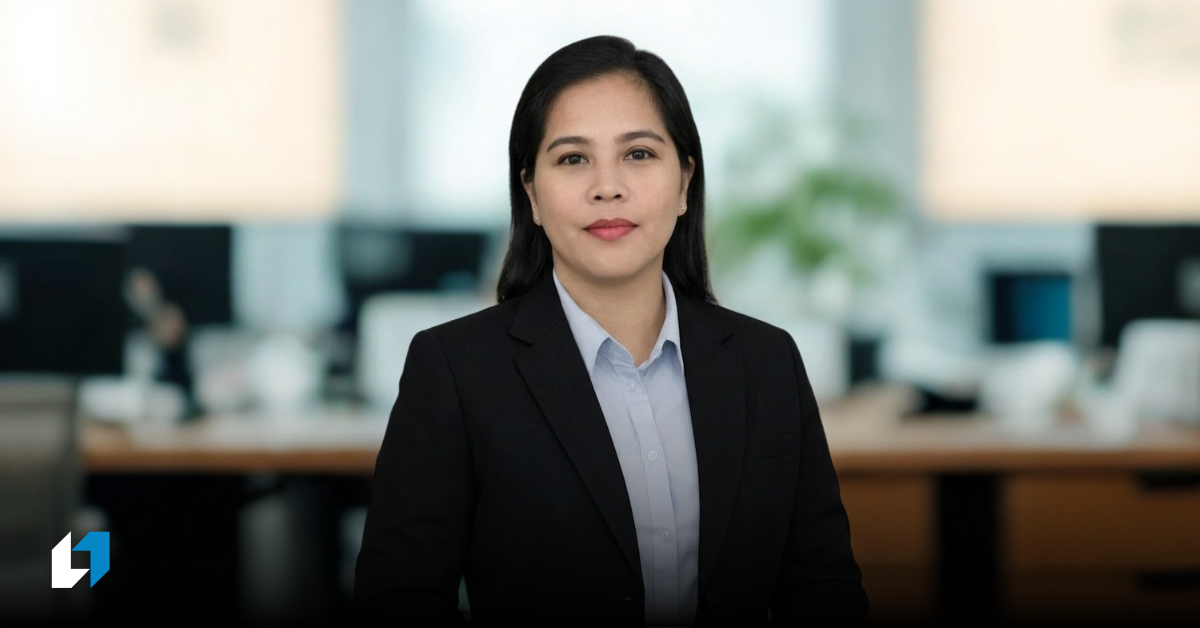
Jennifer Landero didn’t start her career in accounting. She began in administrative work, handling documentation, payroll coordination, and basic compliance tasks. At first, her role focused on keeping things organized, but over time, she found herself getting closer to the financial side of the business.
“I started my career in administrative work… but over time, I became more involved in financial records, tax compliance, and reporting,” she says.
That exposure changed how she viewed her work. What once felt routine started to feel more meaningful as she saw how financial accuracy affects the entire organization.
“I saw how critical accurate financial management is to the success of any organization,” she explains.
That realization pushed her to move beyond administrative work and build a more technical skill set in accounting—eventually becoming a Certified Accounting Technician, a step that strengthened both her credibility and capability in the field.
Taking on Responsibility Early
A major turning point came when she was entrusted with payroll and tax compliance responsibilities. The role required more than coordination—it demanded a deeper understanding of accounting processes and government regulations.
“One pivotal moment was being entrusted with payroll and tax compliance responsibilities,” she says. “It required a deeper understanding of accounting processes and government regulations.”
At first, the transition was challenging. The pressure to meet deadlines while ensuring accuracy made the work demanding.
“Early in my career, one of the biggest challenges was mastering complex tax regulations and accounting procedures while balancing multiple responsibilities,” she admits.
Instead of stepping back, she focused on learning.
“I overcame it by continuous learning, attending trainings, asking mentors for guidance, and gaining hands-on experience,” she says.
Growing Into the Role
As her experience expanded, so did her responsibilities. She moved from administrative support to payroll, then into tax compliance, and eventually into broader financial functions such as reporting, analysis, and process improvement.
“My role has evolved from administrative support to handling payroll, then tax compliance, and eventually broader financial responsibilities,” she explains.
She also became more involved in improving workflows—helping ensure that processes are not only accurate but efficient.
Through these experiences, Landero developed a strong sense of discipline in her work.
“My experience in accounting taught me to value integrity, accuracy, and accountability,” she says.
Managing Pressure and Staying Organized
Accounting often comes with tight deadlines and overlapping responsibilities. For Landero, staying organized is key to managing the pressure.
“I stay motivated by planning ahead, breaking tasks into manageable steps, and keeping organized records,” she shares.
By focusing on structure and consistency, she is able to maintain both accuracy and efficiency, even during demanding periods.
Finding Meaning in the Work
What keeps her committed to the field is the impact behind the work. While bookkeeping and compliance may seem routine, she sees how they contribute to the bigger picture.
“What keeps me passionate is knowing that accurate financial records and proper compliance play a vital role in business stability and growth,” she says.
That connection between detail and outcome is what makes the work fulfilling.
“The most fulfilling part is seeing accurate financial reports and knowing they support better decision-making,” she adds.
Growing and Giving Back
Landero also makes an effort to support others in the workplace, especially those who are new to accounting processes.
“I help colleagues by sharing templates, explaining processes, and guiding them in proper documentation and compliance procedures,” she says.
At the same time, she continues to invest in her own development.
“I continue to grow by attending trainings, reading updates on tax and regulatory changes, and applying what I learn in real work situations,” she explains.
Building a Career Step by Step
Looking back, Landero’s career did not follow a fixed path. It started in administration and gradually moved into accounting through experience, learning, and persistence.
Her journey shows that building a career in accounting does not always require starting in the field. Sometimes, it begins with taking on new responsibilities, staying consistent, and continuing to learn along the way.
Because in the end, it’s not just about where you start—it’s about how you grow.

