

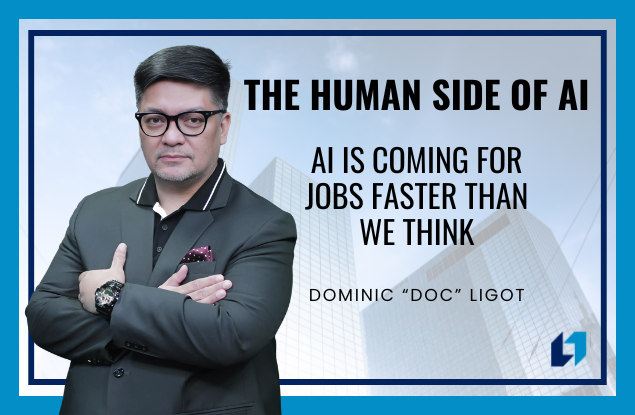
I joined Mimi Ong of Market Edge today for a conversation about AI, jobs, and the future of the Philippines. What struck me most is how many people still think AI is something far away.
It is not. The changes are already happening.
We started by talking about government readiness. The DICT will likely play a major role because infrastructure matters. Stable internet, cybersecurity, cloud systems, and reliable digital services are now basic requirements for economic growth. But even today, we still experience system limitations and outages. That should concern all of us because AI depends heavily on digital infrastructure.
The bigger issue, though, is work. For years, the BPO industry helped millions of Filipinos build stable careers. It created opportunities across the country and became one of the strongest parts of our economy. Now automation is beginning to reshape that industry. Companies abroad are investing heavily in AI tools that can answer customer questions, process documents, summarize reports, and automate repetitive tasks.
This trend will continue. We may not see the full effects immediately, but the direction is clear. That is why future-proofing matters now.
One of the key messages from today’s discussion was the importance of upskilling. Workers cannot wait until jobs disappear before adapting. Learning new tools, understanding AI systems, and improving higher-value skills will become increasingly important.
This is exactly why I invited viewers to visit https://www.resetph.com and join the upcoming webinar on May 20. We will discuss automation, employment trends, and practical ways people can prepare for the future of work.
Awareness is the first step. Another important point involves investment.
We often say we want innovation in the Philippines. We want startups. We want world-class research. We want Filipino scientists to stay here and build the future locally.
But innovation requires funding. Researchers and universities continue to face major resource gaps. Many talented Filipinos eventually leave for opportunities abroad because support systems remain limited here. That creates a long-term competitiveness problem.
Countries investing aggressively in AI today are preparing for the industries of tomorrow. Countries that delay may struggle to catch up later. This affects not only governments and companies, but families as well.
Parents now need to think differently about education and careers. Young professionals need to think differently about long-term stability. Financial planning itself may need to adapt to faster technological disruption.
Near the end of the interview, I was asked what AI question keeps me awake at night. My answer surprised even me.
I thought about children. Gen Z grew up with the internet. Many do not remember life before smartphones and social media. Now Gen Z are becoming parents. Their children: Gen Alpha and Gen Beta, may never know a world without AI.
That means the next generation could grow up with AI systems influencing learning, communication, entertainment, and decision-making from childhood onward.
And honestly, our institutions are still trying to catch up. Schools are adjusting. Governments are adjusting. Parents are adjusting. But the technology keeps moving. That means we all have a role to play. We need to help younger generations build critical thinking, adaptability, and strong human values while also helping them embrace innovation responsibly.
The future will belong to people who can learn continuously. That may be the biggest financial and career lesson from all of this.
The mission remains. Need more coffee.
Dominic “Doc” Ligot is one of the leading voices in AI in the Philippines. Doc has been extensively cited in local and global media outlets including The Economist, Channel News Asia, South China Morning Post, Washington Post, and Agence France Presse. His award-winning work has been recognized and published by prestigious organizations such as NASA, Data.org, Digital Public Goods Alliance, the Group on Earth Observations (GEO), the United Nations Development Programme (UNDP), the World Health Organization (WHO), and UNICEF.
If you need guidance or training in maximizing AI for your career or business, reach out to Doc via https://docligot.com.

