

For many entrepreneurs, the lure of quick profits can be irresistible. But for Fruitas founder and CEO Lester Yu, experience taught him that short-term opportunities without a strong brand are rarely sustainable. After dabbling in different ventures—from pearl shakes to gold trading—Yu made a pivotal decision that would define his career: he would only enter businesses where branding mattered.
It was this principle that guided him to build Fruitas into one of the Philippines’ largest food and beverage chains, with over a thousand outlets nationwide.
“I want to enter a business that has branding. Gold trading has no branding. Importing things from China has no branding,” Yu emphasized.
Lessons from Volatile Businesses
Before Fruitas, Yu experimented with multiple ventures. He tried supplying supermarkets, selling in department stores, and even traded gold with the Bangko Sentral. Each one seemed promising at first, but none had the staying power he was looking for.
“Gold trading has no branding,” he explained, pointing out that such businesses rely purely on commodity value and arbitrage opportunities
Without a brand, there was nothing to differentiate him from countless others who could easily enter the same line of work.
The volatility of these businesses convinced Yu to rethink his approach. He wanted to build something that could withstand market cycles, something that had identity and recognition.
Why Branding Matters
Yu drew inspiration from business icons who emphasized brand strength. “I learned this from John Gokongwei,” he shared, recalling how the late tycoon built lasting value through recognizable products and names.
In Yu’s eyes, branding was more than just marketing—it was protection. A strong brand builds trust, creates loyalty, and makes it harder for competitors to copy. Without it, a business is vulnerable to sudden shifts in the market.
This realization set him apart from many entrepreneurs who were content to chase the next hot trend. Yu wanted to build something enduring.
Fruitas: A Business Built on Branding
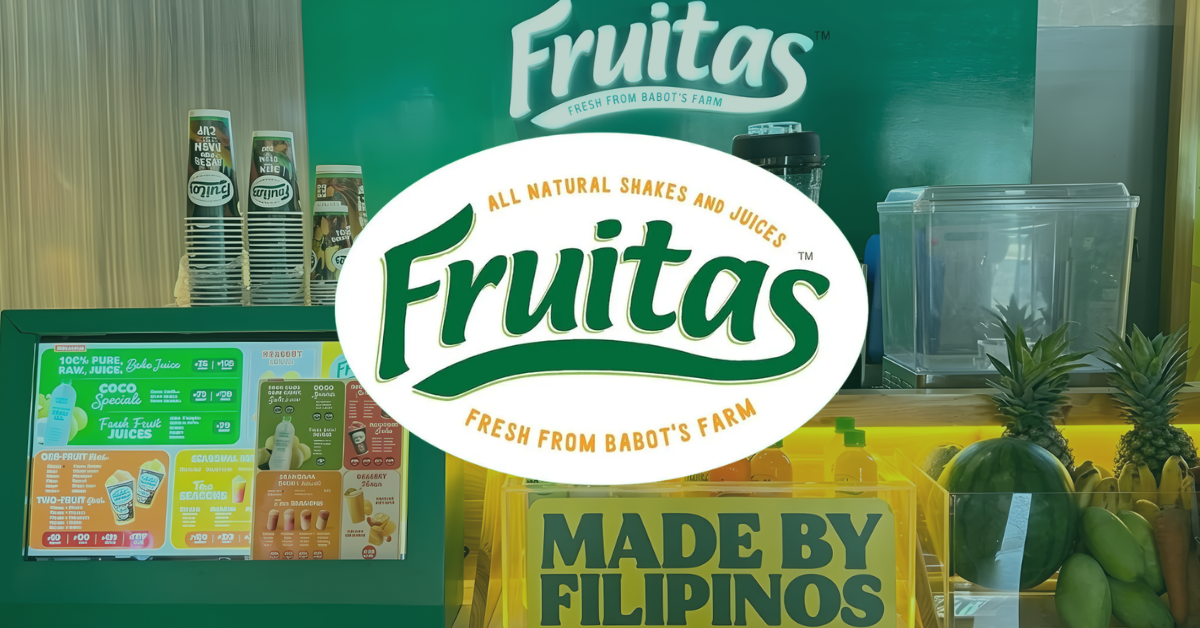
In 2002, Yu launched Fruitas with a humble two-square-meter stall in SM Manila. Unlike his earlier ventures, this was not just about selling fruit shakes. It was about creating an identity that customers would recognize and return to.
“It was so clear to me when I started,” he said, noting how earlier fruit shake players had already survived more than a decade.
.To him, that was proof that the business had long-term potential if it was anchored on a strong brand.
The early years were tough. Fruitas wasn’t immediately profitable, but Yu stuck to his conviction. Instead of abandoning the business when growth was slow, he reinvested earnings and kept building the brand’s presence. “We had to stick with our resources and just believe in our product,” he recalled.
Riding the Wave of Health Consciousness
Timing eventually worked in Yu’s favor. By the mid-2000s, Filipinos were becoming more health conscious, joining fun runs, marathons, and looking for alternatives to sugary sodas. Fruitas, positioned as a fresh and natural option, was perfectly aligned with this trend.
“Our breakthrough came when the Philippine environment became more health conscious—fun runs, marathons, lifestyle changes,” Yu said
It was a moment that validated his belief in building a brand around sustainable consumer needs rather than chasing temporary fads.
Branding Beyond Shakes
As Fruitas expanded, Yu applied the same principle to acquisitions and new ventures. Whether it was Jamaican Patties, Lechon businesses, or wine brands, the goal was always the same: build or acquire strong branding.
His strategy wasn’t just about growth in numbers—it was about creating value that lasts. “We control our destiny,” Yu said, explaining how his team carefully designs names, colors, and logos for every brand they launch.
The Takeaway for Entrepreneurs
Yu’s journey is a lesson for founders who are tempted by fast profits. Businesses without branding may succeed in the short term, but they rarely endure. A brand, on the other hand, becomes an asset that compounds in value over time.
“I do not like to enter a volatile, not sustainable business anymore,” Yu admitted.
That decision—to prioritize branding over volatility—was what transformed Fruitas from a two-square-meter stall into a nationwide empire.
For Yu, the choice was clear: a business anchored on branding is a business built to last.

