

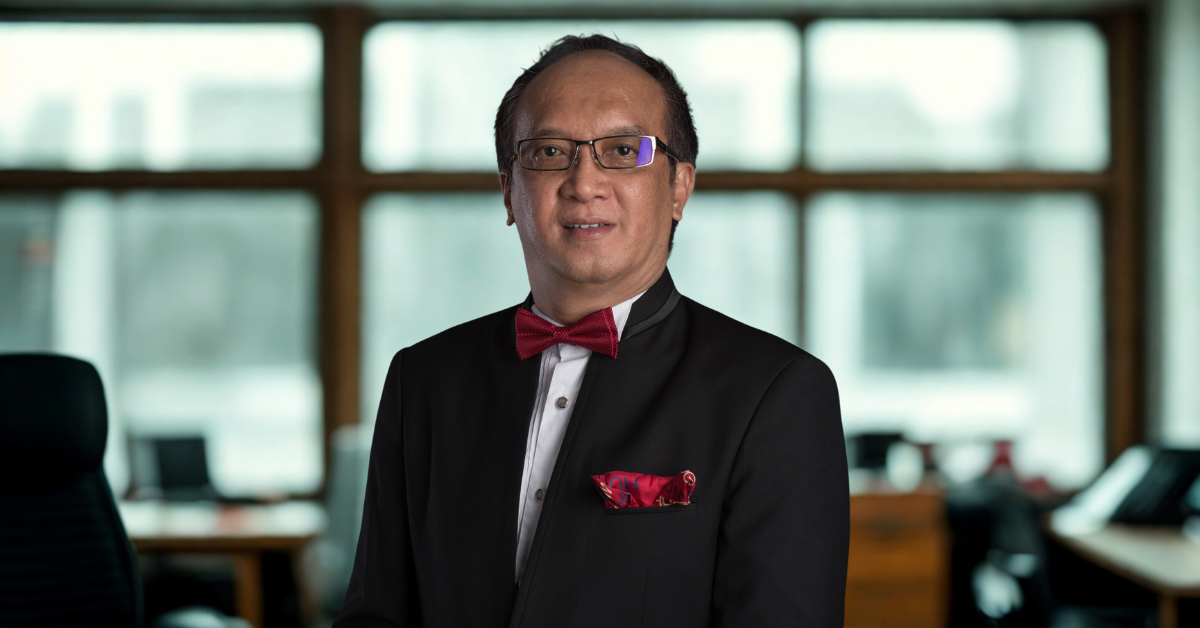
More than three decades into his career, this accountant had already seen almost every side of finance. He had worked as a CPA, served as a banker, and spent years navigating accounting and financial systems across different environments. But it was only when he entered public practice that he realized where his experience could make the greatest impact.
“I am a CPA, former banker, and I have been in accounting and finance for more than three decades,” Ferdinand Rodriguez, Certified Forensic Accountant, says. With that background came a clear view of how organizations operate—and where they break down. When he transitioned into public practice, he began to see forensic accounting not as a niche, but as a necessary extension of his work. “When I became a public practitioner, I saw the opportunity to be in this field,” he explains.
What drew him in was not novelty, but relevance. In the current business and regulatory environment, he believes forensic accounting has moved from optional to essential. “It is very relevant and useful, especially what is happening now in our country,” Rodriguez says, referring to the growing public attention on accountability, governance, and financial irregularities. For him, forensic accounting responds directly to real-world conditions—where questions of misuse, misrepresentation, and responsibility can no longer be ignored.
Despite this growing relevance, Rodriguez observes that the discipline remains misunderstood. “To tell you frankly, our country is already adopting the systems and procedures of forensic accounting,” he says, “but only few know and understand it.” The tools and frameworks exist, but the shortage lies in professionals who can properly apply them—methodically, objectively, and without bias.
In investigations, Rodriguez sees the forensic accountant as part of a broader ecosystem of accountability. “A forensic accountant plays a vital role in the investigation,” he explains, “just like other agencies of the government that are part of it.” The role is not to replace regulators or law enforcement, but to contribute financial clarity—establishing facts through evidence, analysis, and disciplined inquiry.
That same discipline defines how he leads forensic engagements. His starting point is always restraint. “At first, I need to understand what is the root cause,” Rodriguez says, “so that I can briefly emphasize what needs to be done in order to investigate.” Rather than jumping to conclusions, he focuses on framing the situation correctly before determining the investigative path.
For him, leadership is tested not only in cases, but in responsibility. One of the most challenging leadership roles he recalls was serving as president of a professional organization. “When you say leadership, this was tested when I became a president of our organization,” he says. “In that experience, you need to work hard for the betterment of all the members.” It reinforced his belief that leadership in forensic work—much like in organizations—requires fairness, patience, and accountability to others.
Objectivity, he emphasizes, is non-negotiable. “Do not pre-judge,” Rodriguez says plainly. “Don’t be judgmental.” His approach is to establish the situation first, analyze it properly, and let evidence—not assumptions—drive conclusions. Even in sensitive cases, he relies on comparison and verification. “Compare the result objectively,” he adds.
When asked what he would tell younger accountants considering forensic accounting, his message is direct and timely. “In today’s setting, forensic accountants play a vital role,” Rodriguez says. “That’s why for the younger ones—if you think you can make a difference, this is the time.”
For him, forensic accounting is not about prestige or specialization for its own sake. It is about applying experience, judgment, and discipline where they matter most. After decades in accounting and finance, Rodriguez sees forensic work as a continuation of responsibility—not a departure from it.
And in an environment where trust is fragile and accountability is demanded, that sense of responsibility is exactly what the profession needs.

