

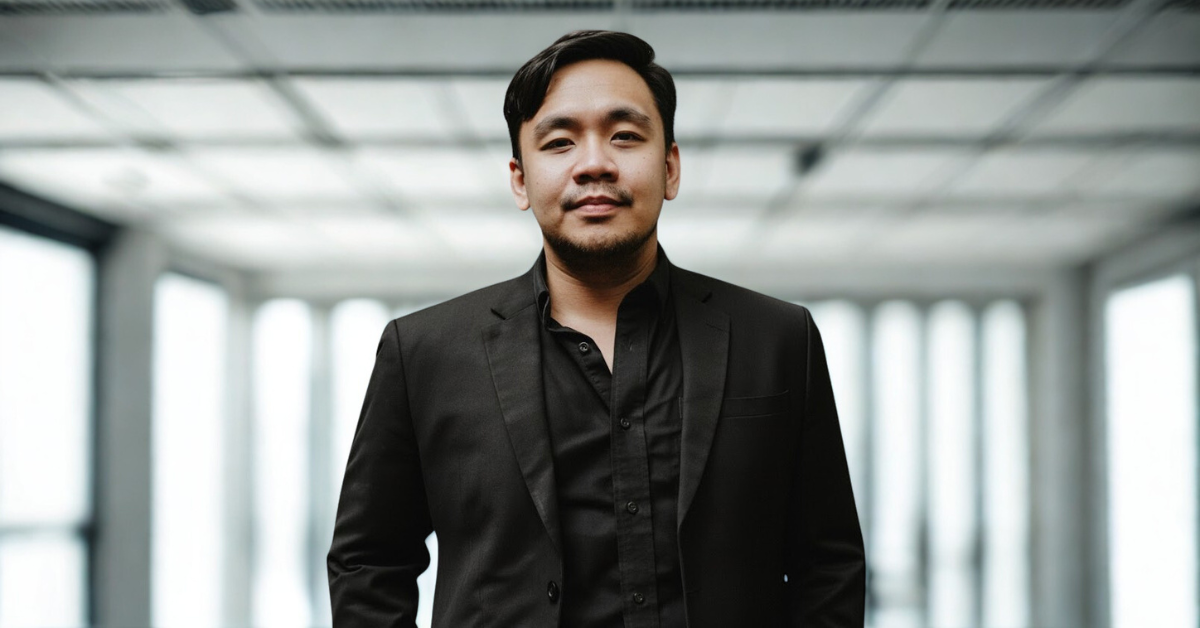
For this management consultant, credibility did not come from staying in one lane. It came from moving across industries, learning how different sectors operate, and understanding where strategy, people, and execution intersect.
Zabyzaky Uy Leccio, Certified Management Consultant (CMC®), did not begin his career in consulting. His professional journey started in aviation engineering, a field that trained him to think systematically, work with precision, and respect structured processes. Over time, his career expanded into sales, operations, and business development, exposing him to the commercial realities that determine whether strategies succeed or fail.
“I began my career in aviation engineering, then moved into sales, operations, and business development,” Leccio shared. “Over the years, I worked in various industries, which gave me a broader perspective and insight into how different sectors operate and what challenges they face.”
As his responsibilities grew, so did the scope of problems he was asked to solve. Companies began turning to him not just for operational input, but for guidance on improving processes, aligning teams, and developing growth strategies.
“Eventually, I shifted to consulting because companies often sought my help to improve processes, build teams, or create strategies,” he said. “What started as internal projects grew into formal consulting work.”
That progression culminated in the founding of Trucend Business Management Inc., which allowed him to pursue management consulting as both a structured profession and a long-term commitment. “Founding Trucend Business Management Inc. allowed me to fully embrace management consulting as both a career and a passion,” Leccio noted.
What distinguishes his consulting practice is the sheer breadth of industries he has worked with. His experience spans engineering, aviation, retail, finance, e-commerce, technology, entertainment media, gaming, and business services. Rather than diluting his approach, this diversity sharpened it.
“This diverse experience shaped my consulting style in three ways, which also represent our company values,” he explained.
The first is directness. “I communicate openly, addressing challenges directly and making decisions quickly,” Leccio said. In environments where time and resources are limited, clarity becomes a competitive advantage.
The second is simplicity. “I keep things clear and focused, avoiding complexity so we can advance smoothly and efficiently,” he shared. His philosophy reflects a belief that overengineering solutions often slows down execution.
The third is impact. “I concentrate on actions that produce meaningful change and deliver lasting value,” he said—an orientation that consistently ties strategy back to measurable results.
At the foundation of his consulting mindset is a deep background in sales, business development, and marketing. Unlike consultants who rely heavily on theory, Leccio views revenue as a practical test of strategic effectiveness.
“My strongest foundation for consulting came from my background in sales, business development, and marketing,” he said. “I have always believed that every business is essentially a sales organization and that revenue is the best indicator of a strategy’s effectiveness.”
That belief shaped how he listens to clients and diagnoses problems. “I learned to identify clients’ real pain points by listening like a salesperson,” he explained. “I pinpoint gaps in value delivery and monetization, and I build strategies that are practical and aligned with growth.”
His ability to work across departments also strengthened his consulting effectiveness. “I work with various teams and understand how departments like marketing, operations, finance, and product interact,” Leccio noted.
Sales, in particular, taught him human-centered skills that many consultants struggle to develop. “Being in sales taught me empathy, negotiation, stakeholder management, and how to deliver results,” he said. “I believe these skills are crucial in consulting.”
Looking at the consulting landscape today, Leccio sees both opportunity and transformation. “Consulting is becoming more data-driven, digital-first, and specialized,” he observed.
In the Philippines, he has noticed a significant shift. “MSMEs are now embracing professional consulting, not just large corporations,” he said. Globally, the expectations are even higher. “There’s a growing demand for consultants who can weave technology, automation, and AI-driven decision-making into business strategies.”
Despite these changes, he believes the differentiator remains relational. “Partnership and connections are key,” Leccio emphasized. “Successful consultants know how to leverage their networks and position themselves advantageously.”
Equally important is adaptability. “They also adapt based on the scenario and situation, recognizing that one-size-fits-all solutions do not work,” he added.
His leadership style reflects this balance between structure and flexibility. “I have a collaborative and results-oriented style,” Leccio said. “I believe in empowering teams, setting clear expectations, and fostering a culture of accountability.”
That approach becomes especially critical in managing consulting projects, where misalignment is common. “I have encountered misalignment of expectations among stakeholders,” he shared. “I addressed this through strong project scoping, clear KPIs, and regular communication.”
Scope management has also been a recurring challenge. “Some clients pushed for more, despite knowing those requests were outside the initial scope,” he explained. “I manage this by setting clear expectations and timelines around our scope.”
One project illustrates how leadership and structure can drive turnaround. In a retail company struggling with disconnected teams and unclear roles, Leccio led the development of an operational and strategic plan.
“By implementing structured planning sessions, alignment workshops, and process mapping, the company achieved both operational clarity and improved sales performance,” he said. Central to the success was influence mapping. “This was possible by identifying key influencers, which was essential to unite the department leaders and drive change.”
For aspiring consultants, his advice is grounded and reflective. “Always listen more than you speak,” Leccio said. “As a consultant, you won’t always have the answers. Often, I learn more from clients than they learn from me.”
Frameworks, he stressed, are only starting points. “Frameworks are just guidelines; you can plan and teach clients, but ultimately, it’s about practical application and taking action.”
Balancing technical expertise with people management remains a constant discipline. “Technical expertise and frameworks offer structure, but people drive results,” he said. “Balancing both ensures that potential solutions are not only technically sound but also actionable by the team.”
His decision to pursue the Certified Management Consultant (CMC®) designation was rooted in professional responsibility. “I wanted to formalize my consulting practice and align it with global standards,” Leccio explained. “The CMC designation represents ethics, competence, and credibility.”
Since earning the credential, the impact has been tangible. “Professionally, it has attracted leads and potential clients,” he said. “It has boosted my credibility with existing clients and opened doors to strategic opportunities.”
For consultants considering the same path, his message is clear: credibility compounds when experience is matched with standards.
“Many people ask me how to become a consultant,” Leccio reflected. “I began without a formal certification but later realized how much my credibility increased with the CMC.”

