

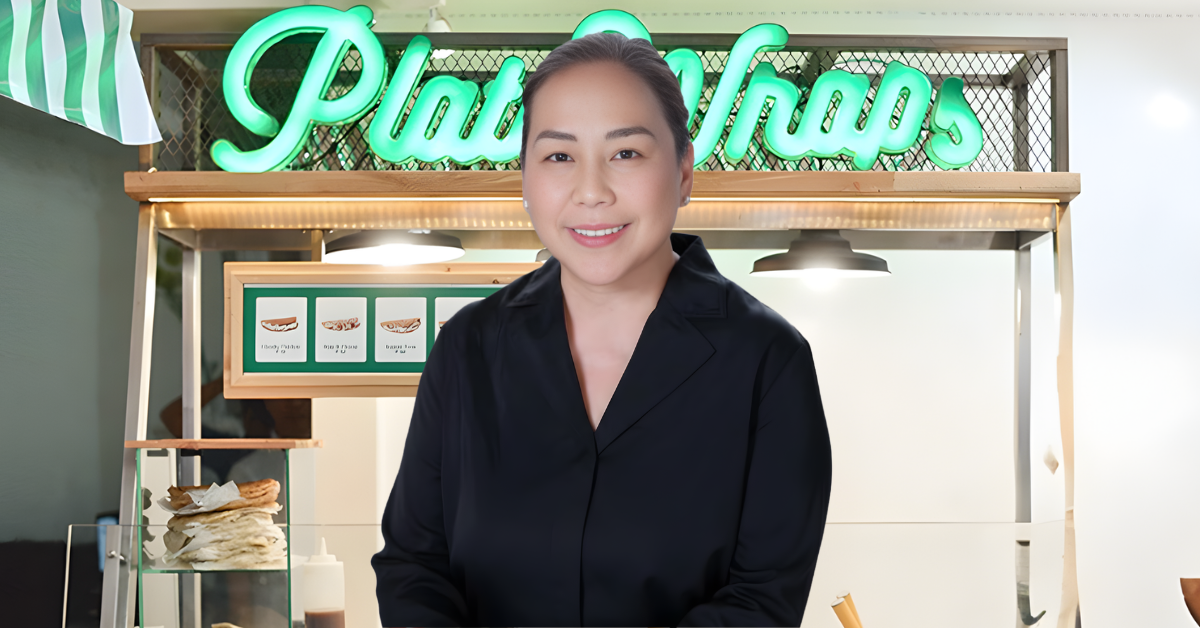
When Kamela Seen got married at 23, entrepreneurship was not part of the plan. She and her husband were a young couple from Dagupan, newly married and still figuring out how to build a life together. “We were a young couple from Dagupan, and I married my high school boyfriend,” she recalls.
At the time, Seen had a job in Manila, but everything changed quickly after the wedding. “I had my job here in Manila tapos when we got married, nag-resign ako,” she says. The couple decided to return to the province, where opportunities were fewer but family support was closer.
Back in Dagupan, both of them took whatever work they could find. Seen worked for her uncle, who owned a shoe store, while her husband was employed at his brother’s auto supply business. It was not an easy adjustment, but it was stable—until another difficult decision came along. When her husband was offered a chance to work in Taiwan as an overseas Filipino worker, they took it, knowing it would mean living apart. “Nung nagkaron kami ng chance na pumunta siya ng Taiwan as an OFW,” Seen says, “nag-work pa rin ako sa tito ko.”
That period tested them in ways they had not anticipated. While her husband worked abroad, Seen stayed behind in Dagupan, raising their children and trying to keep the household afloat. By then, she already had three young kids. “Around that time, meron na akong tatlong anak kasi sunod-sunod na sila,” she says. With limited income and growing responsibilities, she knew she had to find another way to contribute.
Catering became that lifeline—not out of passion, but out of necessity. Seen began accepting catering jobs while her husband was overseas, juggling food preparation with childcare. “So yung pag-catering ko, yun yung pag-survive namin,” she says plainly. There was no illusion about what it was. Catering was not a business dream or a long-term strategy. It was how they paid bills, put food on the table, and kept going as a young family separated by distance.
She learned fast because she had no choice. Each event meant budgeting tightly, managing ingredients carefully, and delivering consistent food despite limited resources. The pressure was constant. Any mistake could mean losing income they could not afford to lose.
At the same time, catering gave her something invaluable: firsthand experience in food operations, pricing, and customer expectations. Even without formal systems, she was already learning how to run a food business under real constraints.
After six years, her husband returned home from Taiwan. “After ng stint ng husband ko sa Taiwan, after mga six years, kinailangan nya nang umuwi sa Pilipinas,” Seen says. By then, catering had sustained them, but it was clear it could not remain their only option. The family needed something more stable—something that could grow with them rather than depend on sporadic bookings.
That opportunity arrived unexpectedly. Around the time her husband came home, a mall in Dagupan—described as a lifestyle center—offered them a small space. “At that time, tamang tama nagkaroon kami ng offer sa isang mall,” Seen recalls.
The space was only 25 square meters, and the proposal was to open a bakery. The idea made sense on paper. Her husband came from a family that owned the oldest bakery in their town, Sanitary Bakery, and bread was familiar territory. “Kasi yung family ng husband ko owns the oldest bakery in our town,” she explains.
Still, Seen’s mindset had already been shaped by years of survival-driven work. She knew that familiarity did not guarantee success. Catering had taught her that margins were thin, timing mattered, and volume alone did not solve cash flow problems. But at that point, the bakery was a chance to stay afloat together as a family again.
Looking back, Seen sees that period as the foundation of everything that came later. Catering was never meant to be permanent, but it trained her to think like an operator under pressure. It forced her to make decisions quickly, manage limited capital, and prioritize sustainability over comfort. More importantly, it changed how she viewed entrepreneurship—not as a glamorous pursuit, but as a practical response to real-life needs.
Kamela Seen’s journey did not begin with a breakthrough idea or a polished concept. It began with survival. Catering was not her dream—it was her answer to a difficult season marked by separation, responsibility, and financial pressure. By building a livelihood while raising three children and living apart from her husband, Seen learned the fundamentals of entrepreneurship the hard way. That experience shaped her instincts long before Plato Wraps existed, proving that some of the strongest businesses are born not from inspiration, but from the refusal to give up when circumstances leave no room for hesitation.
This article includes quotes from an interview originally published by Esquire Philippines, authored by Henry Ong.

