

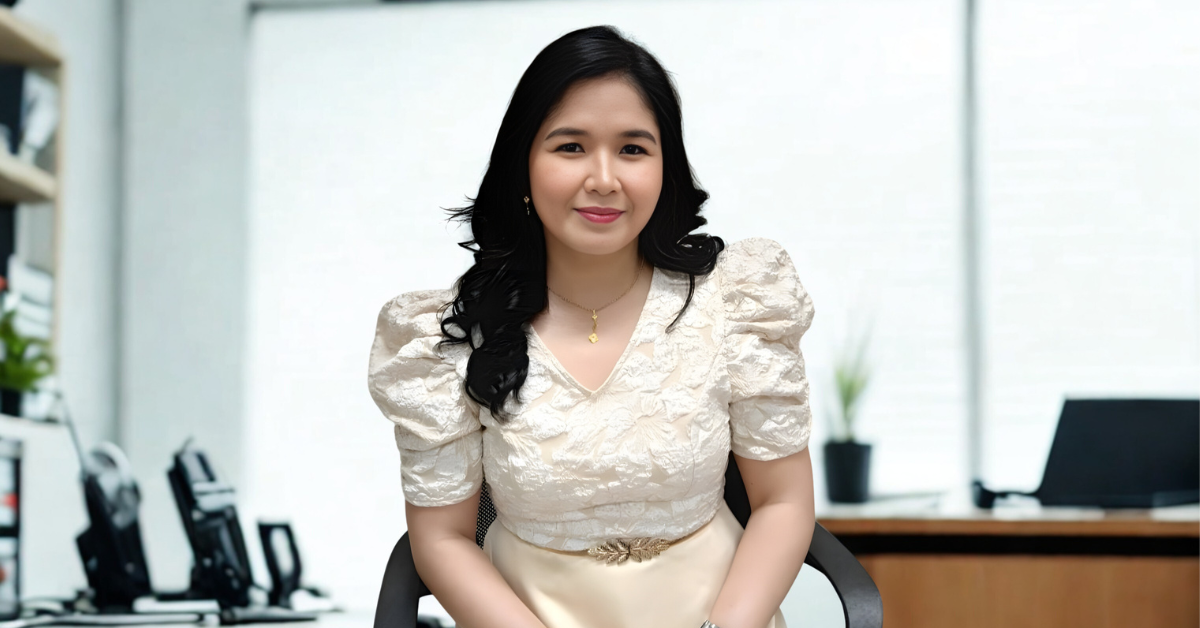
Long before she stepped into a university classroom, Mary Ann Carranza was already learning what marketing really meant—on the retail floor, inside membership offices, and in fast-moving environments where customer trust could be gained or lost in seconds.
Her career began in the retail and membership shopping industry, where she joined PriceSmart Membership Shopping as an Executive Assistant to International Operations. The role exposed her early to systems, operations, and the discipline behind customer-first strategies in a competitive setting. It was there that she began to understand that marketing was not just about promotion, but about consistency, experience, and loyalty.
That understanding deepened when she moved to S&R Membership Shopping. Over time, she grew into leadership roles, first as Front End Supervisor and later as Membership Supervisor. The work placed her at the center of customer relationships, where service quality directly influenced retention and trust.
Those years taught her something fundamental. Marketing, she realized, was not abstract strategy—it was lived daily through people, processes, and decisions. “What drew me to marketing is its strong connection to people—understanding needs, building trust, and delivering value,” she says.
From operations to leadership under pressure
Her transition to SM Hypermarket as an Assistant Store Manager further sharpened her leadership instincts. Managing operations meant balancing efficiency with empathy, ensuring teams could deliver consistent customer experiences even under pressure.
Retail leadership demanded decisiveness, accountability, and the ability to see both the details and the bigger picture. It was not enough to understand customers—she also had to understand people.
Over time, those experiences shaped how she viewed leadership. “My retail roles required both operational discipline and people leadership,” she explains. The lesson stayed with her even as her career took an unexpected turn.
A pivotal shift into academia
One of the most defining moments in Carranza’s journey came when she transitioned from industry to academe. Moving into Bulacan State University (BulSU) meant leaving a familiar environment where results were immediate and measurable.
The challenge was significant. She now had to translate years of practical experience into structured learning that could empower students with different backgrounds and levels of confidence.
“A pivotal moment was transitioning from industry to academe,” she says. “It challenged me to translate practical experience into structured learning that can empower students.”
Rather than seeing this shift as a departure from marketing, she came to see it as an extension of it. Teaching, for her, became another way of creating value—this time by developing people instead of products.
Today, as an Associate Professor III at BulSU, her days are filled with teaching, mentoring, preparing learning materials, and engaging in research. But the foundation of her approach remains rooted in real-world practice.
Marketing as confidence-building, not just strategy
Carranza believes marketing education should go beyond frameworks and tools. At its core, it should help people build confidence in decision-making and communication.
She remains passionate about the field because of its ability to create impact beyond business. “What keeps me passionate is how marketing continuously evolves, and how it can create meaningful impact not only in business but also in education and community development,” she says.
That belief shapes how she engages students. She focuses on clarity, empathy, and relevance—ensuring lessons connect with real organizational needs, especially for local businesses and community settings.
“I aim to understand what matters to them and communicate solutions in a way that is practical and relevant,” she explains.
Milestones built through learning and resilience
Progression did not come overnight. Carranza advanced by consistently taking on greater responsibility, investing in education, and committing to professional development. Along the way, she completed both her MBA and DBA—milestones that strengthened her strategic perspective.
Another turning point came when she earned her Certified Marketing Professional (CMP) credential through SMI. The certification was not just about adding letters after her name.
“Completing my SMI certification helped me realize that the things I feared before can be faced and conquered through commitment and continuous learning,” she shares.
The experience reinforced a belief she now passes on to her students: growth often begins on the other side of discomfort.
Navigating a rapidly evolving field
Carranza remains deeply aware of how fast marketing continues to change. Digital tools, analytics, and data-driven decision-making have expanded what marketers can do—but they have also raised new responsibilities.
She is excited about how marketing is becoming more measurable and strategic, but cautious about losing the human element. “I remain cautious about over-reliance on automation without maintaining ethical standards and genuine human connection,” she says.
For her, technology should enhance—not replace—understanding.
That balance between data and empathy reflects lessons she learned early in retail. Systems matter, but trust is built through consistency, integrity, and human judgment.
Preparing marketers who think long-term
One of the achievements she is most proud of is helping students and emerging professionals develop strategic marketing plans grounded in research and real-world application.
“I am proud of guiding students in developing research-based recommendations that can be applied to real organizational needs,” she says, particularly for local businesses and community-focused initiatives.
This long-term view of impact distinguishes her approach. Marketing success, in her view, is not only about immediate results but about building capability that lasts.
A career shaped by people, not just positions
Looking back, Carranza sees her journey as a continuum rather than a series of disconnected roles. Retail, leadership, and academia all reinforced the same principle: marketing works best when it starts with people.
Whether managing store operations or mentoring future professionals, she continues to draw on the same values—discipline, empathy, and lifelong learning.
Her story offers a grounded reminder for professionals navigating career transitions: the skills built in one chapter often become the foundation for the next. When experience is paired with reflection and continuous learning, it can shape not only careers—but future leaders as well.

