

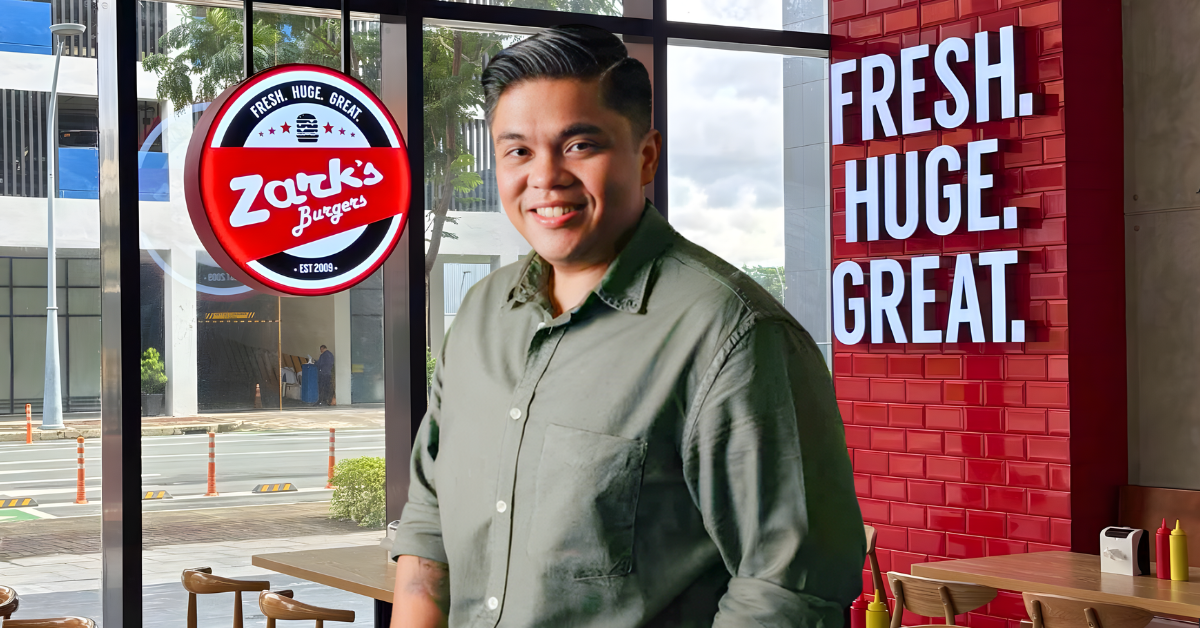
Long before Rolandrei Varona ever thought about opening a restaurant, food had already become part of his identity. His interest didn’t begin with business plans or market gaps. It began at home, with friends, routines, and a growing fascination with restaurants as places where people gathered.
“Yung passion ko sa pagluluto started nung high school pa ako,” Varona says.
Cooking was never something he approached as a job or a future profession. It was simply something he enjoyed doing.
“Mahilig akong mag-entertain sa friends ko. I usually cook sa bahay.”
Where he grew up played a quiet but important role in shaping that interest.
“Kasi I grew up sa Malate area.”
Malate exposed him early to a dining culture that was both local and vibrant—something he absorbed without fully realizing it at the time.
“I went to Malate Catholic school and every Sunday, we would always go to Bistro Remedios or Café Adriatico after church.”
Those weekly rituals stayed with him.
“So na-inspire ako.”
Among the people he encountered during those years, one left a particularly strong impression.
“Nakita ko si Larry Cruz, yung may-ari nung time na yun.”
Varona wasn’t someone who easily looked up to others.
“Hindi ako mahilig mag-iidol ng mga tao eh.”
But seeing someone successfully combine creativity, food, and professional life felt different.
“Pero nung nakita ko siya, parang na-starstruck ako.”
The admiration went beyond cuisine.
“Kasi journalist din mom ko, so magkakilala sila.”
What stood out to Varona was the idea that someone could move between worlds.
“Bumilib ako kasi journalist siya, pero may mga restaurant sya.”
To him, that mix felt aspirational.
“Tapos parang ang sarap pa ng restaurants nya, parang cool.”
Feeling out of place—and finding a direction
Despite his growing interest in food, Varona didn’t see entrepreneurship reflected in his own family.
“Sa family namin kasi, more on sa medical field, journalist, artist.”
He didn’t feel naturally suited to any of those paths.
“Eh ako wala akong talent sa ganon eh.”
There were no entrepreneurs around him to model himself after.
“Walang negosyante sa family namin.”
That absence made his attraction to restaurants feel less like something inherited and more like something he had to choose for himself.
“Sabi ko, sige mukhang cool mag restaurant.”
It wasn’t a calculated decision grounded in forecasts or financial projections. It was instinctive.
“Kaya I took up HRM sa Philippine Women’s University.”
The choice was also practical.
“Dun lang din yan sa area namin.”
Accessibility mattered.
“Just walking distance from our house sa Malate.”
From the beginning, food wasn’t about trends, branding, or ambition. It was about curiosity—about environments that felt familiar, creative, and alive.
Early clarity, even without certainty
Varona moved quickly through school.
“I graduated at 19 years old.”
Graduating early didn’t mean he had everything figured out. But it did confirm one thing: food was where his attention naturally gravitated.
His attraction to restaurants wasn’t rooted in glamour or prestige. It came from watching how food brought people together—families after church, friends around a table, kitchens as places of movement and connection.
Even before business entered the picture, Varona already understood something essential: restaurants were more than places to eat. They were spaces where identity, creativity, and community intersected.
That realization quietly shaped his choices long before Zark’s Burger existed.
Before Rolandrei Varona learned how to run a kitchen or analyze a market, he learned how to care about food. His story is a reminder that entrepreneurship doesn’t always begin with strategy or ambition. Sometimes, it begins with exposure—repeated moments that make a certain world feel familiar and meaningful. Long before Zark’s Burger became a business idea, it was already part of how he saw himself.
This article includes quotes from an interview originally published by Esquire Philippines, authored by Henry Ong.

