

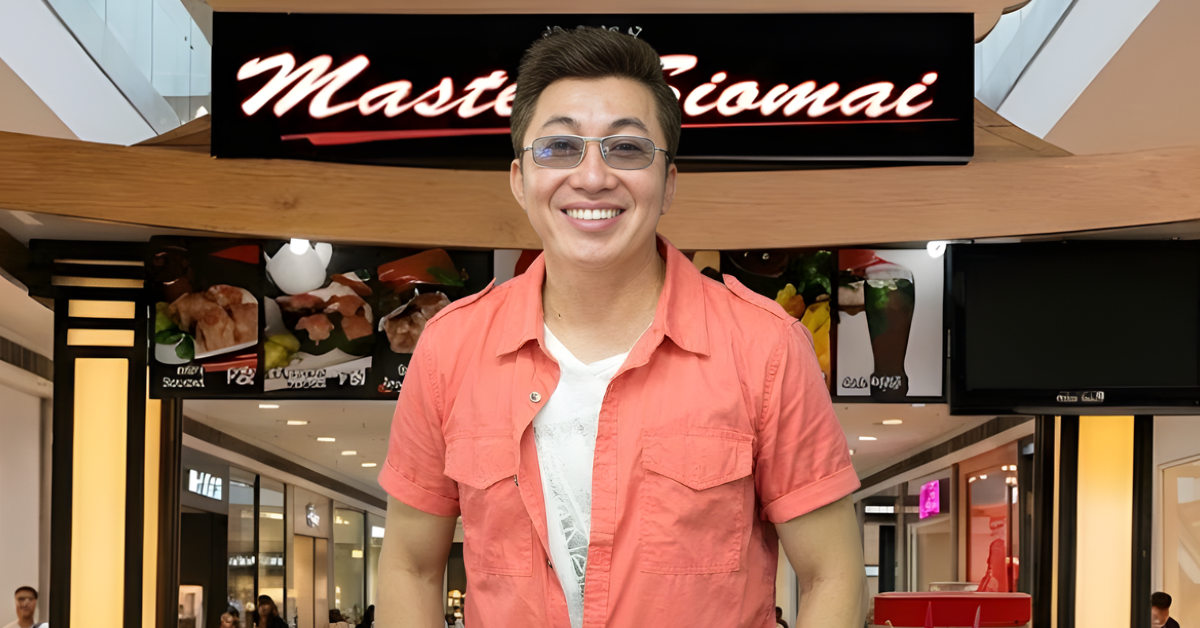
Long before Master Siomai became a familiar name, Ernilito Chan’s life revolved around one priority: earning enough to survive. College was never part of the equation. Work came first.
“Before, marami akong pinasukang work,” he says.
He started young, taking whatever jobs were available.
“Nag-work ako sa construction. May kaibigan akong contractor, nakuha akong worker doon.”
The work was physical and demanding.
“Na-assign ako sa may Quezon City. Nagi-install kami ng mga tiles, yung mga marmol, tapos hahasain, ipo-polish.”
When construction work ended, he moved on.
“Then nag-work din ako sa factory, dyan sa may Caloocan, sa Bagong Barrio.”
The factory work was repetitive and unglamorous.
“Pagawaan ng bote. Taga-linis ako ng bote, saka textiles.”
He was still a teenager.
“Mga 17 years old ako nun.”
At an age when many were thinking about college, Chan had already accepted that higher education was out of reach.
“Hindi ako nag college.”
The reason was simple and harsh.
“Sobrang hirap ang buhay noon so gusto ko ng mag-work.”
College was not just unaffordable—it felt inappropriate.
“Wala kaming pang college.”
Over time, the idea of studying further faded entirely.
“Parang nahihiya na kong mag-aral sa college eh.”
By then, survival mattered more than credentials.
“Kasi adult na ako nun.”
Education stopped being a priority.
“Hindi ko na gaanong naging concern mag-aral sa college.”
What mattered was income.
“Ang kailangan ko nun, gusto kong mag-work para kumita.”
Learning self-reliance early
Chan spent about two years moving from job to job, but fixed wages quickly became a frustration.
“Mga two years akong nag-work pero dahil hindi ako kontento dun sa sweldo ko kasi fixed lang.”
The predictability of income felt limiting.
That dissatisfaction planted an early lesson: effort and reward did not always scale together.
Although Chan did not yet know it, this realization would later shape his decisions as an entrepreneur. At this stage, however, he was simply looking for a better way to earn.
He had no formal training, no diploma, and no safety net. What he did have was a willingness to work and an openness to any opportunity that could put money on the table.
Even at a young age, Chan refused to assign dignity to certain jobs and shame to others. Work was work—as long as it was honest.
That mindset became the foundation of his resilience. He did not wait for ideal conditions. He adapted to what was available.
Survival before ambition
Chan’s early years were not driven by dreams of building a brand or becoming an entrepreneur. They were driven by necessity.
His story reflects a reality shared by many Filipinos: when survival is at stake, ambition takes a back seat. Education becomes optional. Pride becomes negotiable. Stability, however small, becomes everything.
Yet those same years built the qualities that would later matter most—discipline, adaptability, and the ability to keep moving forward despite limited options.
Before Ernilito Chan ever sold a product or closed a deal, he learned how to endure. He learned how to show up, even when the work was hard, repetitive, or invisible.
Master Siomai did not begin with a business plan. It began with a young man who understood early that waiting was not an option—and that earning, however modest, was a form of survival.
Long before he became a founder, Chan had already learned the most important lesson of entrepreneurship: when you don’t have the luxury of choice, effort becomes your currency.
And for Ernilito Chan, that lesson was earned the hard way—one job at a time.
This article includes quotes from an interview originally published by Esquire Philippines, authored by Henry Ong.

