

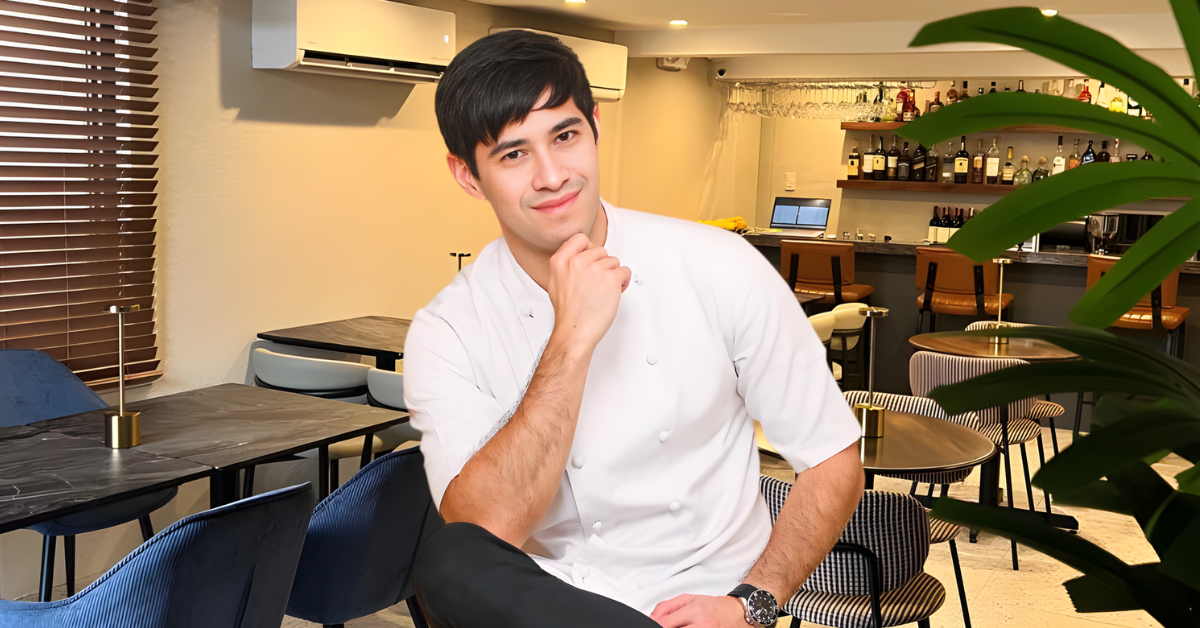
For most entrepreneurs, the first business is born out of long nights, small savings, and borrowed capital. But for celebrity chef and actor Jose Sarasola, the path was different. After finishing culinary school at De La Salle–College of Saint Benilde, his parents gave him a gift unlike any other: a restaurant of his own.
In 2010, Avenue 75 opened its doors in Parañaque. For a 22-year-old fresh out of school, the gift was both a blessing and a responsibility. Many might think that starting with strong financial support guarantees success. But Sarasola’s journey shows that while capital can open doors, discipline and perseverance are what keep them from closing.
The Opportunity of a Head Start
Sarasola admits he was fortunate. Unlike peers who had to bootstrap their ventures, take out loans, or juggle side jobs, he began with a solid foundation. The financial burden of setting up Avenue 75—rent, equipment, suppliers—was covered. He could focus on operations, food, and building the brand.
That head start gave him time and space to learn. Instead of being consumed by the pressure of debt, he could experiment, adjust, and slowly establish his footing in the competitive restaurant industry. “I was just blessed that my parents gave me a business for my graduation gift,” he recalled.
The Pressure to Prove Himself
But privilege comes with its own weight. For Sarasola, the gift wasn’t just an opportunity—it was a test. Having capital to begin with meant expectations were higher. Failure wouldn’t just be personal; it would be letting down the family that believed in him.
The early months were far from easy. Avenue 75 didn’t instantly thrive. Revenues trickled in while expenses stayed high. The sports bar was still new, and building a customer base took time. Sarasola had to learn that even with money behind you, business demands perseverance.
It was during those months that he discovered the truth: capital can start a business, but only grit can sustain it.
Privilege in Entrepreneurship
Sarasola’s story highlights an uncomfortable but important topic: privilege in entrepreneurship. Not everyone begins from the same starting line. Some, like Sarasola, receive financial backing. Others bootstrap from zero.
But privilege, while helpful, doesn’t guarantee endurance. Many businesses with capital fail because they lack direction, discipline, or adaptability. Sarasola’s case shows that support can help open the first door, but the responsibility to keep it open falls entirely on the entrepreneur.
Discipline Matters More Than Money
Over the years, Sarasola has proven that the real differentiator isn’t how you start, but how you manage. Avenue 75 has now transitioned into Bistro 75, reinventing itself to match changing customer tastes. Through crises, including the pandemic, Sarasola’s ability to adapt and his refusal to compromise on quality kept the restaurant alive.
His story reinforces a simple truth: money is not the ultimate safeguard. What matters more is financial discipline, adaptability, and the willingness to endure setbacks.
A Business Meant to Last
Fifteen years later, Bistro 75 is still in operation—a remarkable feat in the volatile world of restaurants. For Sarasola, the “graduation gift business” was never just about starting with support. It became about proving that he could turn opportunity into something sustainable.
His journey is a reminder that while privilege can provide a head start, it is perseverance, discipline, and resilience that determine who stays in the game. In the end, what matters is not how you begin, but whether you build something meant to last.

