

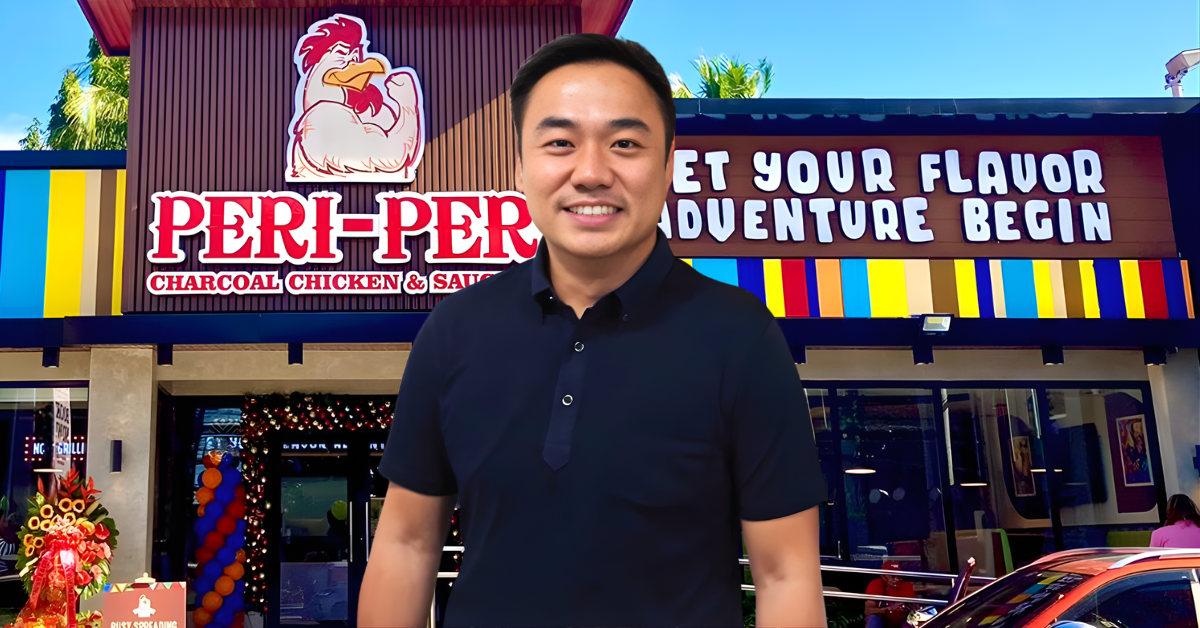
After founding Teriyaki Boy and growing it into a beloved Japanese dining brand, Brian Tiu made a bold move: he sold 70% of the company to Pancake House Inc.
Most entrepreneurs would consider that a career high point.
But for Tiu, it was just the beginning of something bigger.
“Alam ko ‘yung weakness ko eh,” he said. “Entrepreneur ako. Pero ‘pag corporate level na—may systems, finance meetings, structure—hindi na ako ‘yon.”
Tiu had spent five years building Teriyaki Boy from a single branch in Madison Square to a 10-branch chain. The brand’s success had proven his instincts right—but the post-acquisition structure didn’t suit his style. After stepping back from day-to-day operations, he found himself looking for a new challenge—this time, on his own terms.
A New Obsession: Finding the Next Chicken Star
Even before the Teriyaki Boy deal was finalized, Tiu had already begun researching his next venture. “Mahilig talaga ako sa chicken,” he said. “So sabi ko, ano pa bang type ng chicken ang wala pa sa market?”
The answer came from an unlikely source: an Australian friend introduced him to peri-peri chicken, a Portuguese-African dish that had gained popularity abroad. Intrigued, Tiu flew to Australia to study it firsthand.
“May konting pera na ako noon, kaya pumunta ako sa Australia. Tinikman ko, inaral ko,” he recalled. “Tapos iniisip ko, paano ko ito ima-match sa Filipino market?”
He didn’t just copy what he saw. Tiu went deep into product development—tweaking sauces, experimenting with cooking techniques, and sourcing the right machines. “Believer talaga ako sa equipment,” he said. “Domino’s worked because of their machines. Kaya I applied that same logic here.”
Slow by Design
From 2006 to 2013, Tiu kept Peri-Peri Charcoal Chicken small—just two stores. “Technically, may non-compete clause pa ako noon,” he said. “Pero kahit wala, I really wanted to study the business first. Ayoko ng sabog.”
This deliberate pace was a sharp contrast to his fast expansion with Teriyaki Boy. This time, Tiu wanted everything dialed in—flavor, operations, branding—before scaling.
“Focus na ako ngayon. Dati kasi when you grow fast, ang kalaban mo rin minsan is sarili mong lack of focus.”
When the timing felt right, he began expanding. From 2013 onward, Peri-Peri grew into a multi-branch success, known for its smoky grilled chicken, flavorful sauces, and modern Filipino appeal.
Reinventing Himself—Without Starting Over
Tiu’s comeback wasn’t about replicating Teriyaki Boy’s success—it was about building on what he learned. “Sa Peri-Peri, mas klaro na ‘yung vision. Mas maayos na ‘yung team. Mas alam ko na ang gusto kong gawin,” he said.
The numbers agree. Peri-Peri now has over 15 branches and counting. Unlike before, Tiu has been able to scale while staying true to the product and the market he knows best.
A Strategic Exit: Passing the Torch to Shakey’s
In 2019, after establishing Peri-Peri as a formidable player in the fast-casual dining scene, Tiu made another strategic decision. He sold the brand to Shakey’s Pizza Asia Ventures Inc. (SPAVI), transferring ownership of 23 stores, along with the brand’s assets and proprietary recipes. This move allowed SPAVI to diversify its portfolio and expand into the charcoal-grilled chicken segment, while Tiu capitalized on the brand’s growth and success.
Why He Still Believes in Filipino Taste
Despite drawing inspiration from abroad, Tiu remains anchored in local flavor and execution. “Ang daming restaurant abroad na Pinoy ang nagpapatakbo. Kaya nating gumawa ng world-class concept dito mismo, basta aligned sa panlasa ng Pilipino.”
From selling his first big brand to building another from scratch, Brian Tiu’s story proves that resilience—and knowing yourself—can lead to something even greater the second time around.
This story is based on an interview originally conducted for Esquire by Henry Ong. Some quotes in this article may not have been published previously.

