

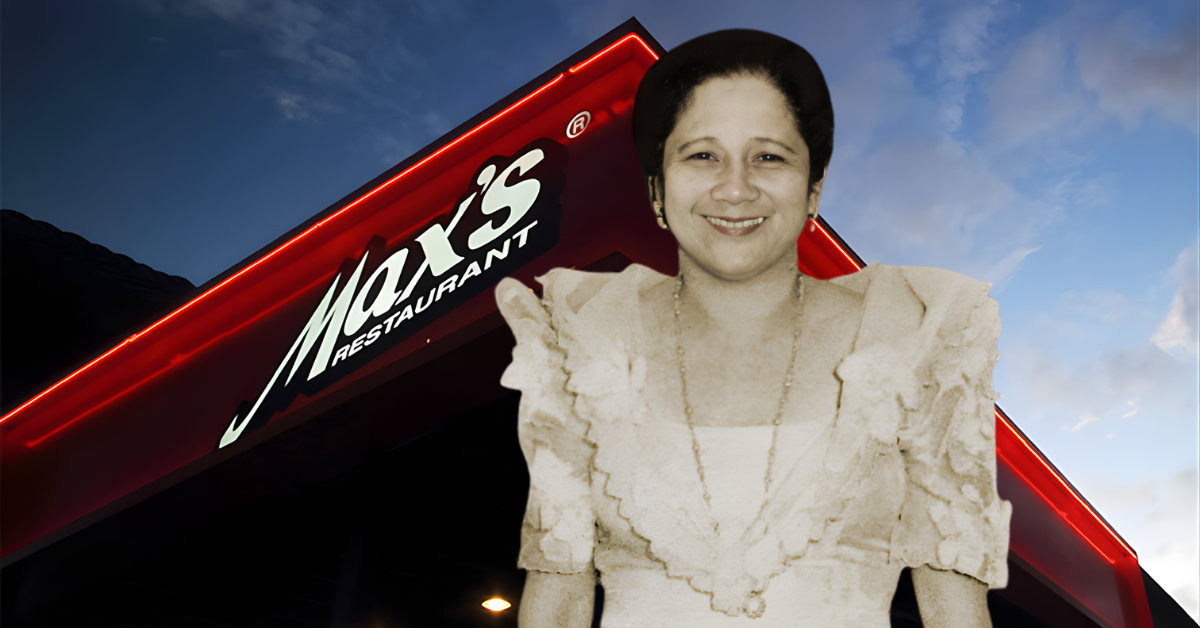
Before Max’s became a nationwide dining institution, it was a modest home kitchen run by a woman with a vision—and a daily trip to the palengke.
“She would be the one to go to the palengke, buy chickens at the time, and then prepare it, and then cook it and then serve it,” shared Sharon Fuentebella, Chairperson of Max’s Group and granddaughter of Ruby Trota.
Long before the brand became a staple for fried chicken lovers, Ruby Trota—then a young woman helping out her uncle Maximo Jimenez—was building the foundation of what would become a Filipino icon. While Maximo, a Stanford-educated entrepreneur, connected with American GIs across the street, Ruby ran the kitchen with heart, hustle, and a whole lot of home-cooked magic.
“She was the niece of Maximo Jimenez,” Fuentebella explained. “So Ruby Trota is my maternal grandmother. That’s first generation, 1945.”
The original Max’s wasn’t even a formal restaurant—it was a house. Family members pitched in wherever they could. “There were like five founders… it was really a close-knit family,” she said. Some were waiting tables. Others were on cashier duty. But Ruby? She was in the kitchen making it all happen—before commercial fryers, before supply chains, before social media buzz.
And yet, for decades, her name flew under the radar.
It’s easy to remember the face on the logo, the name on the storefront, or the catchphrase. But history is often shaped by the quiet builders—the women who showed up early, worked behind the scenes, and created experiences people would come back for, again and again.
Ruby Trota didn’t just cook meals. She cooked up memories. She didn’t just serve chicken. She served hospitality and tradition.
Today, Max’s has grown into a nationwide brand. But every golden, crispy bite still traces back to that one kitchen, that one table, and one woman who started it all—with her hands, her heart, and a dream.
Some quotes in this article are from an interview originally conducted for Esquire by Henry Ong and may not have been previously published.

